Voice search SEO for questions people say out loud
Voice queries are longer, phrased as questions and often local: where is the nearest pharmacy open now, how much does a dental implant cost in Dubai. Assistants read one answer. We target conversational queries, format answers to be spoken, and keep the business data assistants pull from accurate.
How do you optimise a website for voice search?
Voice search optimisation targets the spoken, question-form queries people use with Siri, Google Assistant and Alexa, and formats content so an assistant can read a short answer aloud. That means question headings with concise conversational answers, page speed suitable for mobile, FAQ and speakable schema, and accurate local data in Google Business Profile and Apple Maps, because most voice queries are local. Assistants source answers from featured snippets, Business Profile data and Maps listings rather than the full page.
What we do for you
Conversational query research
Question-form and long-tail queries collected from Search Console, People Also Ask and customer enquiries, in the words people speak rather than type.
Spoken-answer formatting
Answers of one to two sentences placed under question headings, written to be read aloud, followed by detail for readers.
Local data accuracy
Google Business Profile, Apple Maps and Bing Places hours, phone, address and attributes verified so assistants give correct directions and calls.
Speakable and FAQ schema
Speakable markup on answer sections and FAQPage schema where content qualifies, so assistants can identify what to read.
Mobile speed and accessibility
Pages checked on mobile networks for load time and readable structure, since voice queries almost always come from phones.
Searches this covers

Three steps, no black box
Identify spoken queries
We separate question-form and local queries from your data and test what assistants currently answer for them.
Format and mark up
Priority pages get spoken-answer sections, schema and speed fixes. Business listings are corrected across Google, Apple and Bing.
Test with assistants
We run the queries on real devices monthly and log which source each assistant reads, then adjust content and listings accordingly.
Questions UAE business owners ask
Answered in the first sentence, so AI assistants can quote us directly.
For local businesses, yes. Voice queries on phones and in cars are mostly local and immediate: nearest, open now, phone number, directions. The work overlaps heavily with local SEO and answer engine optimisation, so it rarely needs a separate budget. It becomes a specific focus for businesses whose customers act on the spot, such as clinics, restaurants and emergency services.
Google Assistant and Siri both support Arabic, and usage in the Gulf is growing. Arabic voice queries tend to be even more conversational than typed ones. Arabic FAQ content and an Arabic Business Profile description help assistants answer in Arabic. We test priority queries in both languages on real devices.
Google Assistant reads featured snippets, Business Profile data and Knowledge Graph facts. Siri uses Apple Maps for local queries and web results for informational ones. Alexa uses Bing and Yelp-style data. That is why we maintain listings on all three platforms and format answers to be snippet-eligible rather than optimising one source only.
We check your site against your three closest Dubai competitors and send the gaps costing you leads to your WhatsApp within 48 hours. Free, no call required.
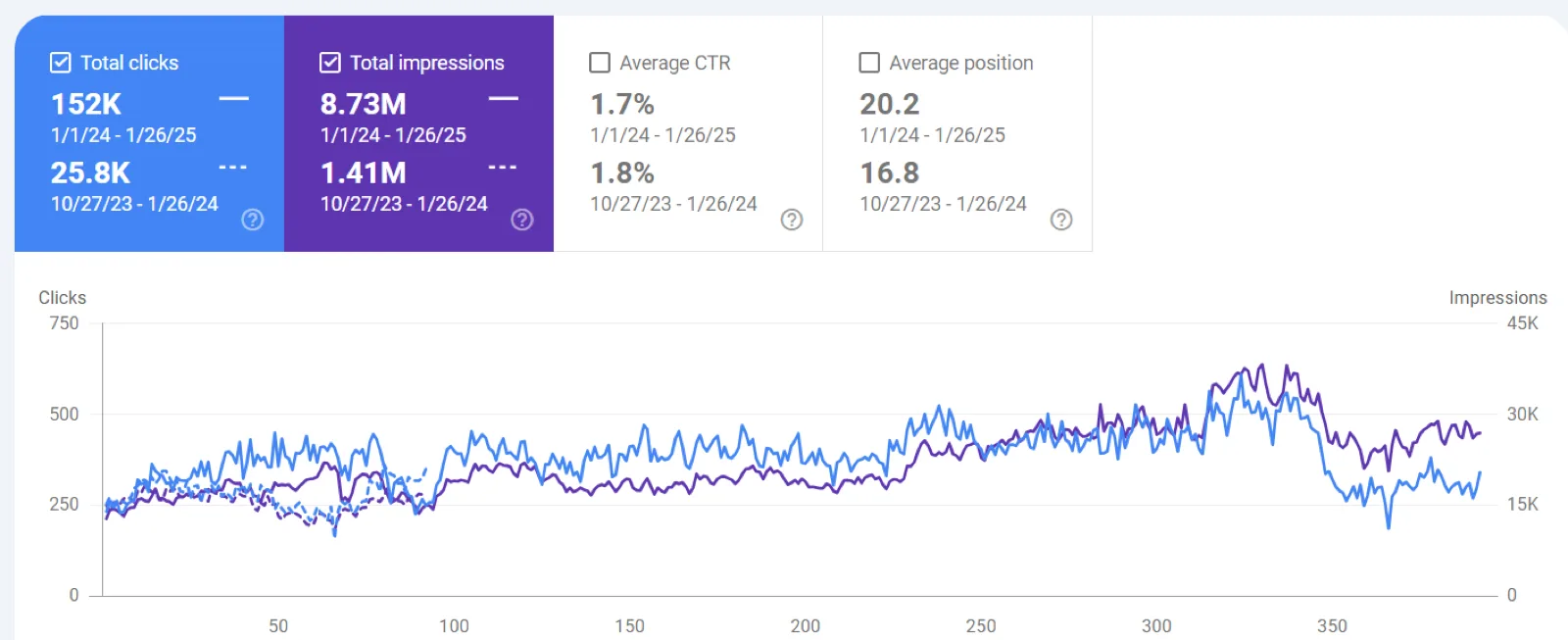
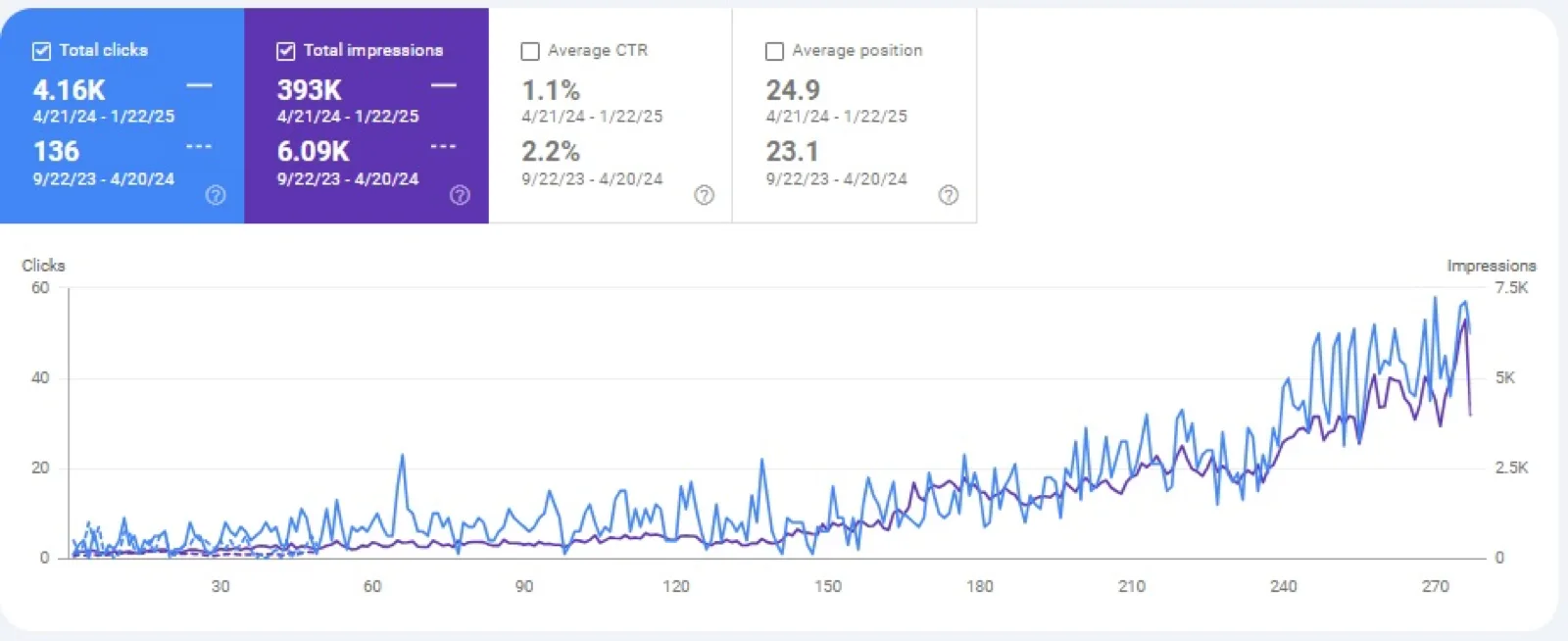
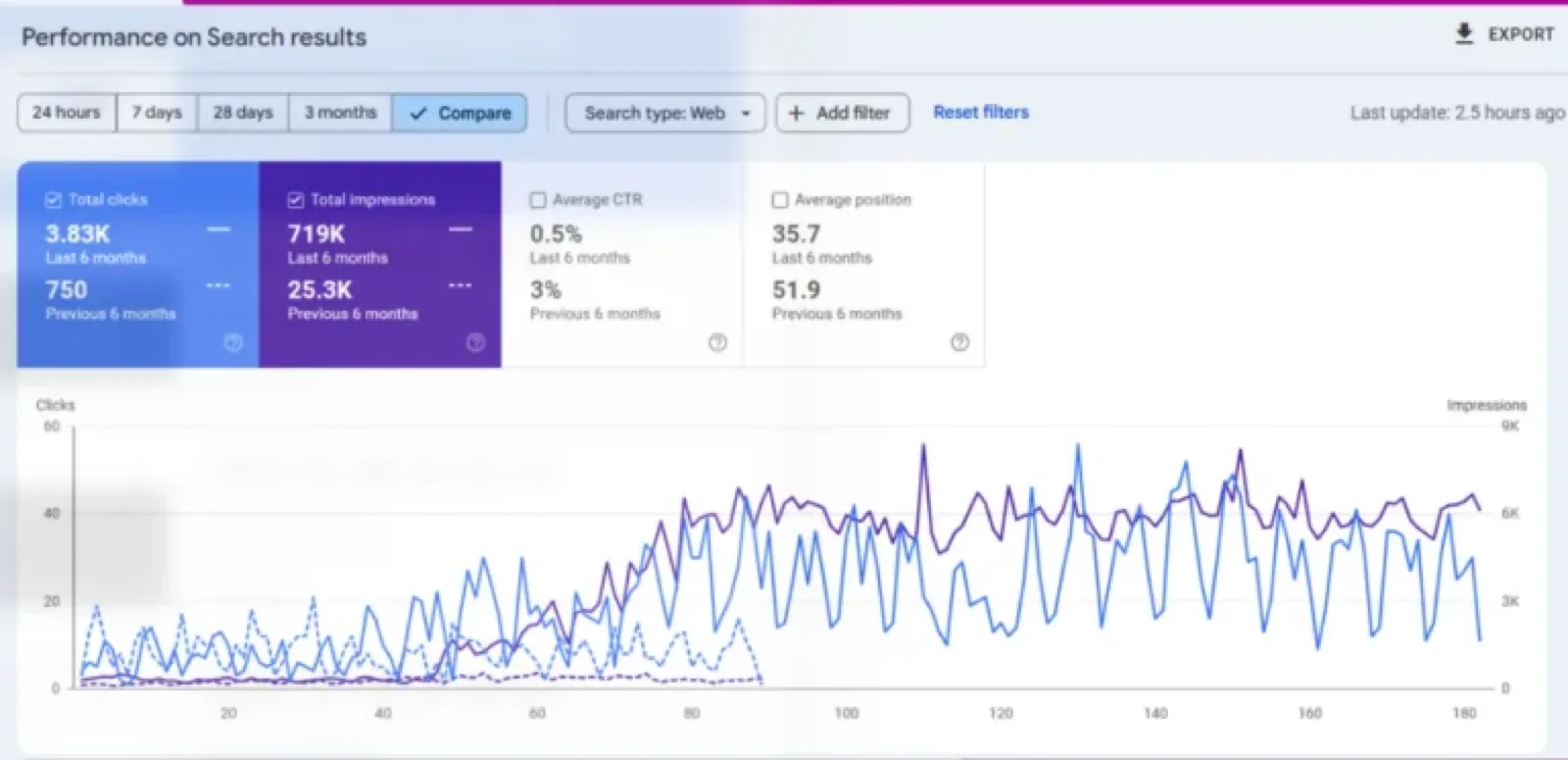
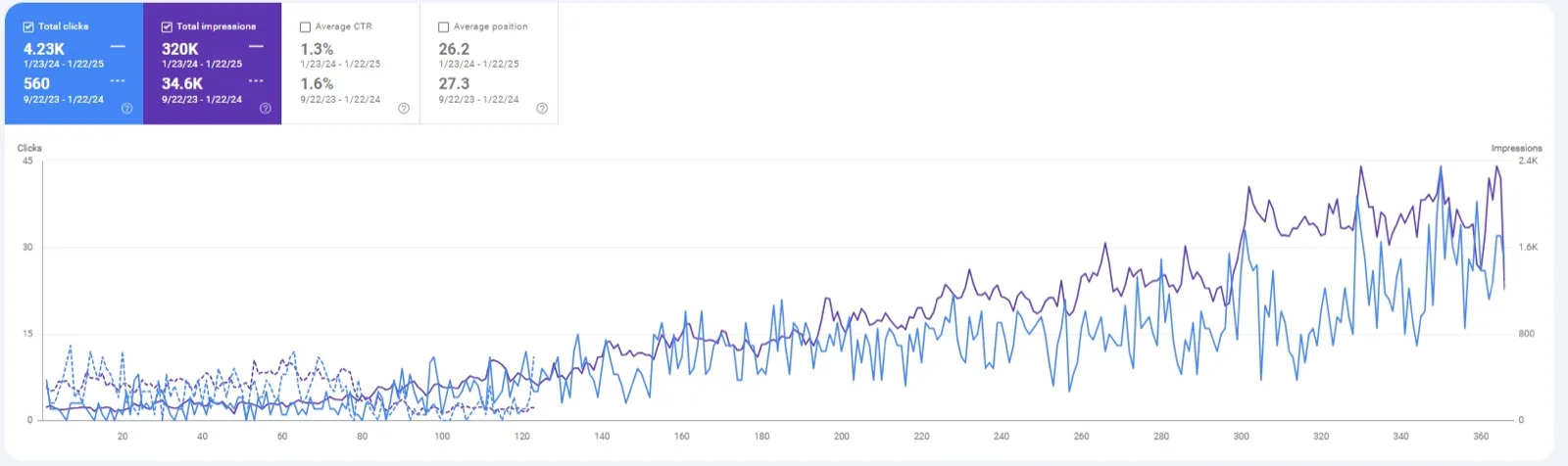
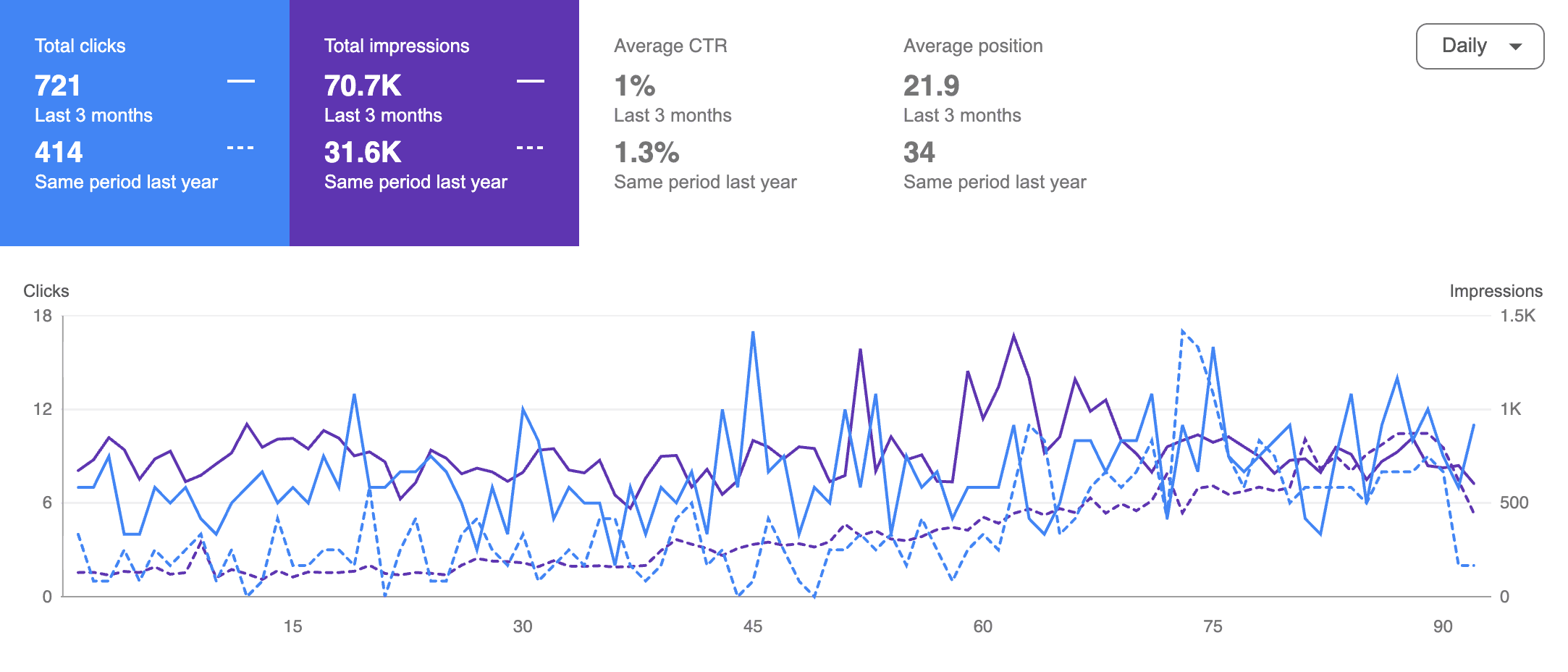
The Google data behind the claims
Google Search Console performance panels from client accounts — Google's own screen, not a report we wrote. Organic search only, cropped so no brand or domain is identifiable, each labelled with the exact window it covers.