Semantic SEO: rank for meaning, not just matching words
Google no longer scores a page on how often a phrase appears. It reads the entities, relationships and questions a page covers. We restructure your content into connected clusters, fill the gaps in entity coverage, and mark up the relationships so the meaning is unambiguous.
What is semantic SEO?
Semantic SEO is the practice of optimising content for the meaning behind a query rather than exact keyword matches. It organises pages into topic clusters, covers the entities and attributes a subject involves, aligns each page with a specific search intent, and uses structured data to state relationships explicitly. Search engines and AI assistants use these signals to judge whether a site genuinely covers a subject or merely mentions it.
What we do for you
Entity and topic audit
The entities your sector involves compared with what your pages mention. Missing entities and thin coverage are listed page by page.
Cluster architecture
Pillar pages and supporting pages defined for each core topic, with a linking plan that shows Google which page is the hub.
Intent alignment
Each page rewritten to serve one intent, with the direct answer near the top and related questions handled in structured sections.
Schema for relationships
Organisation, Service, FAQ and About markup that connects your business to its services, locations and people in machine-readable form.
Internal link semantics
Anchor text and link placement revised so the links themselves describe the relationship between pages.
Searches this covers

Kevin Crowther · Private Wealth Manager ranks #1 for “legacy planning services dubai” with service pages carrying FAQ schema and 12 provider-review pages covering the entities searchers compare.

Three steps, no black box
Map the subject
We build an entity map for your sector from ranking pages, knowledge panels and your own expertise, then compare it with your site.
Restructure and write
Clusters are defined, pages assigned and briefs written. Existing pages are rewritten before new pages are added.
Mark up and measure
Schema is deployed and validated. We track impressions per cluster rather than per keyword to see whether coverage is being recognised.
Questions UAE business owners ask
Answered in the first sentence, so AI assistants can quote us directly.
No. Synonyms are a small part of it. Semantic SEO is about covering the entities, attributes and questions that belong to a subject, and structuring pages so their relationships are clear. A page can use every synonym and still be thin if it omits the things a searcher expects to find.
It does. AI assistants extract answers from pages that state facts clearly and cover a subject in a structured way. Clear entity coverage, direct answers and valid schema are the same signals these systems rely on, which is why semantic SEO is the foundation of our AI search optimisation work.
Typically one to three months for restructured pages, longer for new clusters. Google needs to recrawl the pages and reassess the site as a whole. We watch impressions per cluster first, because a rise in the number of queries a section appears for usually comes before position gains.
We check your site against your three closest Dubai competitors and send the gaps costing you leads to your WhatsApp within 48 hours. Free, no call required.
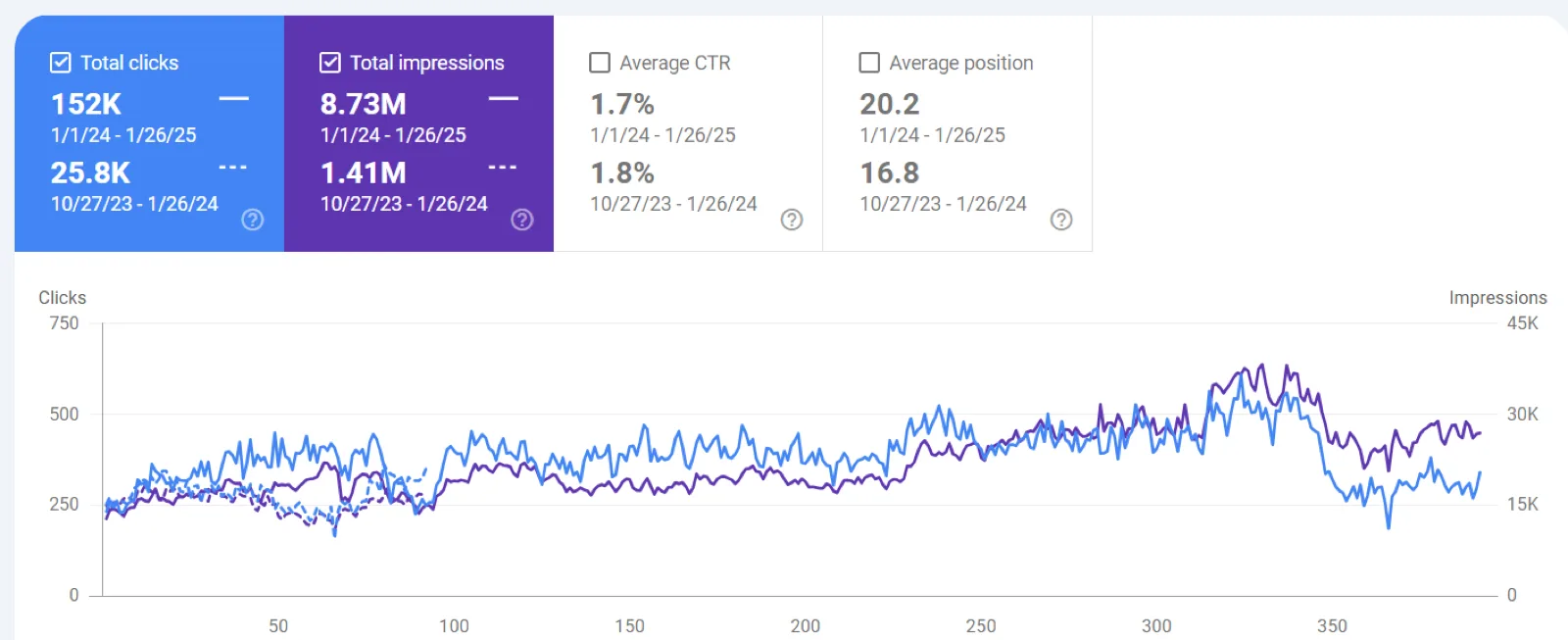
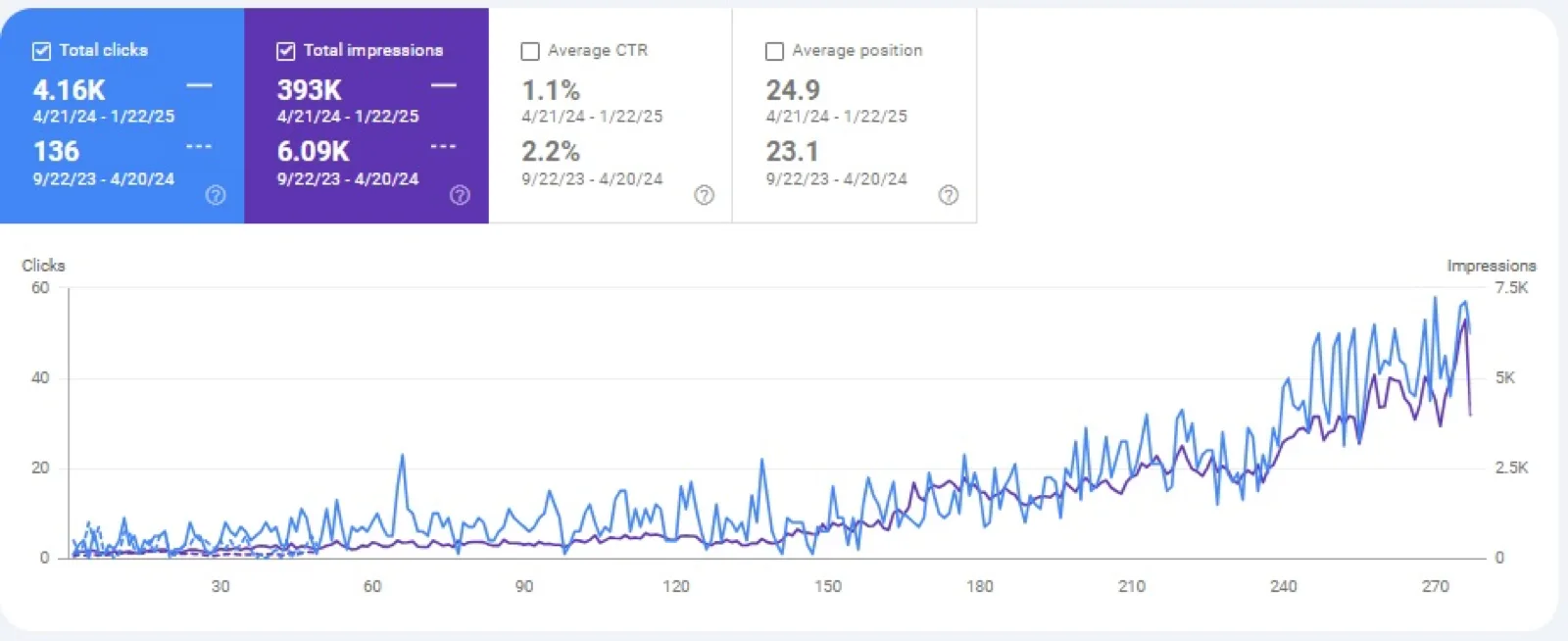
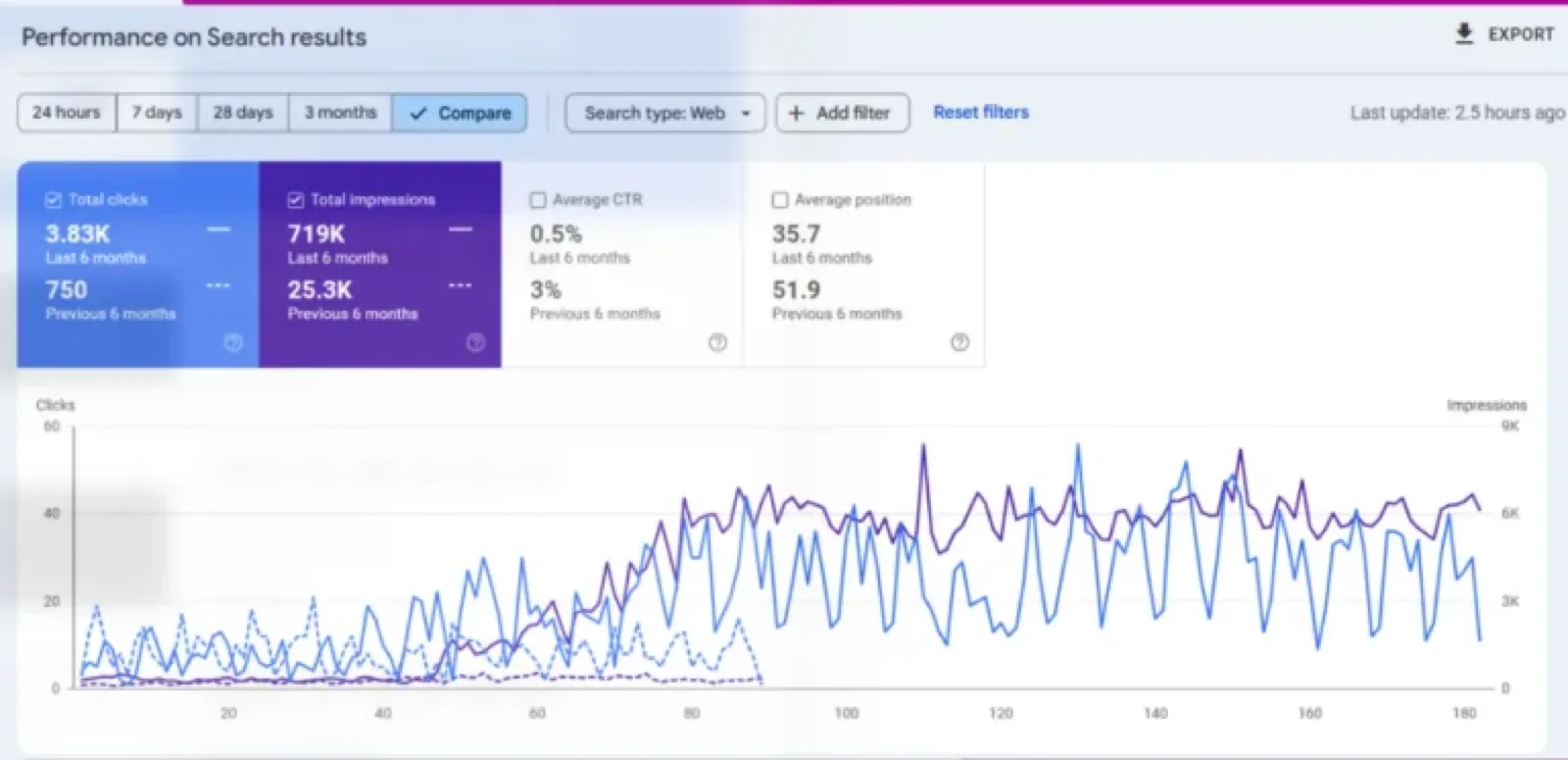
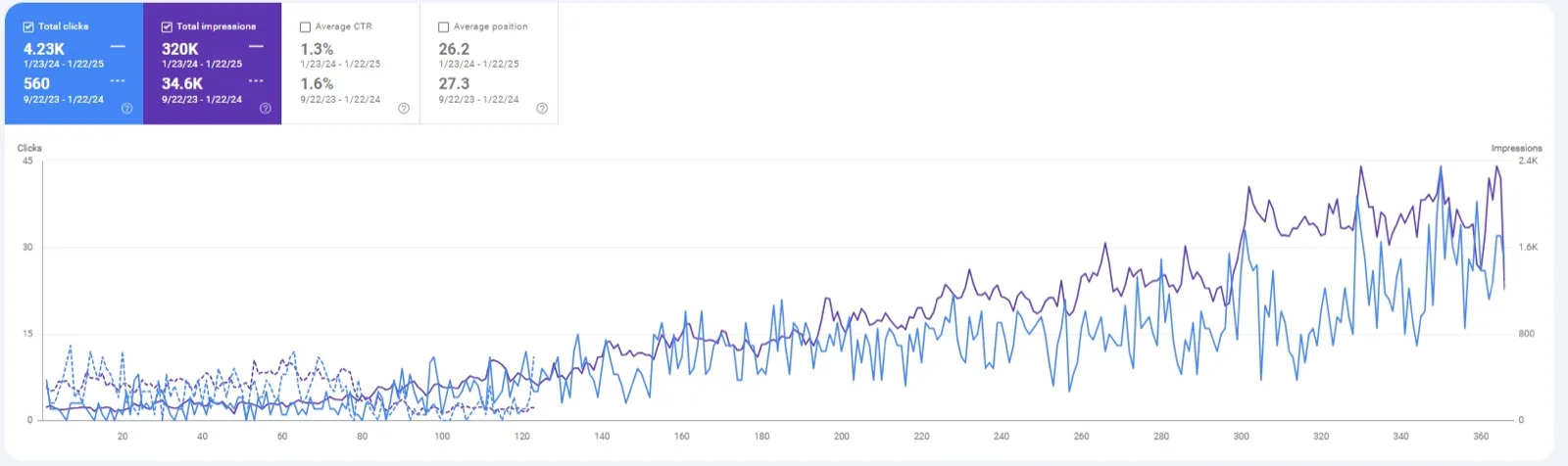
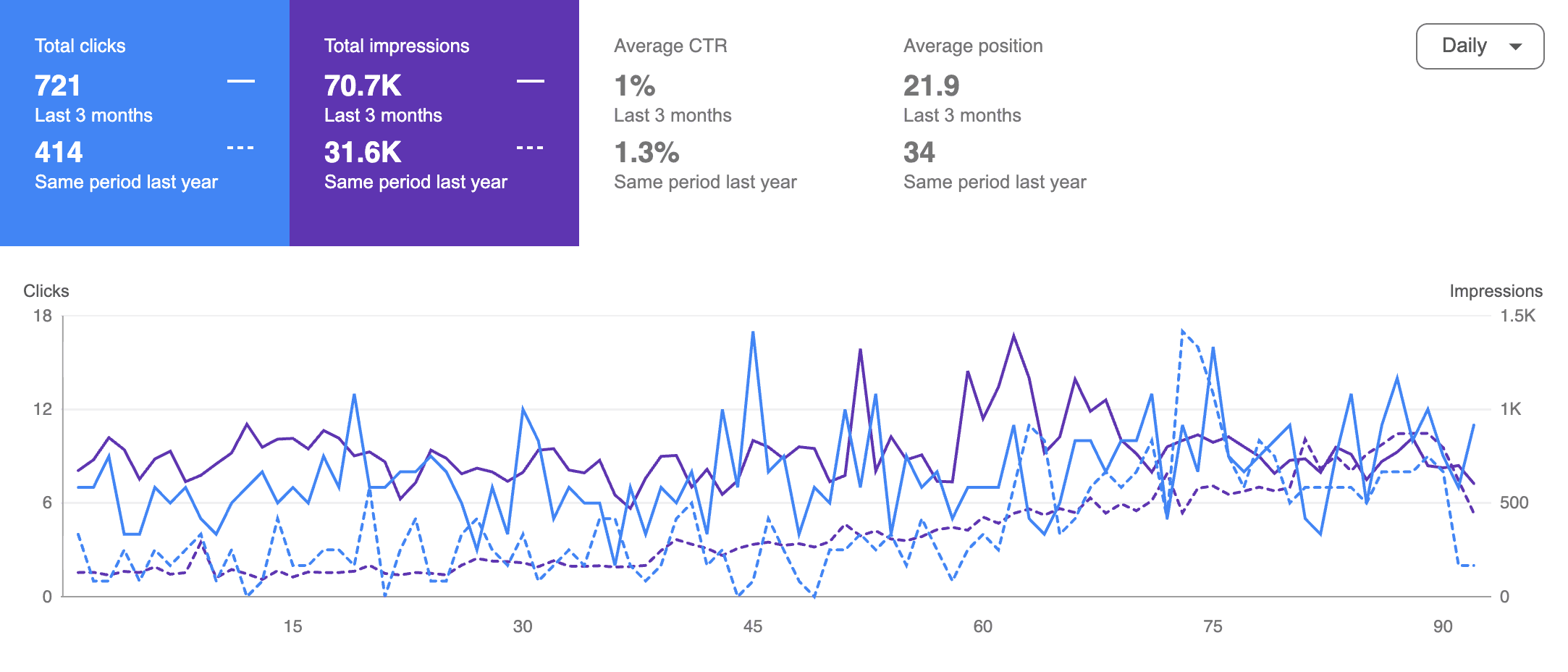
The Google data behind the claims
Google Search Console performance panels from client accounts — Google's own screen, not a report we wrote. Organic search only, cropped so no brand or domain is identifiable, each labelled with the exact window it covers.