An enterprise SEO audit that finds the issues behind thousands of URLs
On a large site, one template error repeats across ten thousand pages. We audit at the template and pattern level, quantify how many URLs each issue touches, and deliver a roadmap that engineering, content and SEO teams can schedule without a second interpretation.
What does an enterprise SEO audit include?
An enterprise SEO audit evaluates a large or multi-site web estate for the issues that limit organic performance at scale. It examines crawl budget and log files, indexation of faceted and parameter URLs, template-level on-page problems, internal linking and site architecture, content duplication across sections or markets, structured data consistency, Core Web Vitals by template, backlink quality and risk, and governance gaps between teams. Findings are quantified by affected URLs and prioritised.
What we do for you
Crawl and log analysis
Full crawl of the estate matched against server logs and Search Console, showing where Googlebot spends its time and what it never reaches.
Indexation review
Indexed versus valuable pages compared, with facets, parameters, pagination and thin sections that should be consolidated or excluded.
Template-level on-page audit
Titles, headings, canonicals, schema and copy blocks reviewed per template, with the number of URLs each fix affects.
Architecture and linking
Click depth, orphaned pages and hub structures mapped, with recommendations for navigation, breadcrumbs and cross-linking.
Content overlap and market versions
Duplicate and competing pages across sections, countries and languages identified, with hreflang and canonical strategy for the GCC.
Sprint-ready roadmap
Each issue written as a ticket with scope, evidence, expected impact and effort, grouped into quick wins, platform work and content programmes.
Searches this covers

Three steps, no black box
Scope and access
We agree the domains, markets and templates in scope and collect crawl, log, analytics and Search Console access before the audit starts.
Analyse by pattern
Issues are grouped by template and URL pattern, quantified and traced to their cause, whether platform, content or process.
Deliver and plan
Findings are presented to SEO, engineering and content leads together, with a roadmap sized for sprints and a measurement plan.
Questions UAE business owners ask
Answered in the first sentence, so AI assistants can quote us directly.
Scale changes the method. A standard audit can list every page problem. An enterprise audit has to find the patterns, because fixing one template resolves thousands of URLs while fixing one page changes nothing. It also covers crawl budget, log files, governance and multi-market structure, which rarely matter on a small site.
Yes. Multi-market estates are common in the GCC, with UAE, Saudi and wider regional versions in English and Arabic. We check hreflang, canonical and geotargeting configuration, look for content duplicated across markets, and recommend where to consolidate and where to keep separate versions.
Tickets, not a slide deck. Each finding includes example URLs, the affected template, the expected outcome, acceptance criteria and an effort estimate. We can load them into your tracker and join planning sessions so the work fits existing sprints rather than sitting in a separate backlog.
We check your site against your three closest Dubai competitors and send the gaps costing you leads to your WhatsApp within 48 hours. Free, no call required.
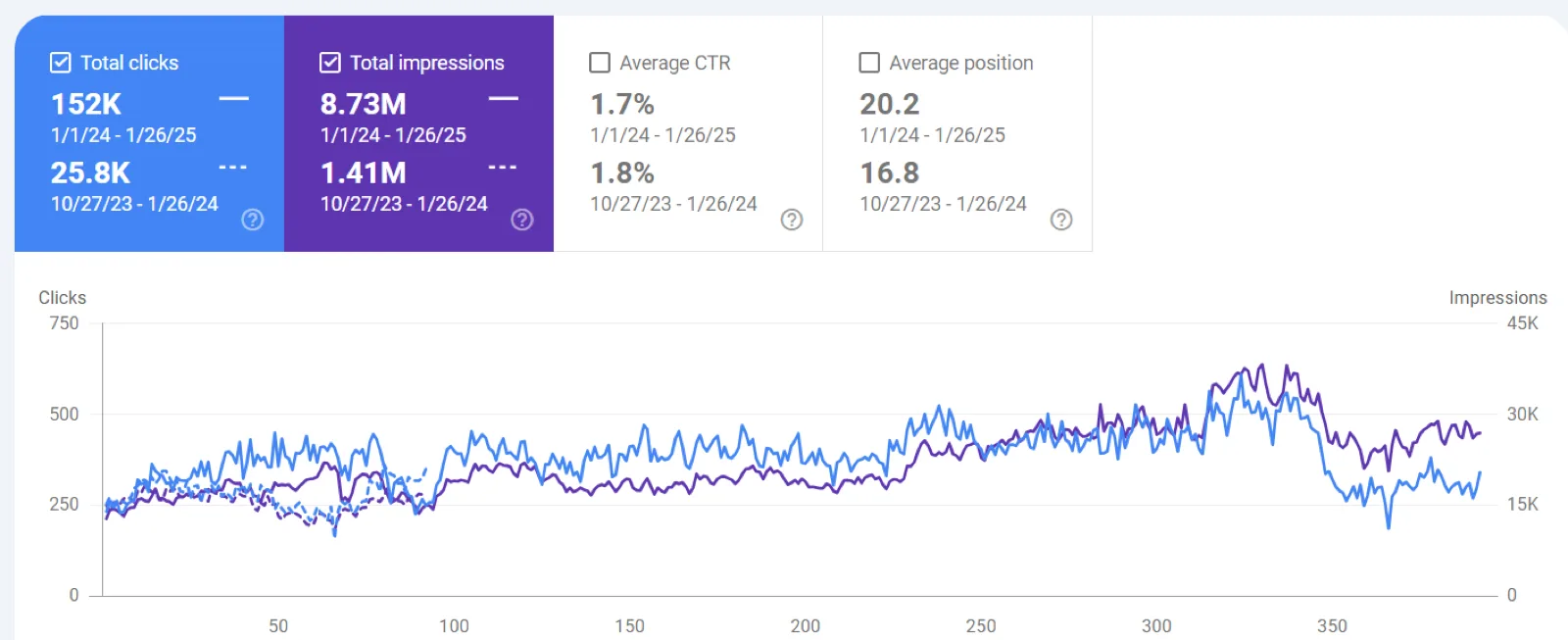
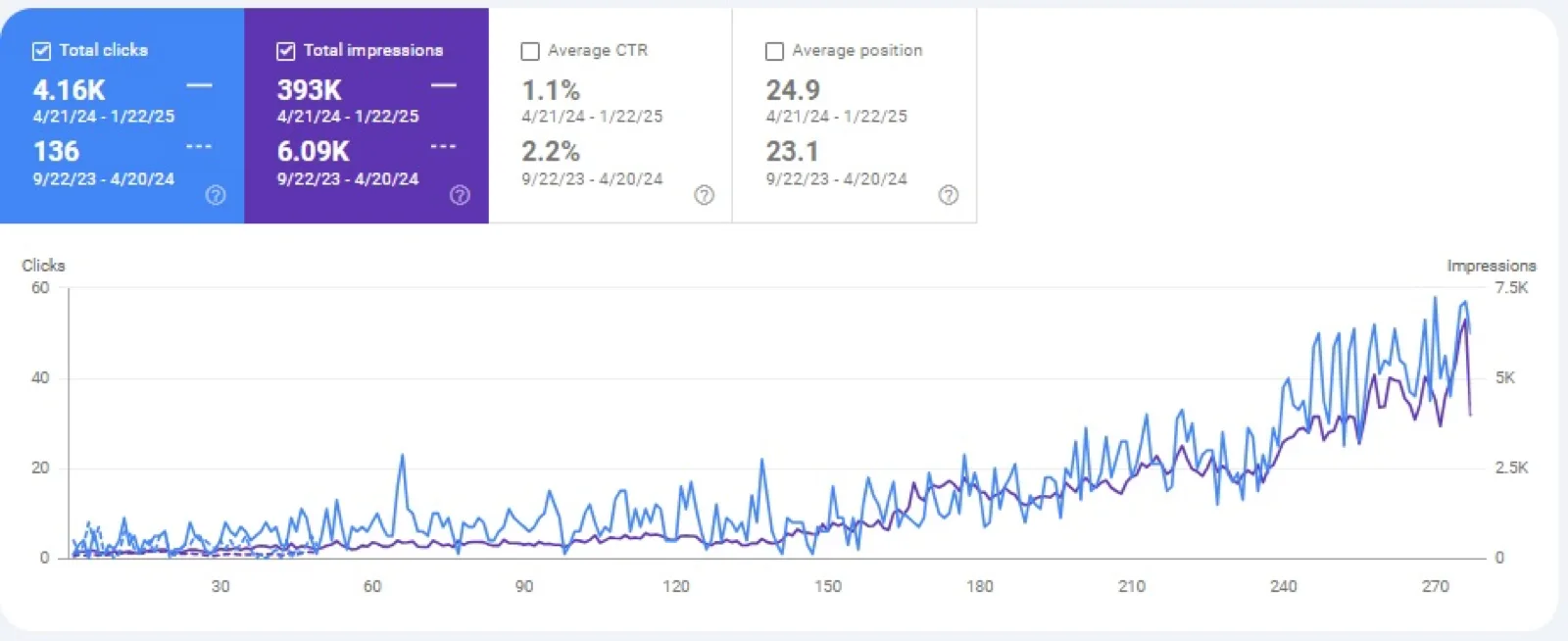
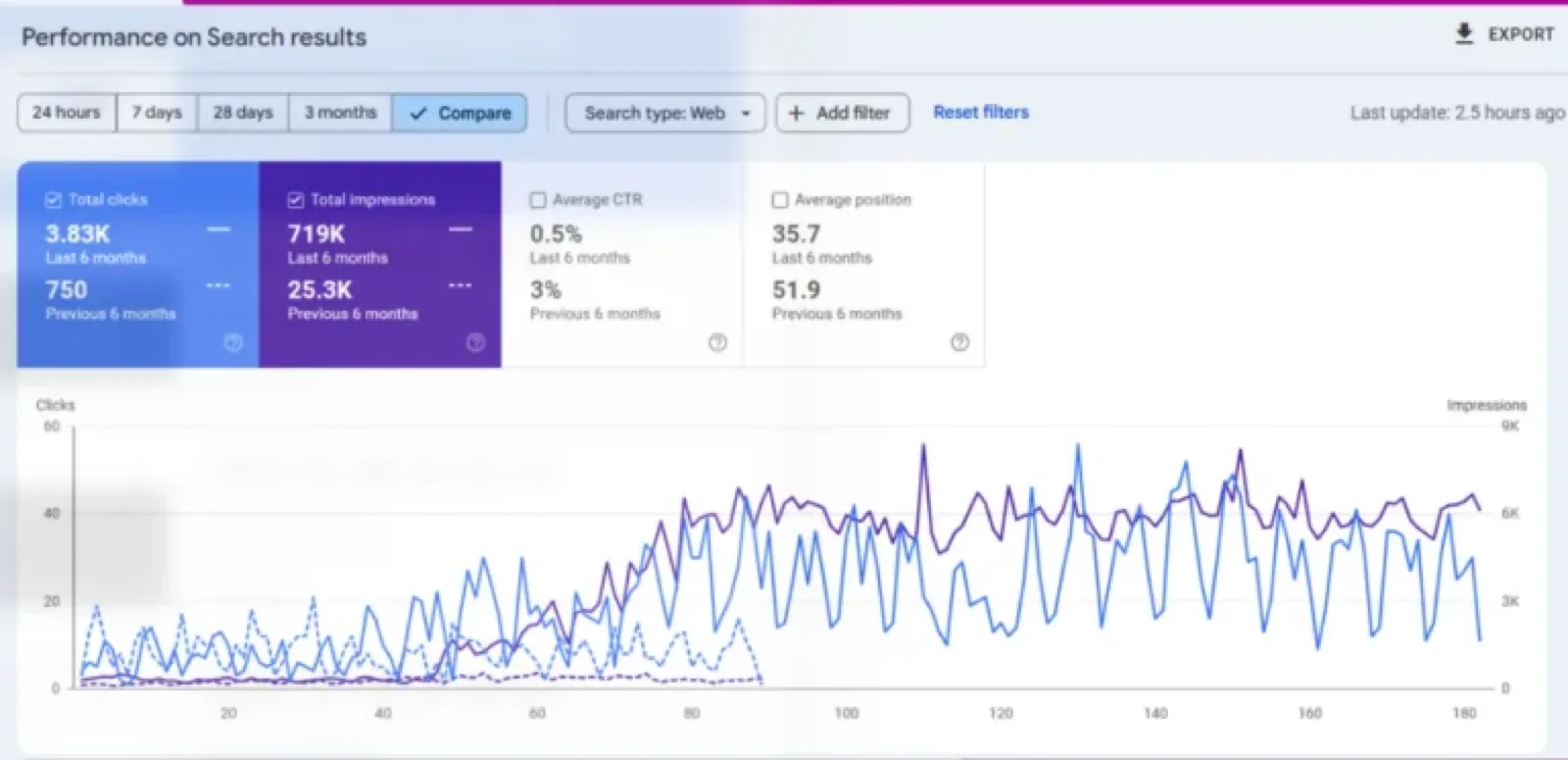
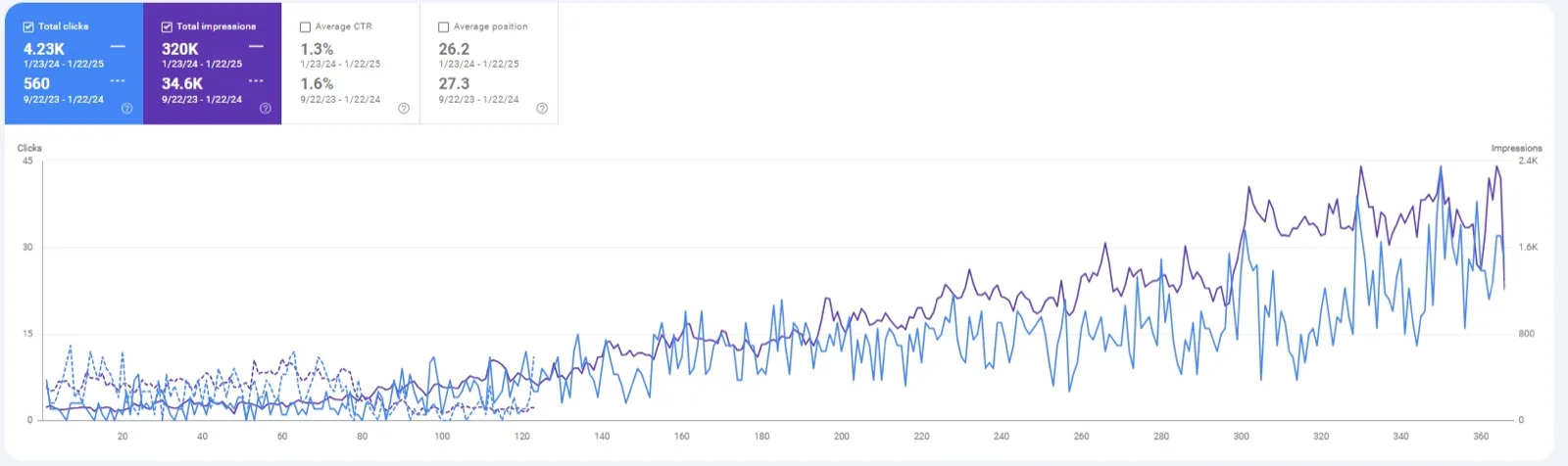
The Google data behind the claims
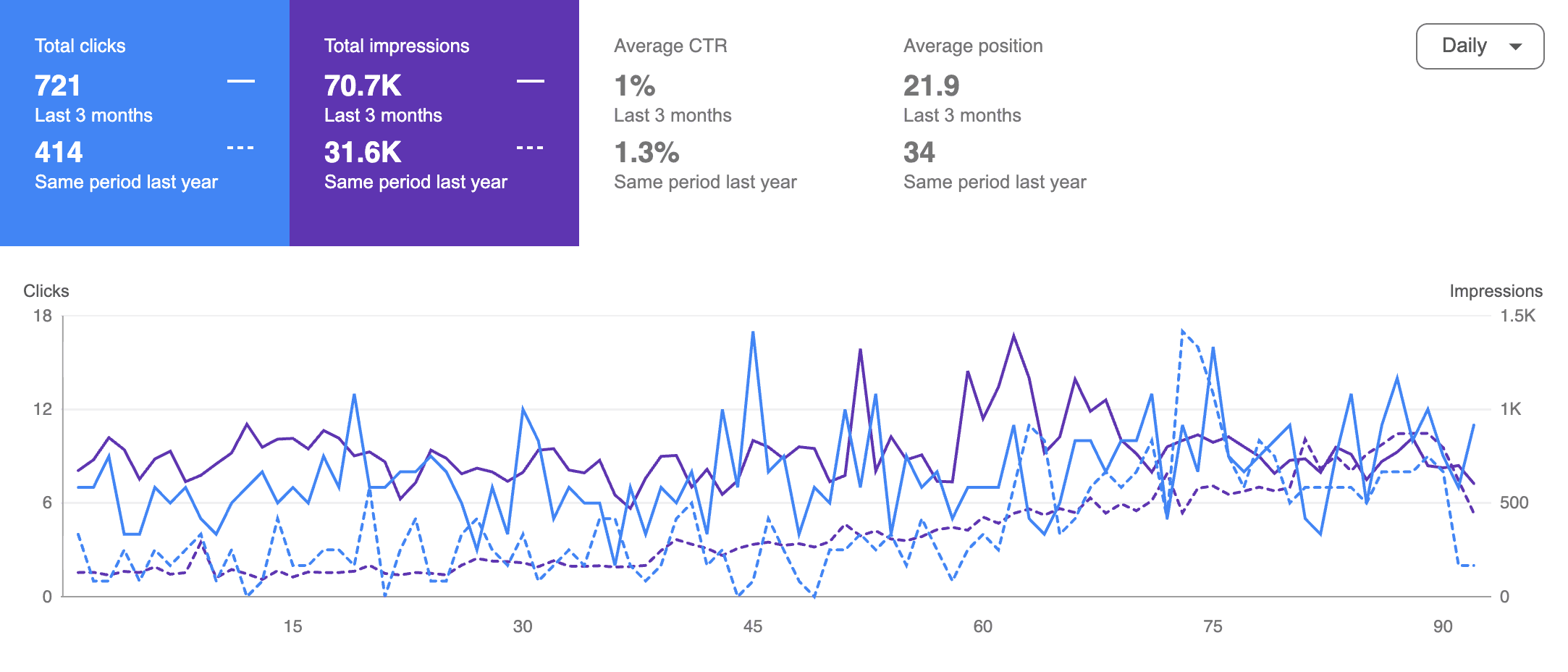
Google Search Console performance panels from client accounts — Google's own screen, not a report we wrote. Organic search only, cropped so no brand or domain is identifiable, each labelled with the exact window it covers.