Shopify SEO that works within the platform’s limits
Shopify is fast to launch and easy to run, but it generates duplicate product URLs, limits URL structure and ships themes with unused scripts. We work within those constraints to build collection pages that rank, fix canonicals, trim theme weight and add the content Shopify stores usually lack.
How do you do SEO on Shopify?
Shopify SEO focuses on collections as the main ranking pages, because Shopify’s URL structure is fixed and product pages compete with marketplaces. Each collection gets unique copy, a descriptive title and internal links. Duplicate product URLs created under collection paths are handled with canonical tags in the theme. Apps that inject scripts are audited for speed. Product schema is checked, since many themes output incomplete markup, and a blog is used to capture research queries that lead to purchases.
What we do for you
Collection page optimisation
Copy, titles, headings and FAQs added to collections, with sub-collections created where search demand justifies a dedicated page.
Duplicate URL and canonical fixes
Product URLs under /collections/ paths canonicalised to the primary /products/ URL, and theme links updated to point to one version.
Theme and app speed audit
Scripts from installed apps measured and removed where unused. Images served in modern formats and theme sections lazy-loaded.
Schema correction
Theme Product and Offer markup validated and fixed, with AED currency, availability and review data so Google shows rich results.
Shopify blog programme
Buying guides and comparison articles that capture pre-purchase searches and link into the collections they support.
Searches this covers

Three steps, no black box
Store audit
We crawl the store, list every app and its scripts, check theme schema and identify collections with demand but no content.
Theme-level fixes
Canonicals, schema, speed and template changes are made in the theme code, on a duplicate theme first, then published.
Content and collections
Monthly work adds collection copy, new sub-collections and blog content, tracked against revenue from organic sessions.
Questions UAE business owners ask
Answered in the first sentence, so AI assistants can quote us directly.
No, but it has limits. You cannot change the /collections/ and /products/ URL structure, tags create thin pages, and apps add scripts that slow the site. None of these stop a store from ranking. Shopify stores rank well when collections carry real content, canonicals are correct and the theme is kept lean.
Some help with image alt text, redirects or schema, but most duplicate what the platform already does or inject scripts that slow the store. We prefer fixing issues in the theme code. An app that promises to automate SEO for the whole store usually adds weight without improving rankings.
Yes. Shopify Markets lets a store serve country-specific pricing and language. For SEO we set up separate market subfolders with hreflang, localised collection content and currency-correct schema, so Google shows the UAE version to UAE shoppers and the Saudi version to Saudi shoppers.
We check your site against your three closest Dubai competitors and send the gaps costing you leads to your WhatsApp within 48 hours. Free, no call required.
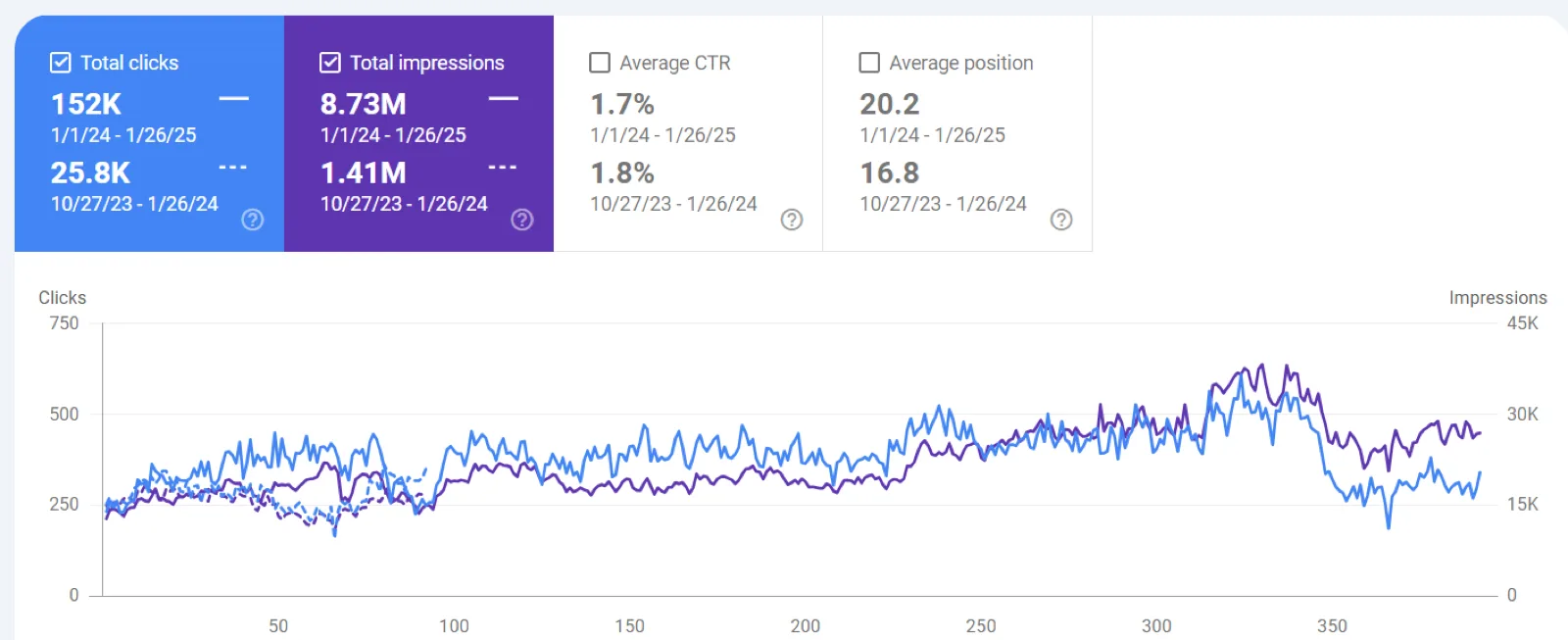
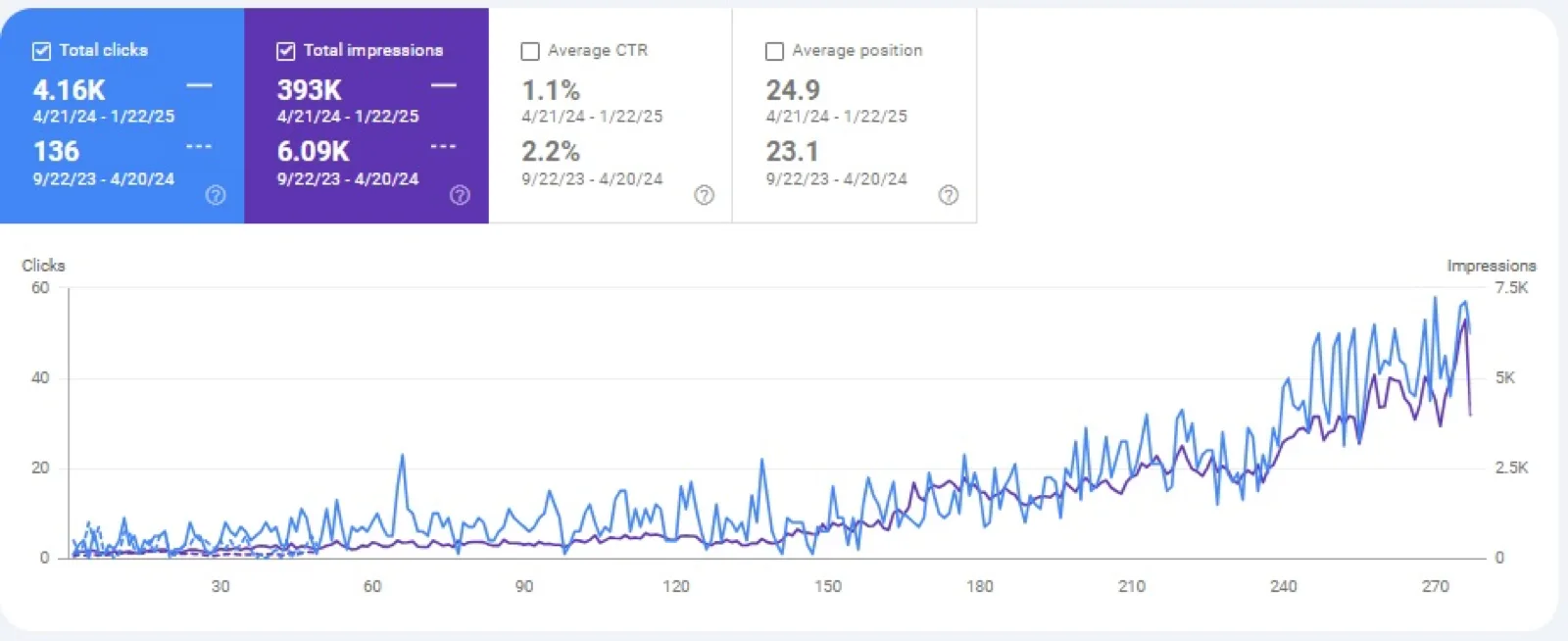
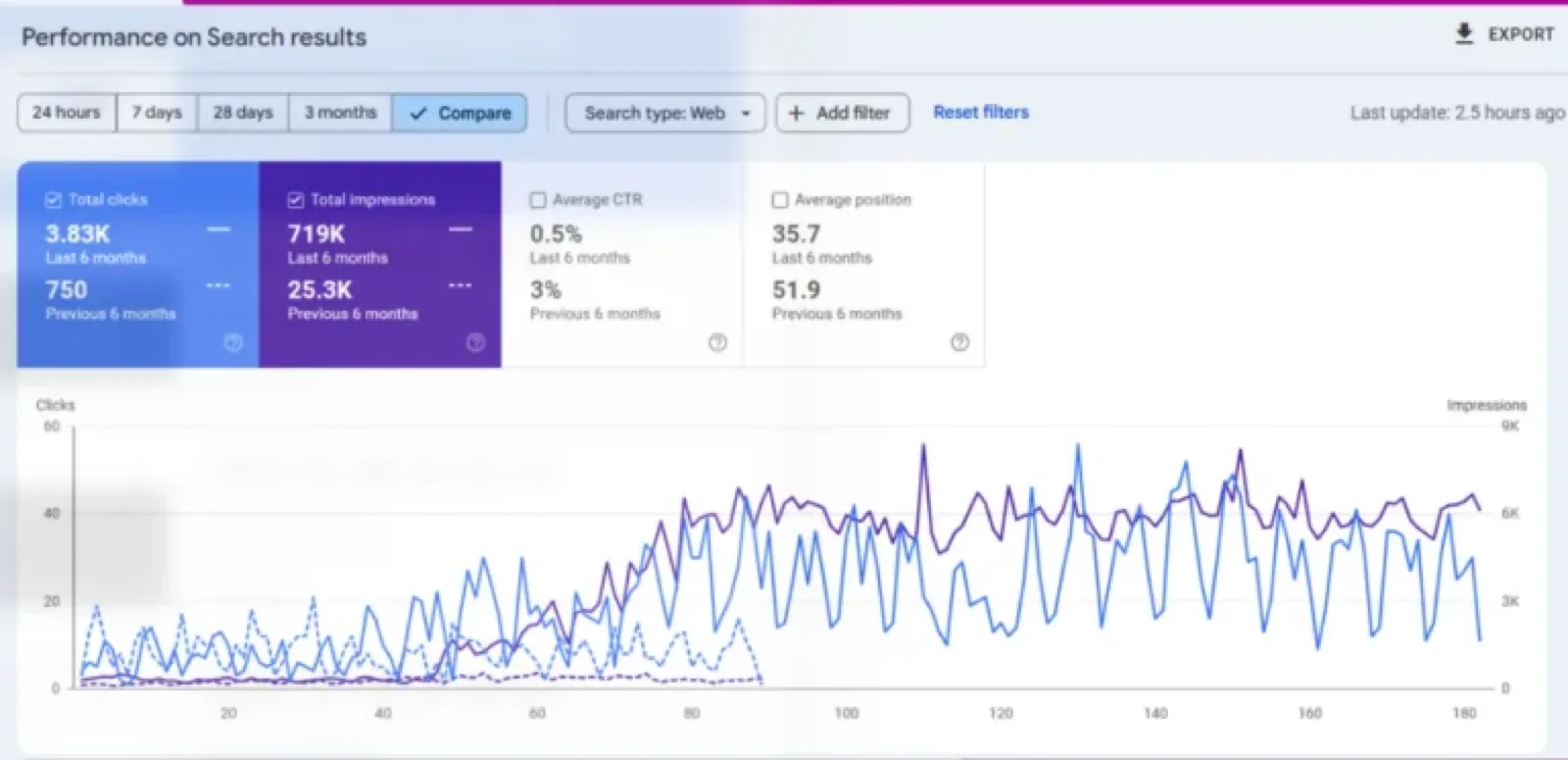
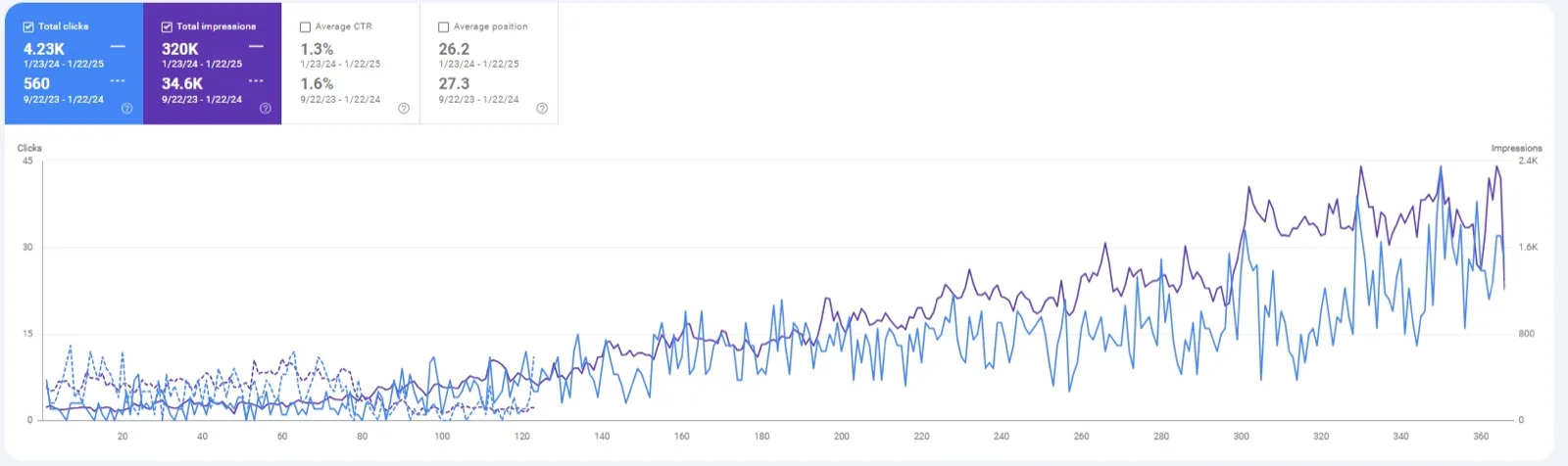
The Google data behind the claims
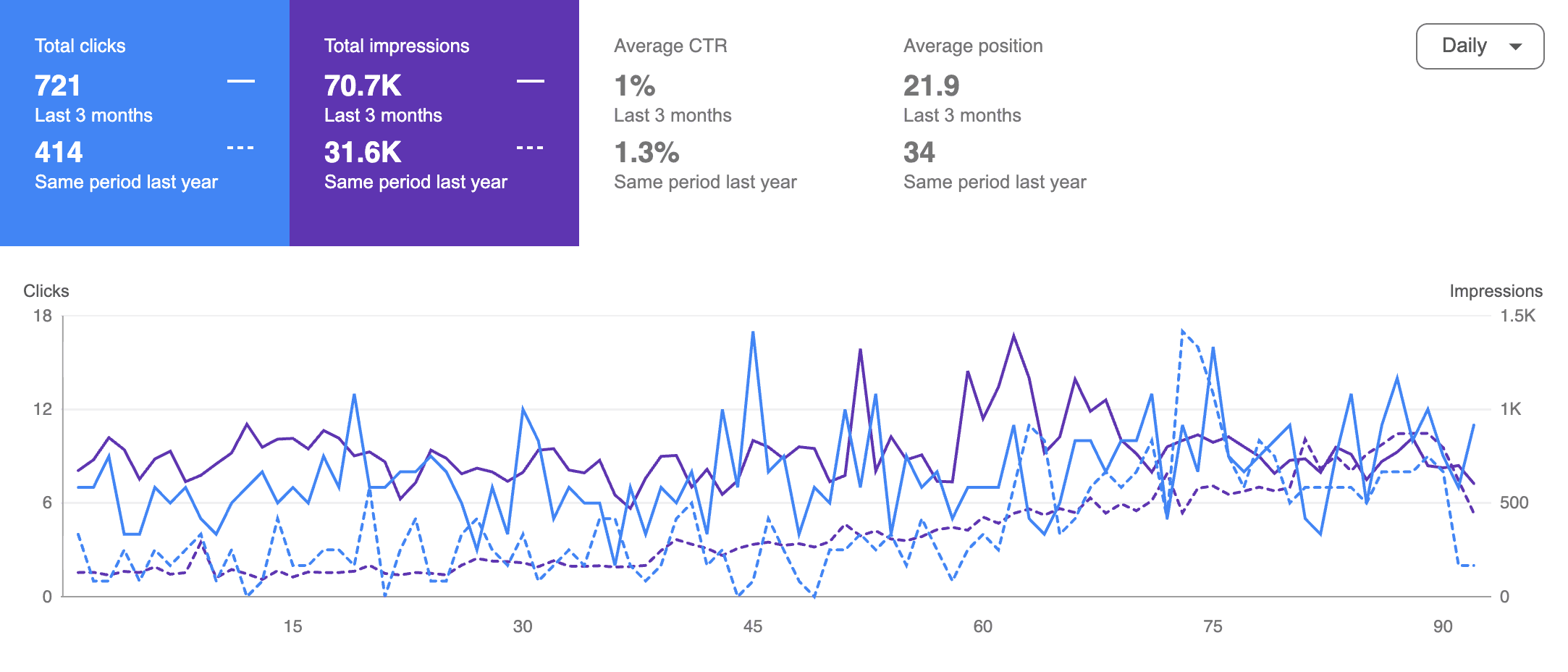
Google Search Console performance panels from client accounts — Google's own screen, not a report we wrote. Organic search only, cropped so no brand or domain is identifiable, each labelled with the exact window it covers.