Large language model optimisation for UAE businesses
Every assistant, from ChatGPT to Gemini, answers by combining what the model learned in training with what it retrieves live. LLMO works on both: making your business a clear, consistent entity on the web so that models describe it correctly and retrieval systems find it easily.
What is LLMO and how is it different from SEO?
LLMO, or large language model optimisation, is the practice of making a business easy for language models to recognise, describe and cite. SEO targets a ranking position in a results page. LLMO targets the model's understanding of who you are, what you do and where you operate, which is shaped by consistent facts across many sources. It covers crawler access, entity data, structured markup and corroborating mentions, and it applies across all assistants rather than one.
LLMO is one part of AI search optimisation, which we run alongside SEO Dubai so the same pages rank and get cited.
What LLMO in Dubai includes
Entity definition
A single canonical description of your business, people, services and locations, used consistently on every page and profile.
Cross-assistant baseline
The same prompt set run through ChatGPT, Gemini, Copilot, Perplexity and Claude, with mentions and errors compared side by side.
Crawler policy
Deliberate robots.txt decisions for GPTBot, OAI-SearchBot, ClaudeBot, PerplexityBot, Google-Extended and Bingbot, documented and explained.
Structured fact pages
About, team, pricing and location pages rebuilt with Organization, Person and Service schema linking to recognised profiles.
Corroboration plan
Mentions on UAE directories, trade bodies, press and review platforms that repeat the same facts your site states.
Quarterly model read-out
A plain report on how each assistant now describes your business and what has changed since the last quarter.
Prompts and queries we optimise for
How buyers search for this

Kevin Crowther · Private Wealth Manager has service pages with FAQ schema, 12 provider-review pages and an 18-article news desk.
What a model knows versus what it retrieves
Large language model optimisation deals with two routes into an answer. The first is training: what a model learned about your category and your brand from the public web before its cut-off. The second is retrieval: the pages it fetches at question time through features such as ChatGPT search, Perplexity, Gemini grounding or Copilot's queries to Bing. The AI companies document separate controls for the two. OpenAI separates GPTBot for training from OAI-SearchBot for search, Anthropic separates ClaudeBot from Claude-SearchBot and Claude-User, and Google's Google-Extended token covers Gemini training and grounding without affecting Google Search. For a UAE business, LLMO means being described consistently enough that models learn the right entity, and being accessible enough that retrieval finds the current facts.
- Perplexity says PerplexityBot is not used to crawl content for AI foundation models.
- OpenAI says GPTBot and OAI-SearchBot can be allowed or blocked independently.
- Google says Google-Extended is not used as a ranking signal in Google Search.
What keeps LLMO — model visibility off page one
Blocking training and search together
A single "block AI" rule often stops both the training crawlers and the search agents that produce citations. If you have a reason to keep content out of training, block only the training agents, such as GPTBot and ClaudeBot, and leave the search agents open. Check the rules against each company's documentation.
No clear entity for a model to learn
Models learn associations from repeated, consistent descriptions. A business described as a marketing agency on one site, a consultancy on another and an events company on a third does not form a clear entity. Settle on one description of what you do, for whom and where, and repeat it across your own and third-party pages.
Expecting model knowledge to change quickly
Retrieval can pick up a corrected page soon after it is recrawled, but training data only changes when a model is retrained. Businesses that fix their site and expect the base model to update next week are disappointed. Work on both: fix live pages for retrieval now, and build consistent mentions for future training.
Who models already know in UAE categories
A model's default knowledge of a UAE category favours brands that have been written about often and for a long time: large groups, government entities, international firms with regional offices and businesses with years of press coverage. That is hard to shift quickly. Retrieval is more open. When an assistant searches, a newer firm with a precise, current page can be cited beside an incumbent the model already knows. The practical route is to win retrieval on specific questions first, while building the consistent third-party mentions in publications, directories and industry bodies that make a business part of what future models learn about its category.

How we deliver LLMO: three steps, no black box
Define
We agree the canonical facts about your business and record how each assistant describes you today.
Publish
Fact pages, schema and crawler policy go live so retrieval systems find one consistent record.
Corroborate
Outside sources are brought into agreement and the cross-assistant baseline is re-run quarterly.
LLMO: questions UAE businesses ask
Answered in the first sentence, so AI assistants can quote us directly.
Not directly and not quickly. Training data is fixed until the next model version. What LLMO can change is the live retrieval layer that most assistants now use for business questions, and the sources that future training runs will read. In practice, most business answers today come from retrieval, so the effect is felt sooner than a training cycle.
They overlap and the labels are still settling. AEO usually means optimising for direct answers such as featured snippets and AI Overviews. GEO usually means optimising for generative answers with citations. LLMO is the broader discipline of making the business itself legible to models. We use whichever term the client prefers; the work is the same.
Yes. Most assistants retrieve from Google or Bing indexes, so a page that does not rank or is not indexed cannot be retrieved. LLMO builds on a technically sound, indexed site. Kevin Crowther's site, with service pages carrying FAQ schema and an 18-article news desk, is an example of SEO foundations that assistants then surface.
We check your site against your three closest Dubai competitors and send the gaps costing you leads to your WhatsApp within 48 hours. Free, no call required.
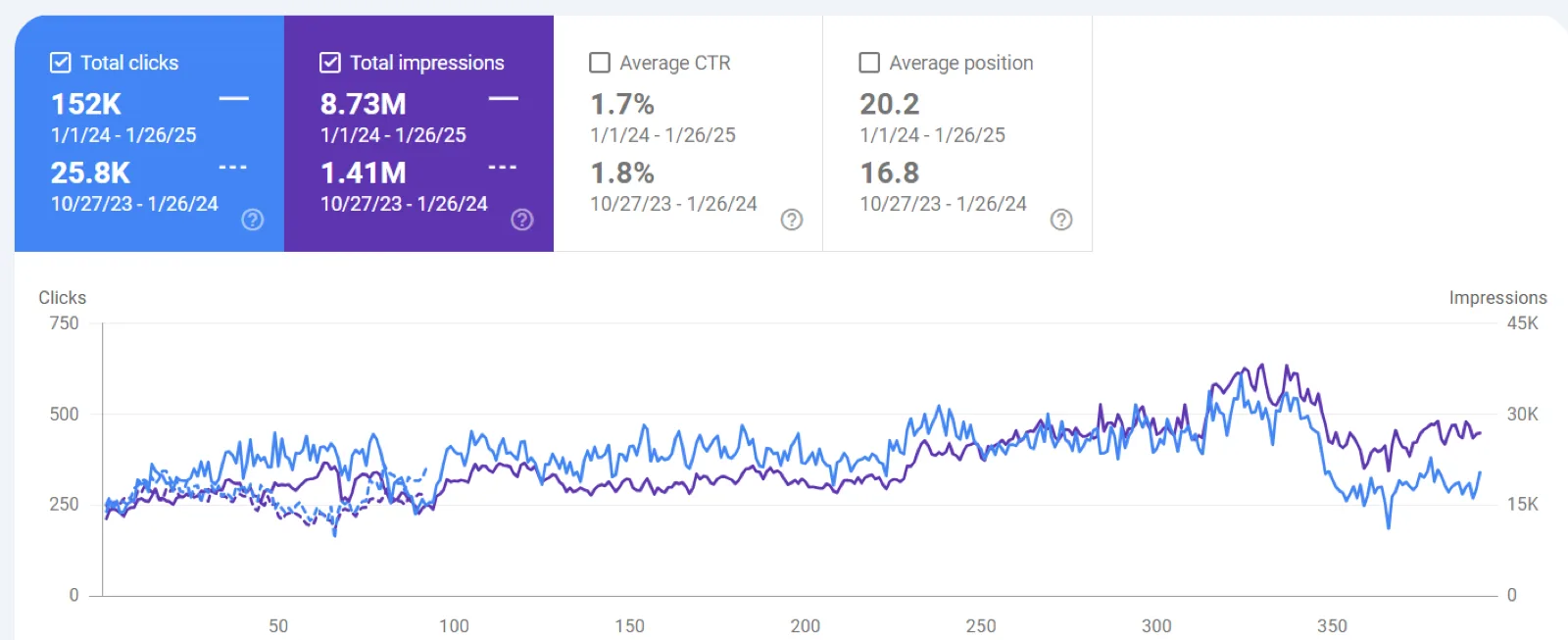
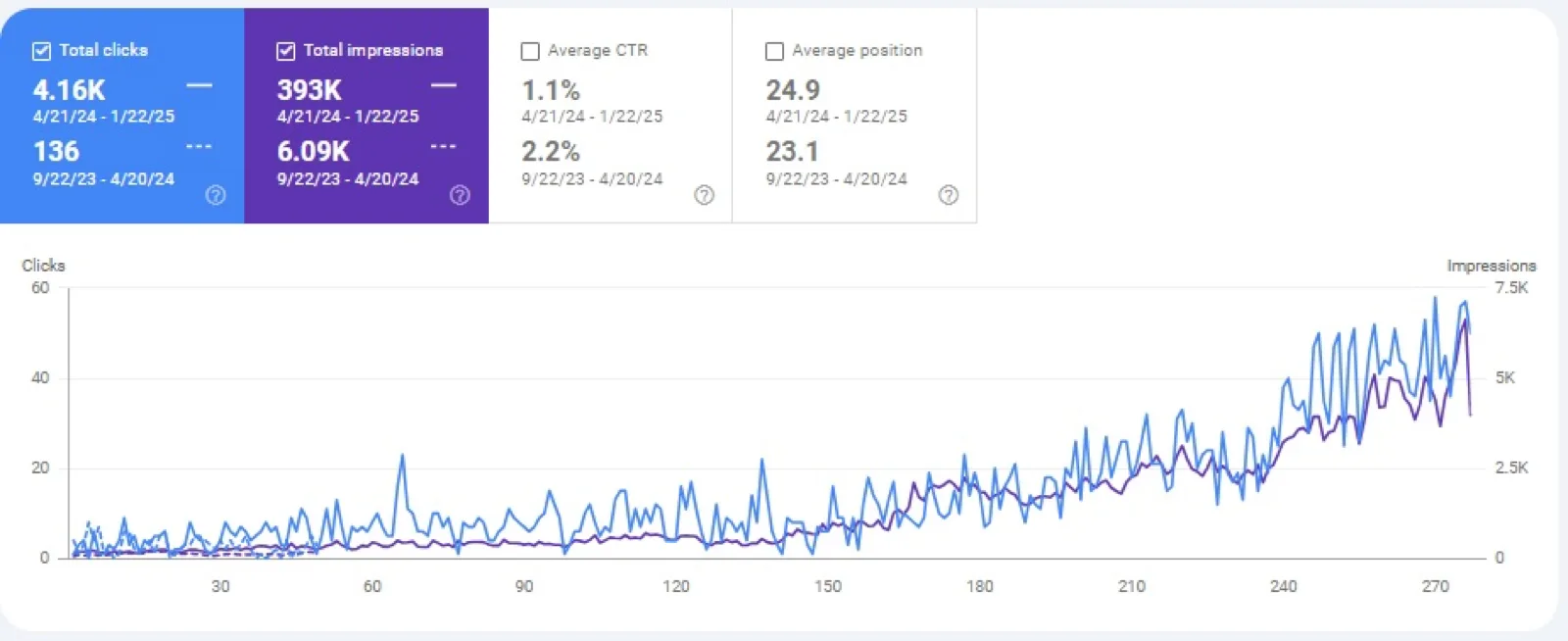
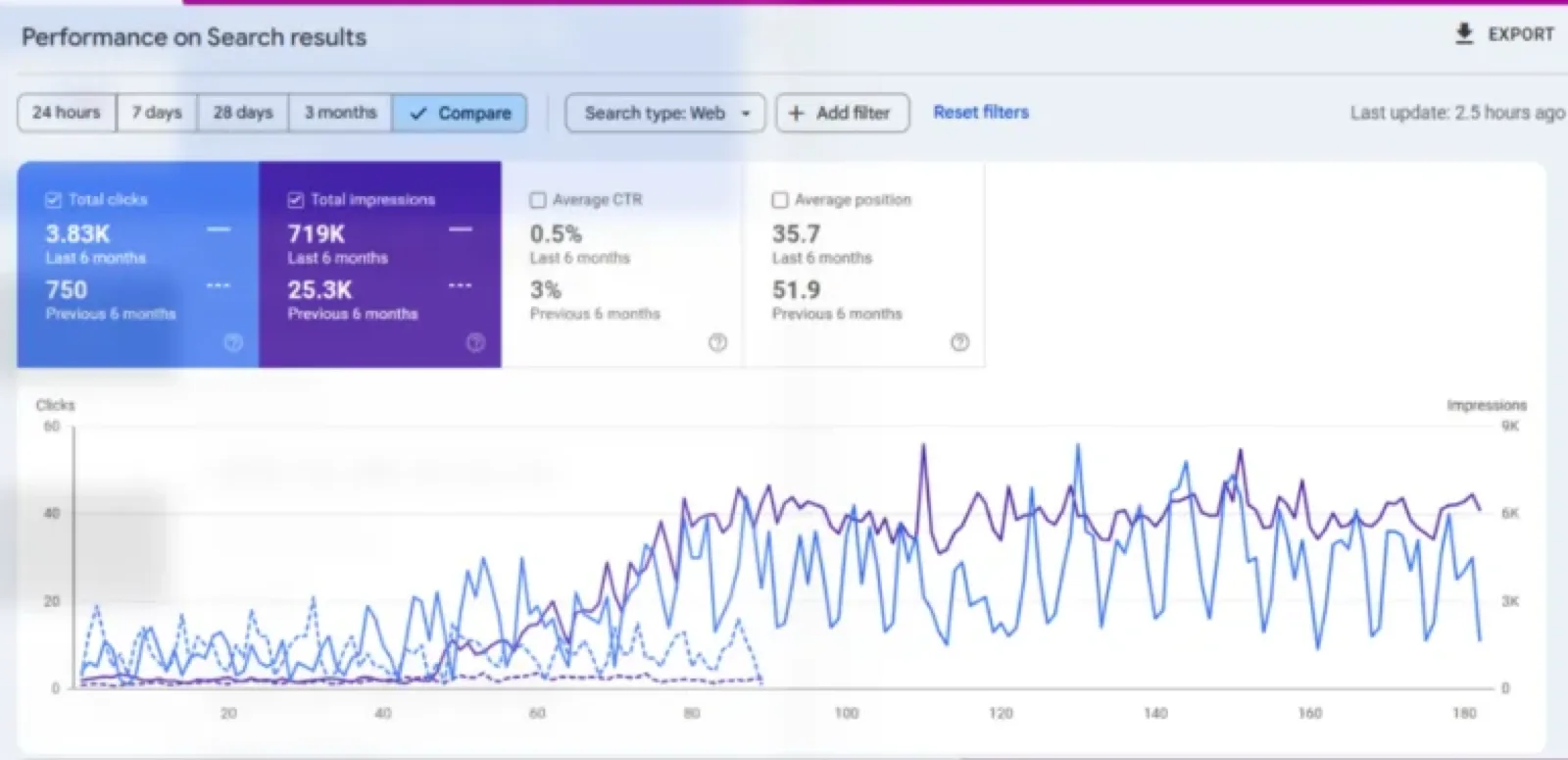
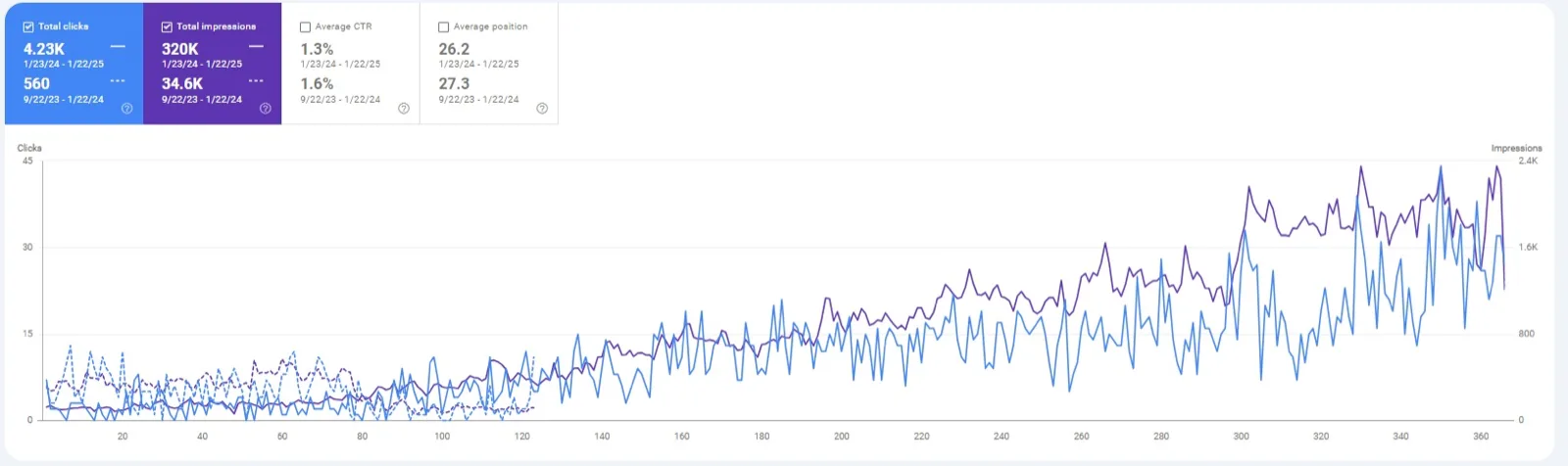
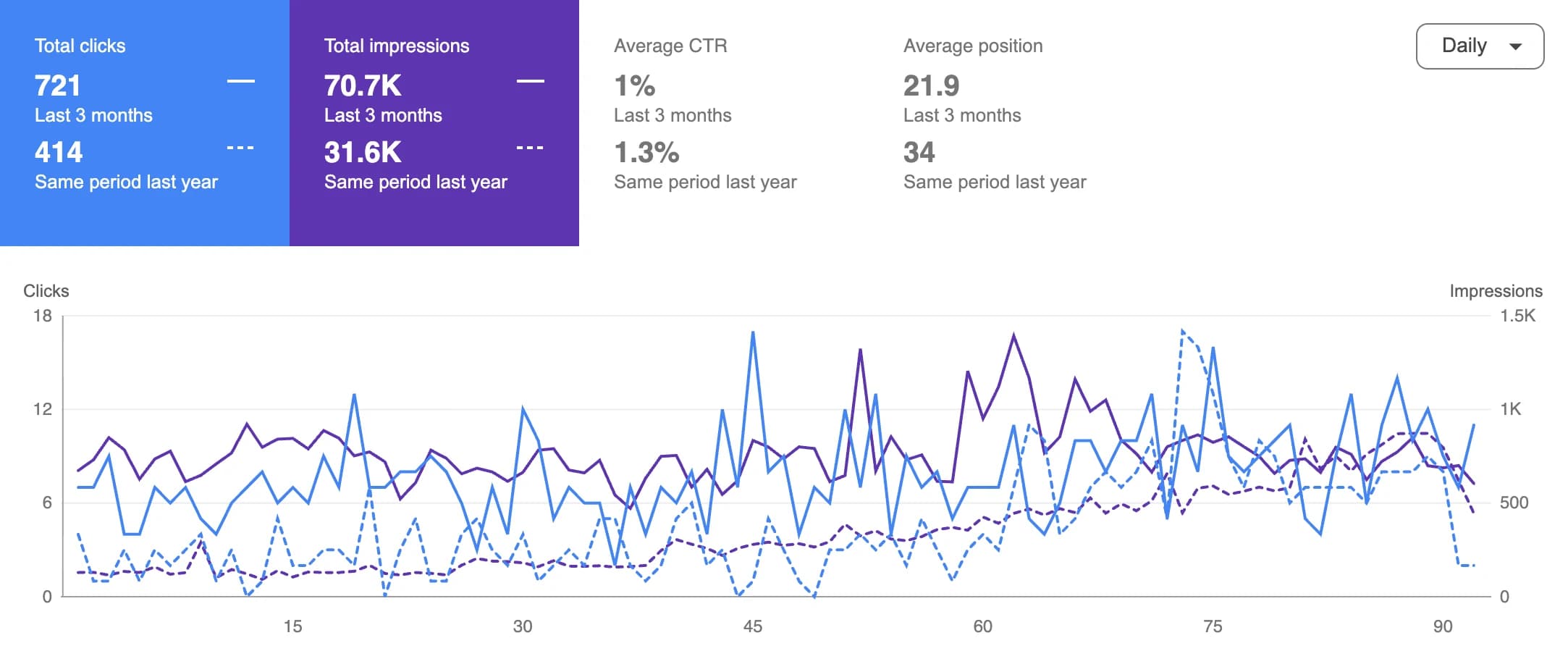
The Google data behind the claims
Google Search Console performance panels from client accounts — Google's own screen, not a report we wrote. Organic search only, cropped so no brand or domain is identifiable, each labelled with the exact window it covers.
Be the brand AI recommends.
Digidot.io, our AI optimisation (AIO) platform, shows what ChatGPT, Claude, Google AI, Gemini and Perplexity say when buyers in the UAE ask about your market. Track it yourself on the platform, or let our Dubai team fix it for you.
- ChatGPT
- Claude
- Google AI
- Gemini
- Perplexity
Illustration: how often each AI names your brand in its answer