Noon and Amazon.ae SEO: get your products found inside marketplace search
Most UAE product searches now start inside Noon or Amazon.ae rather than Google. Each marketplace has its own ranking system built on listing relevance, conversion rate and fulfilment. We optimise your listings for those systems and coordinate with your ads so organic rank and paid placement reinforce each other.
How do you rank products on Noon and Amazon.ae?
Marketplace ranking depends on relevance and performance. Relevance comes from the product title, bullet points, description, backend search terms and correct category. Performance comes from click-through rate, conversion rate, price competitiveness, stock availability, fulfilment method and reviews. Amazon.ae’s A9 algorithm and Noon’s search weight these differently, but both reward listings that match the search term and convert well. Bilingual listings matter, because many UAE shoppers search in Arabic.
Marketplace SEO is one part of SEO Dubai, our full search programme for UAE companies.
What marketplace SEO in Dubai includes
Marketplace keyword research
Search terms shoppers use on each marketplace, in English and Arabic, ranked by volume and by how well your product fits them.
Listing optimisation
Titles, bullets, descriptions and backend terms rewritten per marketplace’s character limits and style rules, without keyword stuffing.
Image and A+ content
Image sequence, infographics and A+ or enhanced brand content briefed to improve conversion, which feeds back into ranking.
Category and attribute audit
Products placed in the correct category with all attributes filled, so filters and browse paths surface them.
Review and rating programme
Compliant post-purchase follow-ups and issue resolution to build review velocity without violating marketplace policies.
Organic and paid coordination
Sponsored ads used to gather term data and defend key placements while organic rank builds, with budgets reviewed monthly.
Searches this covers
How buyers search for this
How UAE shoppers search noon and Amazon.ae in 2026
For many product searches in the UAE, the decision happens inside a marketplace rather than on Google. Amazon.ae replaced Souq.com on 1 May 2019, adding an Arabic version of the site and app, and noon competes with it across most categories. Both run their own search, and neither publishes its ranking formula, so sellers work from what each platform’s seller guidance asks for: accurate titles, complete attributes, good images, competitive pricing and reliable stock. Listing rules are tightening. Amazon announced on its Seller Central forum that from 21 January 2025, titles in most categories across its stores are capped at 200 characters including spaces, may not repeat a word more than twice, and may not use certain special characters unless they are part of the brand name. Sellers who treat a listing as a proper product page, in English and Arabic, are better placed.
- Souq.com was rebranded as Amazon.ae on 1 May 2019, with Arabic added to the site and app (Gulf Business).
- Amazon’s title rules from 21 January 2025 cap most titles at 200 characters, including spaces.
- Amazon’s rules bar a word appearing more than twice in a title, except articles, prepositions and conjunctions.
What keeps marketplace SEO off page one
Keyword-stuffed titles
Titles that repeat search terms or list every possible use now break Amazon’s title rules and read badly on mobile. Lead with the brand, product type and the attributes buyers filter on, such as size, model or capacity, and move supporting detail into bullet points and backend search fields.
Incomplete attributes and variations
Marketplace filters depend on structured attributes. A listing missing colour, size, compatibility or material drops out when buyers narrow their search, and badly grouped variations split reviews across separate listings. Fill every relevant attribute and group variations under one parent listing where the platform allows it.
English-only listings
Amazon.ae and noon both serve Arabic-speaking shoppers, and an English-only listing relies on automatic translation that often mangles product names and features. Write Arabic titles and bullet points properly, using the terms Gulf shoppers actually search for rather than a literal translation of the English.
Ignoring stock and delivery
Strong content cannot make up for frequent stock-outs or slow delivery promises, which cost sales and visibility. Track stock against sales velocity, use the platform’s fulfilment programme where it makes commercial sense, and keep price and availability consistent across both marketplaces and your own site.
Big sellers dominate; complete listings close the gap
On noon and Amazon.ae, the competition for a search is other listings, often the platforms’ own retail operations, large distributors and brand-authorised sellers with long sales histories. Content alone will not overturn that, but many listings in the UAE are still thin, machine-translated into Arabic or missing attributes that filters rely on. A seller with complete, accurate attributes, properly written Arabic content, good images, honestly earned reviews and reliable stock can compete for specific, high-intent searches. Searches on Google for marketplace SEO help, meanwhile, return mostly agencies and seller software vendors, with the platforms’ own seller help pages answering the policy questions.

How we deliver marketplace SEO: three steps, no black box
Listing and account audit
We review your catalogue, category placement, search term coverage, conversion rates and review profile on each marketplace.
Rewrite and relaunch
Listings are rewritten in priority order, starting with products that already convert. Images and A+ content are briefed in parallel.
Track rank and sales
Keyword rank, sessions, conversion rate and organic sales are tracked per listing, and underperformers are revised on a monthly cycle.
Marketplace SEO: questions UAE businesses ask
Answered in the first sentence, so AI assistants can quote us directly.
Yes. Google ranks pages on relevance and authority signals such as links. Marketplaces rank products on relevance plus sales performance: conversion rate, price, stock and fulfilment. There are no backlinks to build. The work is in listing content, images, category data and the conversion signals that tell the marketplace your product satisfies the search.
They do. A large share of UAE and Saudi shoppers search in Arabic, and both marketplaces support Arabic listing content. Listings with well-written Arabic titles and bullets can rank for Arabic queries that English-only competitors miss. We write Arabic listings natively rather than machine-translating the English version.
Usually both. Marketplaces give immediate access to shoppers who already search there, at the cost of fees and price pressure. Your own store builds margin, customer data and brand search over time. We run marketplace SEO and store SEO as separate programmes with shared keyword research, so each channel targets the queries it can win.
We check your site against your three closest Dubai competitors and send the gaps costing you leads to your WhatsApp within 48 hours. Free, no call required.
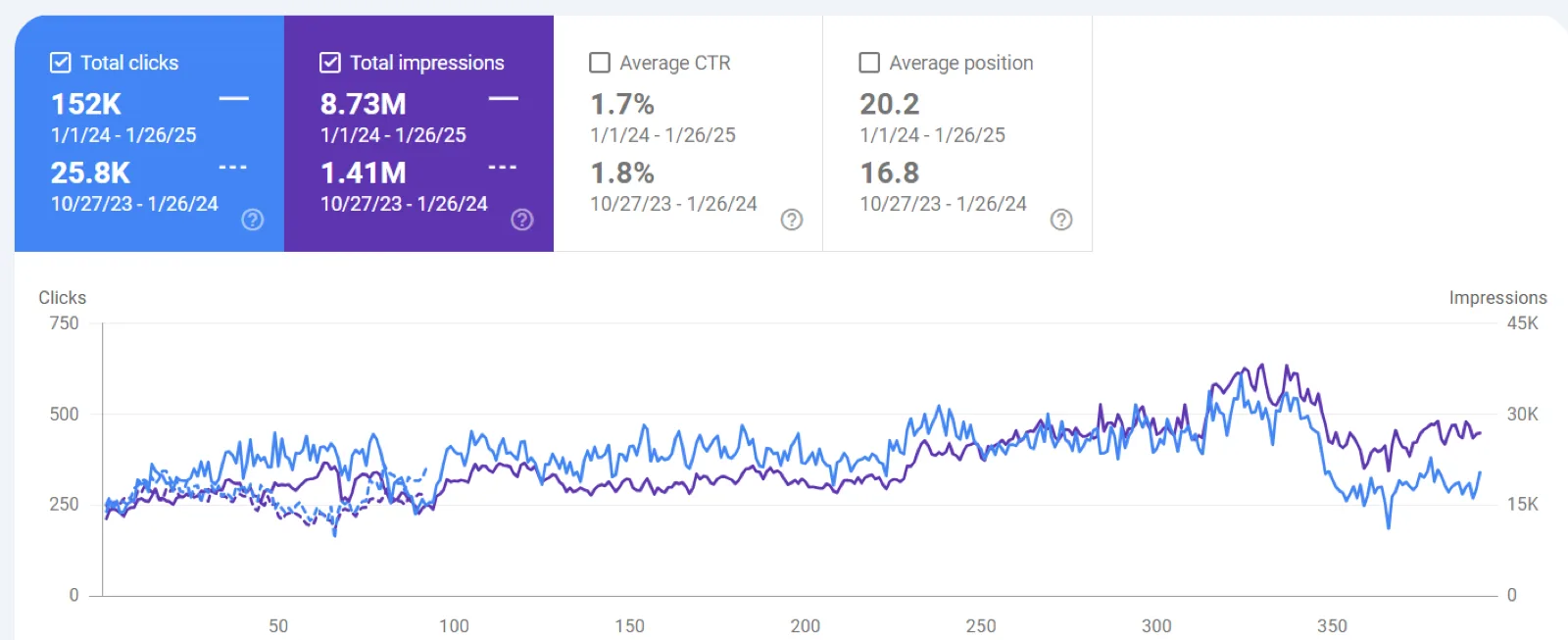
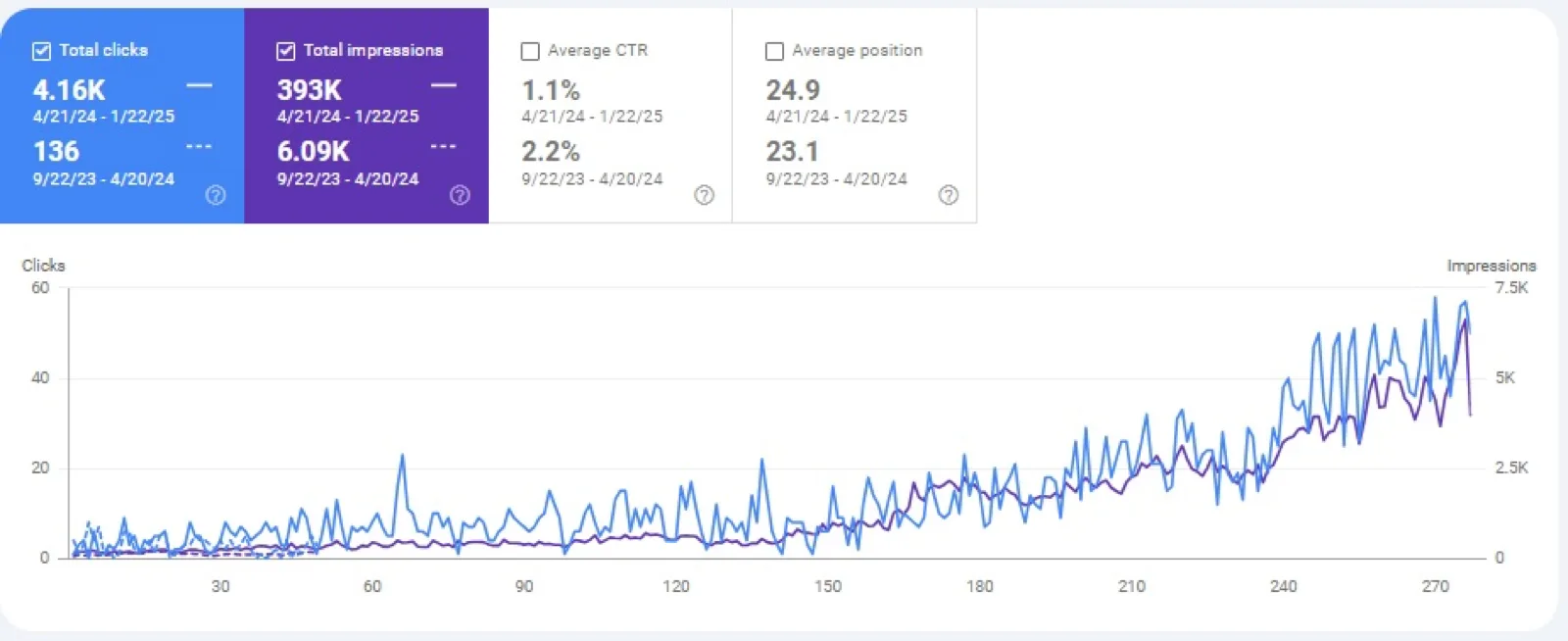
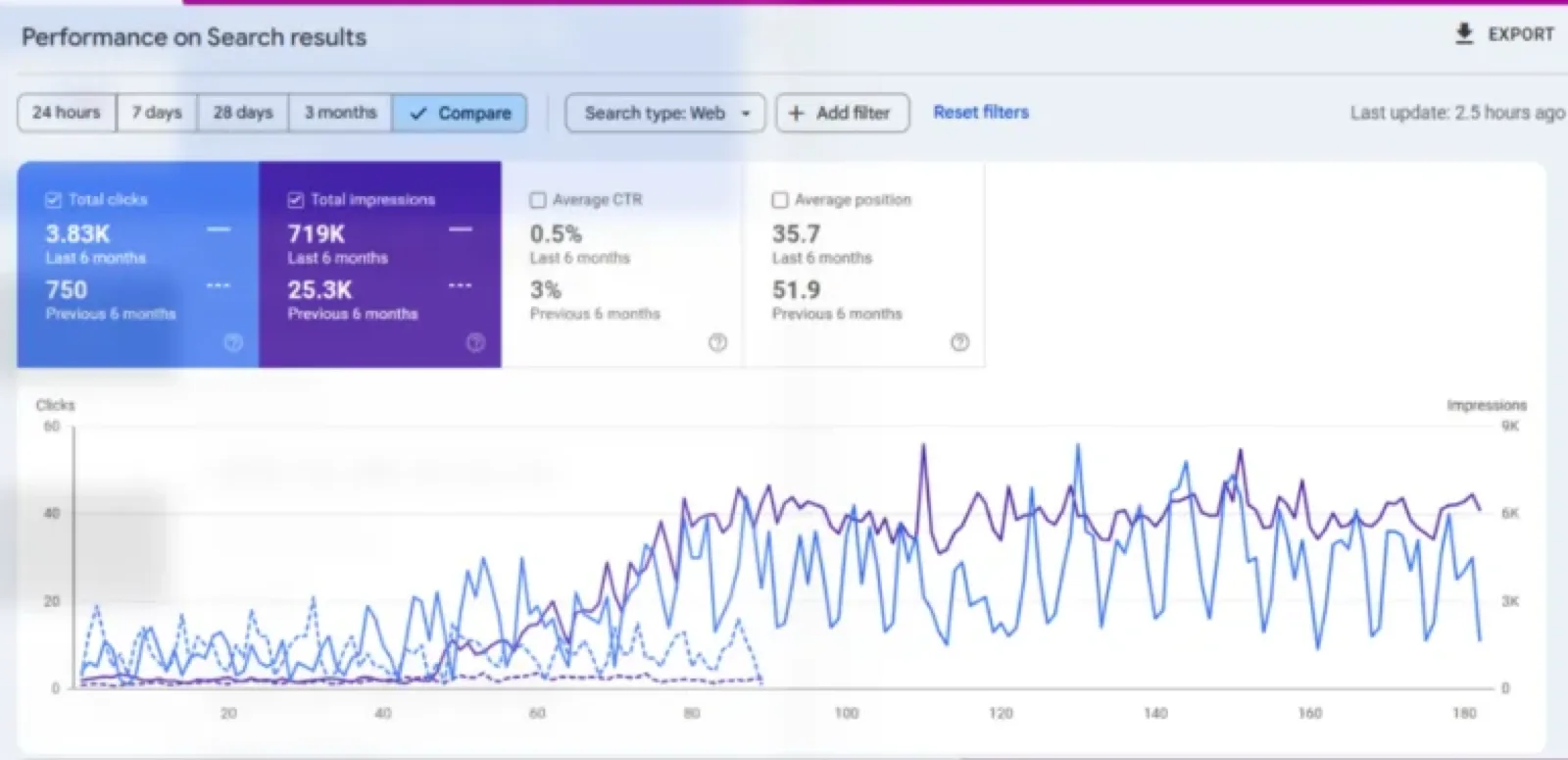
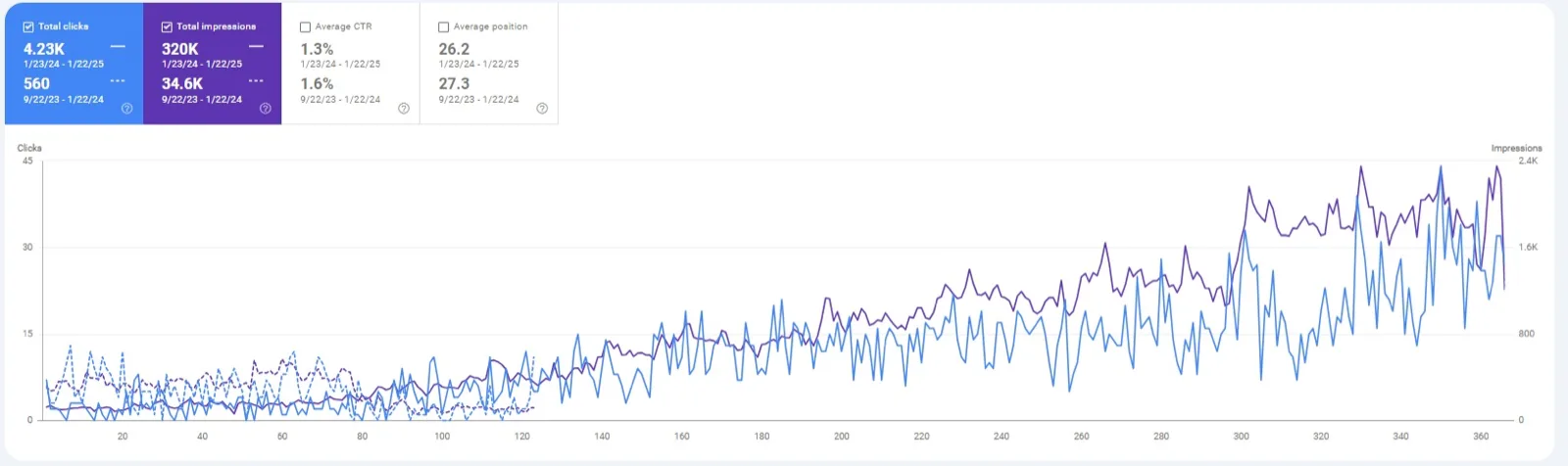
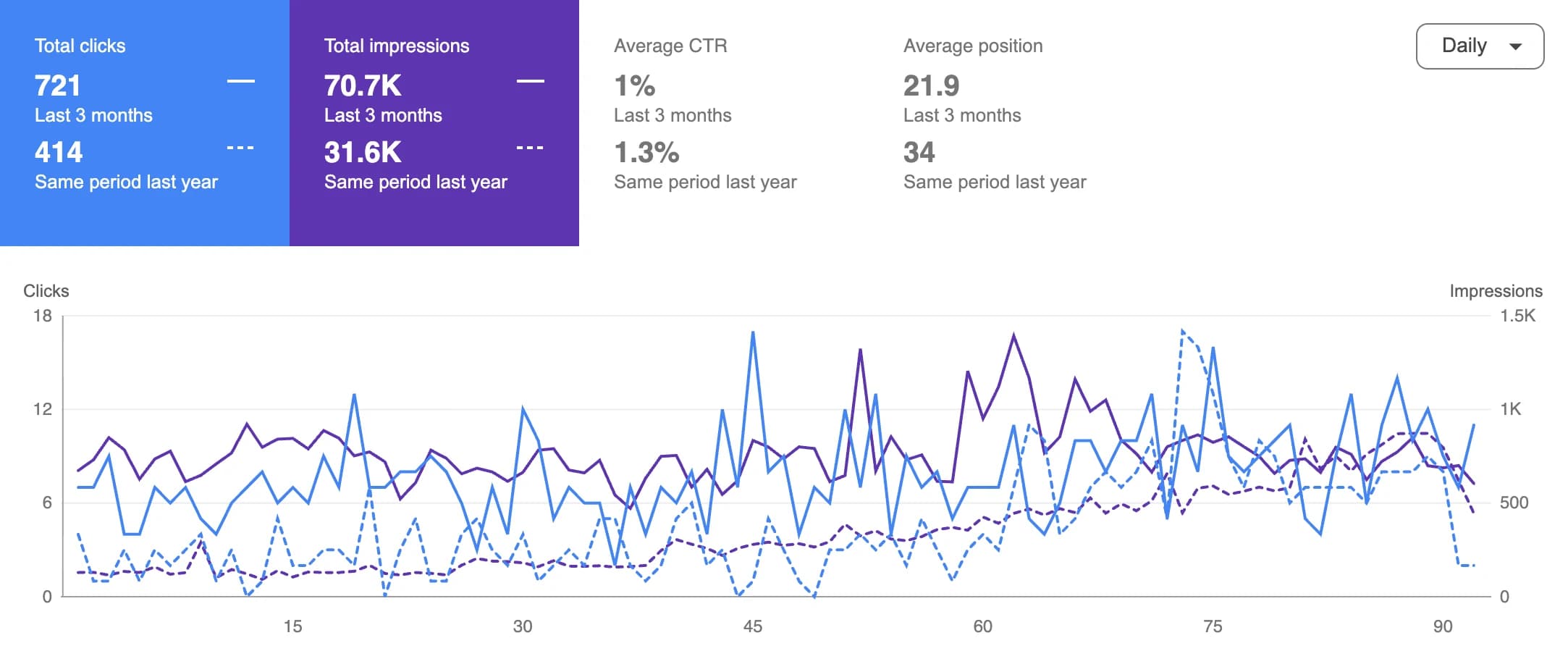
The Google data behind the claims
Google Search Console performance panels from client accounts — Google's own screen, not a report we wrote. Organic search only, cropped so no brand or domain is identifiable, each labelled with the exact window it covers.
Be the brand AI recommends.
Digidot.io, our AI optimisation (AIO) platform, shows what ChatGPT, Claude, Google AI, Gemini and Perplexity say when buyers in the UAE ask about your market. Track it yourself on the platform, or let our Dubai team fix it for you.
- ChatGPT
- Claude
- Google AI
- Gemini
- Perplexity
Illustration: how often each AI names your brand in its answer