International SEO for growth across the GCC and beyond
Ranking in Dubai does not make you visible in Riyadh or Doha. Each Gulf market has its own Google domain, language mix, competitors and search habits. We set the site structure, hreflang and content plan so each country sees the right version, without splitting your authority across six weak sites.
How do you structure a website for multiple GCC countries?
For most companies the best structure is one domain with country and language subfolders, such as /ae/en/, /ae/ar/ and /sa/ar/, each with hreflang tags pointing to every alternate. Subfolders share the domain’s authority, which separate country domains do not. Each country version needs localised content, local currency, local contact details and, ideally, a local Business Profile. Google Search Console international targeting is set per subfolder. Saudi Arabia usually deserves the largest Arabic investment because of its search volume.
See how international / GCC SEO fits into our wider Dubai SEO programme.
What international / GCC SEO in Dubai includes
Market and structure decision
Demand by country and language measured, then a recommendation on ccTLDs, subdomains or subfolders with the reasons and migration plan if needed.
Hreflang implementation
Country-language pairs mapped for every page, tags generated in the sitemap or head, and validated so no alternate points to a missing page.
Localised content, not translated
Country pages adapted for local terms, regulations, pricing and examples, with Saudi Arabic written for Saudi readers rather than reused from the UAE.
Local signals per country
Business Profiles, local phone numbers, currency, local links and citations set up per market to support country rankings.
Geo-targeting checks
Redirect logic, IP detection and currency switching reviewed so Googlebot can crawl every country version without being redirected away.
Searches this covers
How buyers search for this
Expanding search across the GCC in 2026
Many UAE businesses use Dubai as a base for Saudi Arabia, Qatar, Kuwait, Bahrain and Oman, and each market searches differently. Google’s documentation on multi-regional sites says a country-code domain such as .sa gives a strong signal that a site is intended for that country, while subdirectories are lower maintenance but share one server location. Google advises against adapting content by IP address and says it does not use lang attributes, so each market version needs its own crawlable URL. Hreflang ties the versions together, using an ISO 639-1 language code with an optional ISO 3166-1 region, such as ar-SA or en-AE. Google says a country code cannot be used on its own, and that tags are ignored when pages do not point back to each other. Content has to reflect local prices, regulations, delivery and dialect.
- Google calls ccTLDs a strong signal that a site is intended for a specific country.
- Google advises against using IP analysis to adapt content for different users.
- Hreflang cannot use a country code alone; it needs a language code, as in ar-SA.
What keeps international / GCC SEO off page one
Redirecting visitors by IP address
Automatically sending visitors to a country version based on their IP address can stop Google from crawling the other versions, and Google’s multi-regional guidance advises against it. Show a suggestion banner instead, and let both users and crawlers reach every version through normal, crawlable links.
Copying the UAE site for every country
Duplicating the UAE pages with only the currency changed gives Saudi or Kuwaiti buyers nothing specific and creates near-duplicates across markets. Localise prices, delivery, regulations, contact details, examples and terminology for each country, and only launch markets where you can actually serve customers.
Hreflang errors across many versions
With several countries and two languages, hreflang sets grow quickly and break easily: missing return links, invalid codes such as ar-UAE, or tags pointing at redirected URLs. Generate hreflang from one source, add an x-default where it helps, and validate the whole set after every release.
Entering every market at once
Launching six country versions together spreads budget, content and outreach too thin to rank anywhere. Size demand and competition in each market, start with the one or two where you can serve customers best, and expand once those versions are indexed and earning traffic and enquiries.
Local players and regional giants share the results
Across the GCC, results are usually split between regional marketplaces and portals, country-specific businesses on local domains, and international brands with localised subdirectories. Saudi Arabia in particular has strong local competitors in most sectors, and Arabic search there has its own vocabulary. UAE businesses expanding outward often underestimate that and publish a lightly adapted copy of their Dubai site. The opening is for companies that treat each market as its own project: a clear URL structure, correct hreflang, content written for that country’s buyers and rules, and local mentions and links. Searches for international SEO help return mostly agencies and global tool guides, few with GCC-specific depth.

How we deliver international / GCC SEO: three steps, no black box
Size each market
We measure search demand, competition and your current visibility in each GCC country, and recommend the order in which to enter them.
Build the structure
Subfolders, hreflang, sitemaps and geo-targeting are implemented and validated before any country content goes live.
Localise and expand
Country content, Business Profiles and local links are rolled out market by market, with rankings tracked from within each country.
International / GCC SEO: questions UAE businesses ask
Answered in the first sentence, so AI assistants can quote us directly.
One domain with country subfolders in most cases. Separate country domains split link authority and multiply maintenance. Country domains make sense when you have a local legal entity, a separate team and a large enough budget to build authority for each. Many Gulf brands that started with multiple domains later consolidate.
Partly. Domain authority carries across, but Google.com.sa ranks pages that are relevant to Saudi users, so you need Saudi-specific content, hreflang pointing to it and ideally Saudi signals such as a local number and address. A UAE page will rarely outrank a localised Saudi competitor for a commercial Saudi query.
Modern Standard Arabic works across the region for page copy, with keyword targeting adjusted for country-specific terms and spelling. We create ar-SA, ar-AE and ar-QA versions only where content genuinely differs, such as pricing, regulation or services, and use a single ar version with hreflang x-default where it does not.
We check your site against your three closest Dubai competitors and send the gaps costing you leads to your WhatsApp within 48 hours. Free, no call required.
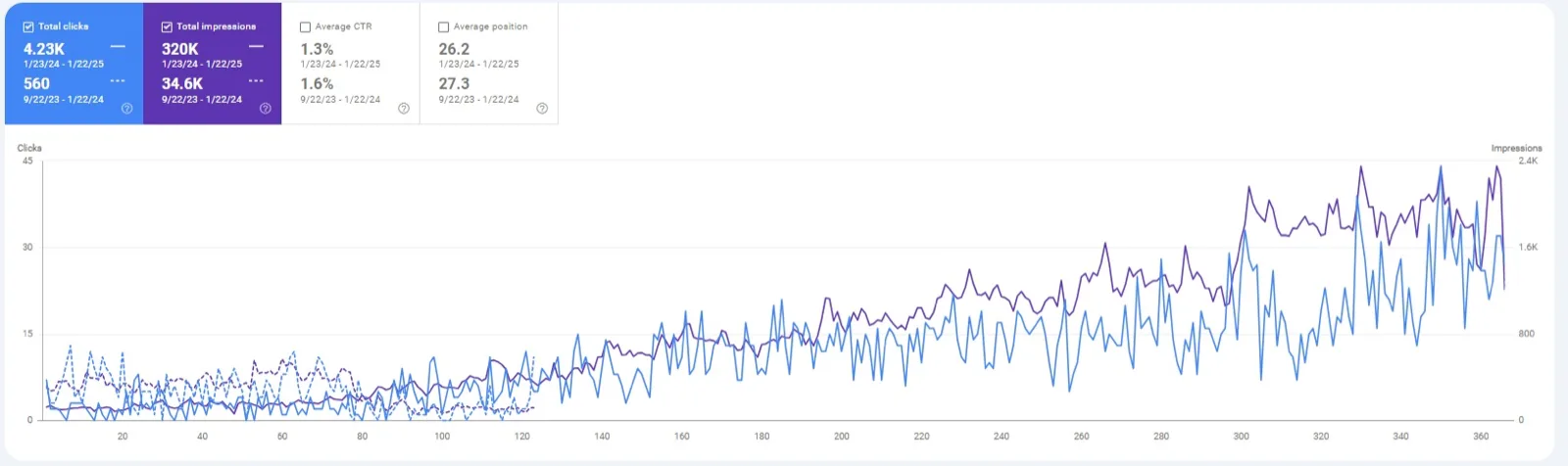
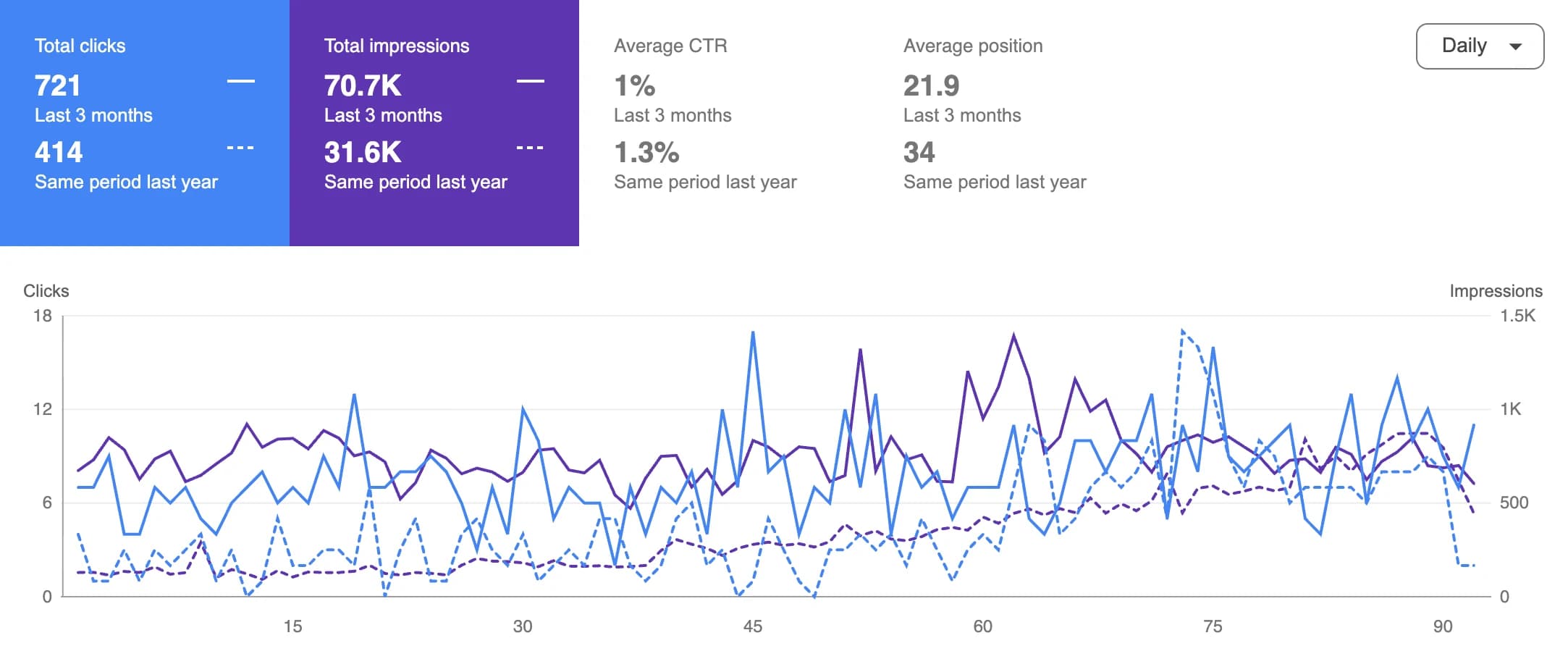
The Google data behind the claims
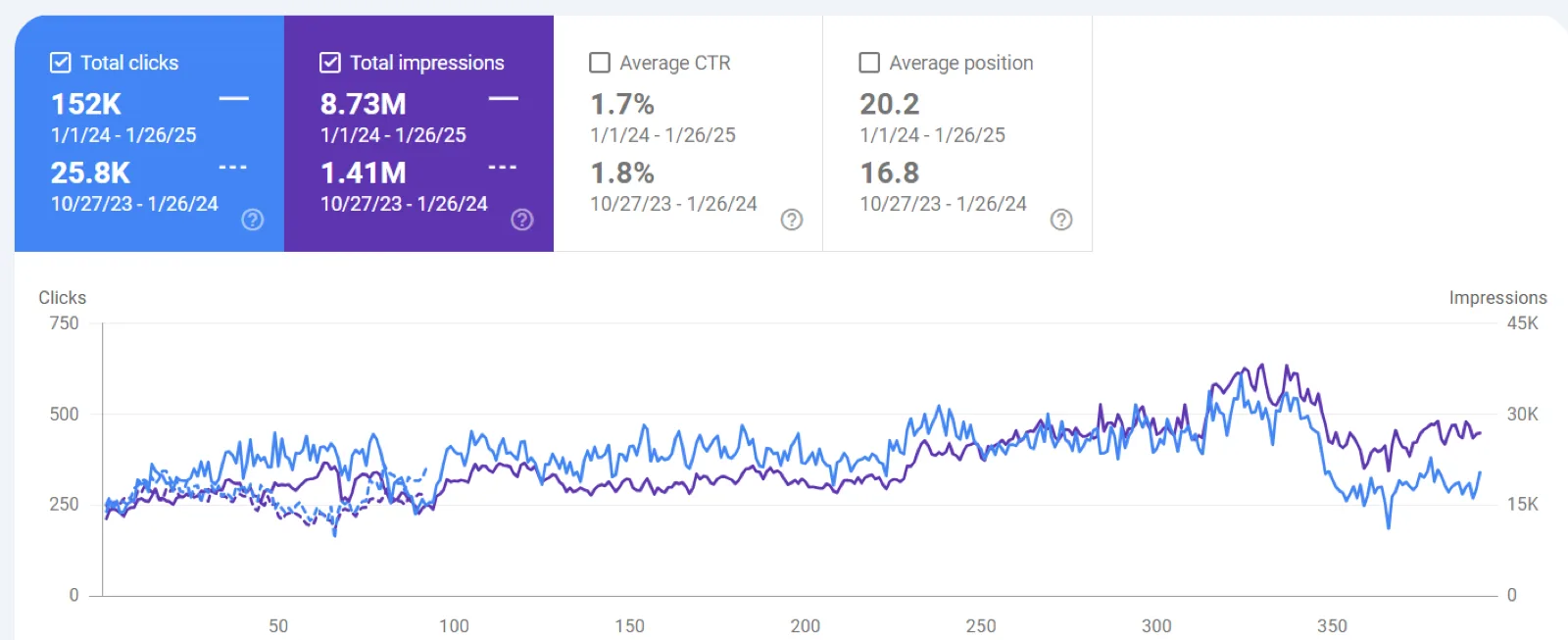
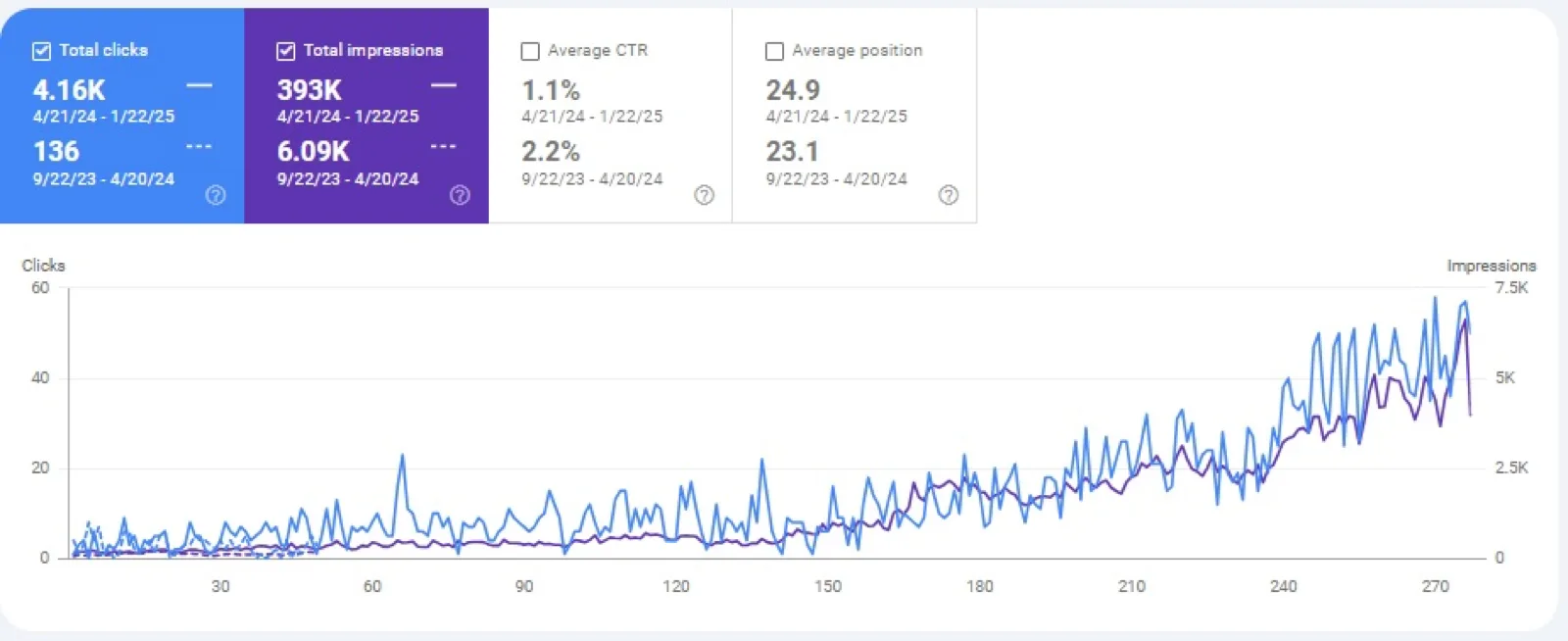
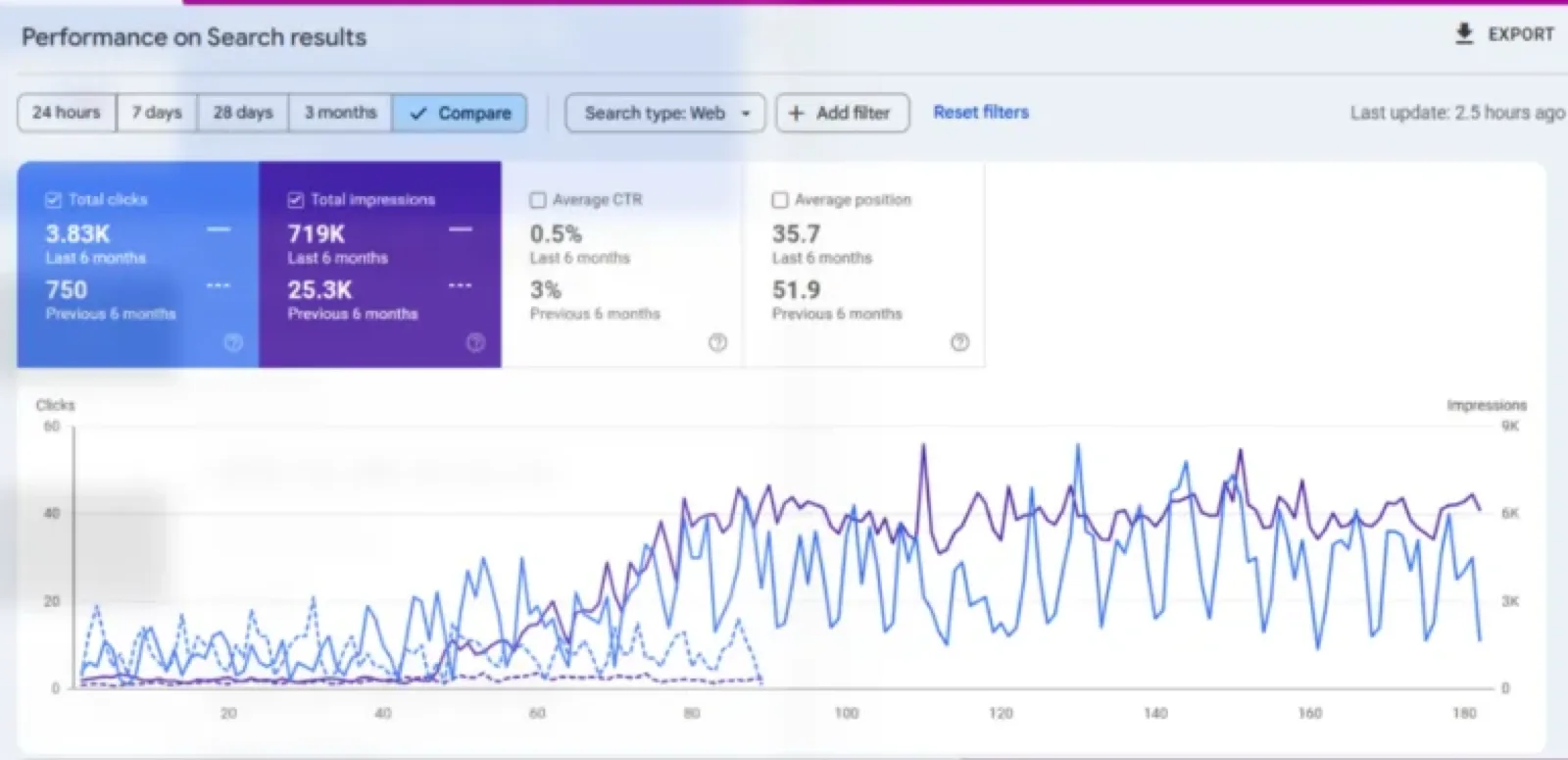
Google Search Console performance panels from client accounts — Google's own screen, not a report we wrote. Organic search only, cropped so no brand or domain is identifiable, each labelled with the exact window it covers.
Be the brand AI recommends.
Digidot.io, our AI optimisation (AIO) platform, shows what ChatGPT, Claude, Google AI, Gemini and Perplexity say when buyers in the UAE ask about your market. Track it yourself on the platform, or let our Dubai team fix it for you.
- ChatGPT
- Claude
- Google AI
- Gemini
- Perplexity
Illustration: how often each AI names your brand in its answer