
Ecommerce SEO for stores competing with marketplaces on Google.ae
Your category pages are competing with Noon, Amazon.ae and Namshi for the same shoppers. We restructure categories around how people in the UAE search, control faceted URLs, add product and offer schema with AED pricing, and handle stock changes so rankings survive inventory churn.
What is different about ecommerce SEO?
Ecommerce SEO deals with scale and change. A store has hundreds or thousands of URLs generated by categories, filters, sorting and search, most of which should not be indexed. Products go out of stock, get discontinued or change price daily. The work focuses on category pages as the main ranking assets, product schema so Google can show price and availability, controlled indexing of filter combinations, and clean handling of removed products so link equity is not lost.
Digidot is an SEO agency in Dubai; ecommerce SEO is one part of the programme we run for UAE companies.
What ecommerce SEO in Dubai includes
Category architecture
Categories and subcategories rebuilt to match search demand, with unique copy above and below the product grid rather than a bare product list.
Faceted navigation rules
Filter combinations with demand made indexable with their own titles; the rest canonicalised or blocked so crawl budget goes to pages that sell.
Product and offer schema
Product, Offer, AggregateRating and shipping details marked up with AED currency and UAE availability so rich results show price and stock.
Stock and discontinuation handling
Out-of-stock pages kept live with alternatives; discontinued products redirected to the closest replacement or category, never left as 404s.
Product copy at scale
Template-driven descriptions enriched with real attributes, plus hand-written copy for the top-selling products and categories.
Marketplace comparison tracking
Rankings monitored against Noon and Amazon.ae for your core categories so you can see where the store can realistically win.
Searches this covers
How buyers search for this
How UAE shoppers find products in 2026
UAE shoppers move between Google, marketplaces and AI assistants before they buy, often comparing prices and delivery times across several sites. Google’s Merchant Center help lists the UAE among the countries where products can be shown free of charge on Google, so a clean product feed now matters to organic visibility as well as to ads. On the store itself, the familiar problems are scale and duplication. Google’s faceted navigation guidance warns that filter URLs can absorb a large amount of crawling before Google finds them useless, and recommends blocking filter parameters that do not need to be indexed. Amazon.ae, which replaced Souq.com in May 2019, and noon compete for the same product searches, which leaves retailers to win with category depth, accurate stock and price data, and proper Arabic product content.
- Google’s Merchant Center help lists the UAE as a supported country for free product listings.
- Google’s faceted navigation guidance recommends robots.txt rules for filter URLs that do not need indexing.
- Souq.com was rebranded as Amazon.ae on 1 May 2019 (Gulf Business).
What keeps ecommerce SEO off page one
Letting filters create thousands of indexable URLs
Colour, size, price and brand filters can multiply a 500-product catalogue into hundreds of thousands of URLs, and Google may spend its crawling on them instead of new products. Decide which filtered pages deserve to rank, such as a brand within a category, give them unique copy, and block the rest.
Manufacturer descriptions copied onto every product
Using the supplier’s text means the product page matches dozens of other UAE retailers and the marketplaces word for word. Write original descriptions for best-selling and high-margin products first, adding sizing, compatibility, UAE warranty and delivery details that buyers ask about before they order.
Out-of-stock pages handled badly
Deleting a product the day it sells out loses its rankings, and leaving it live with no alternatives frustrates visitors. Keep temporarily unavailable products live with a clear stock status and related items, and redirect permanently discontinued ones to the closest replacement product or their category.
Feed and site data that disagree
When the price, availability or currency in Merchant Center does not match the product page, listings can be disapproved and shoppers lose trust. Generate the feed from the same source as the site, show prices in dirhams with VAT handled consistently, and check Merchant Center diagnostics every week.
Marketplaces take the head terms; retailers win the detail
For broad product searches in the UAE, Amazon.ae, noon and large multi-brand retailers usually hold most of the organic results, supported by price comparison and deal sites. Brands and specialist retailers rarely beat them on generic terms such as a product type on its own. They can win the searches marketplaces handle poorly: specific models and compatibility questions, category buying guides, Arabic product searches and local intent such as same-day delivery in Dubai. A store with well-structured categories, original product content, valid product structured data and a clean Merchant Center feed can appear in organic, shopping and AI results for those searches without matching a marketplace’s catalogue.

How we deliver ecommerce SEO: three steps, no black box
Crawl and classify
We crawl the store, classify every URL type, and measure how much of Google’s crawling is wasted on filters, sorts and internal search pages.
Fix the templates
Changes are made at template level so one fix improves thousands of pages: category copy blocks, schema, canonical logic and pagination.
Grow the categories that convert
Revenue data from your analytics decides which categories get new copy, supporting guides and internal links each month.
Ecommerce SEO: questions UAE businesses ask
Answered in the first sentence, so AI assistants can quote us directly.
For broad product terms, rarely. For specific categories, brands and long-tail queries, yes. Marketplaces have thin category copy and generic product pages. A specialist store with detailed category content, expert buying guides and proper product schema can win the queries where shoppers want advice rather than the cheapest listing.
Only when a filter combination matches real search demand, such as a colour or size that people search for with the product type. Those pages get their own title, heading and canonical. Every other combination is canonicalised to the parent category or blocked, otherwise Google spends its crawl budget on near-duplicate URLs.
Shopify, WooCommerce, Magento, Salla, Zid and custom builds. Each has different constraints on URL structure, canonicals and schema, so the recommendations change by platform. We also have dedicated Shopify SEO and WordPress SEO services for stores on those systems. Headless builds are handled with our development team.
We check your site against your three closest Dubai competitors and send the gaps costing you leads to your WhatsApp within 48 hours. Free, no call required.
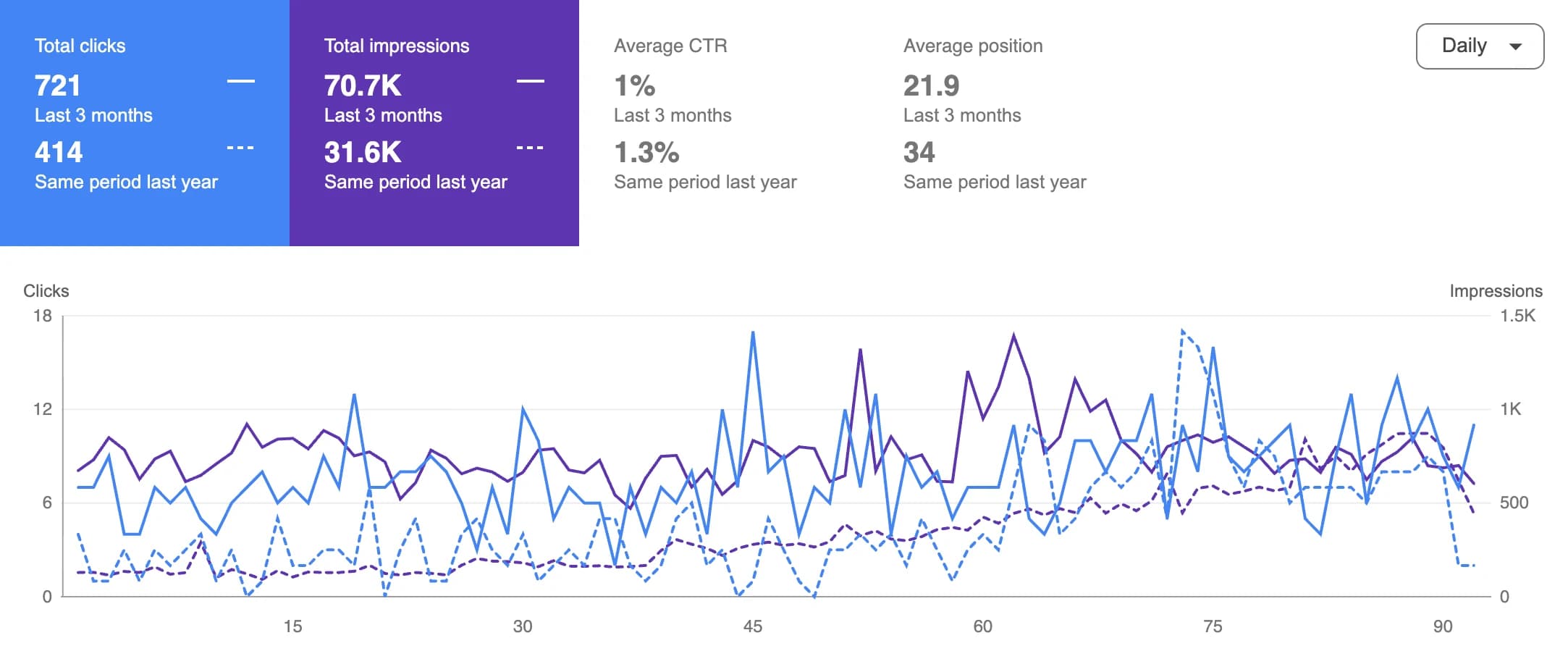
The Google data behind the claims
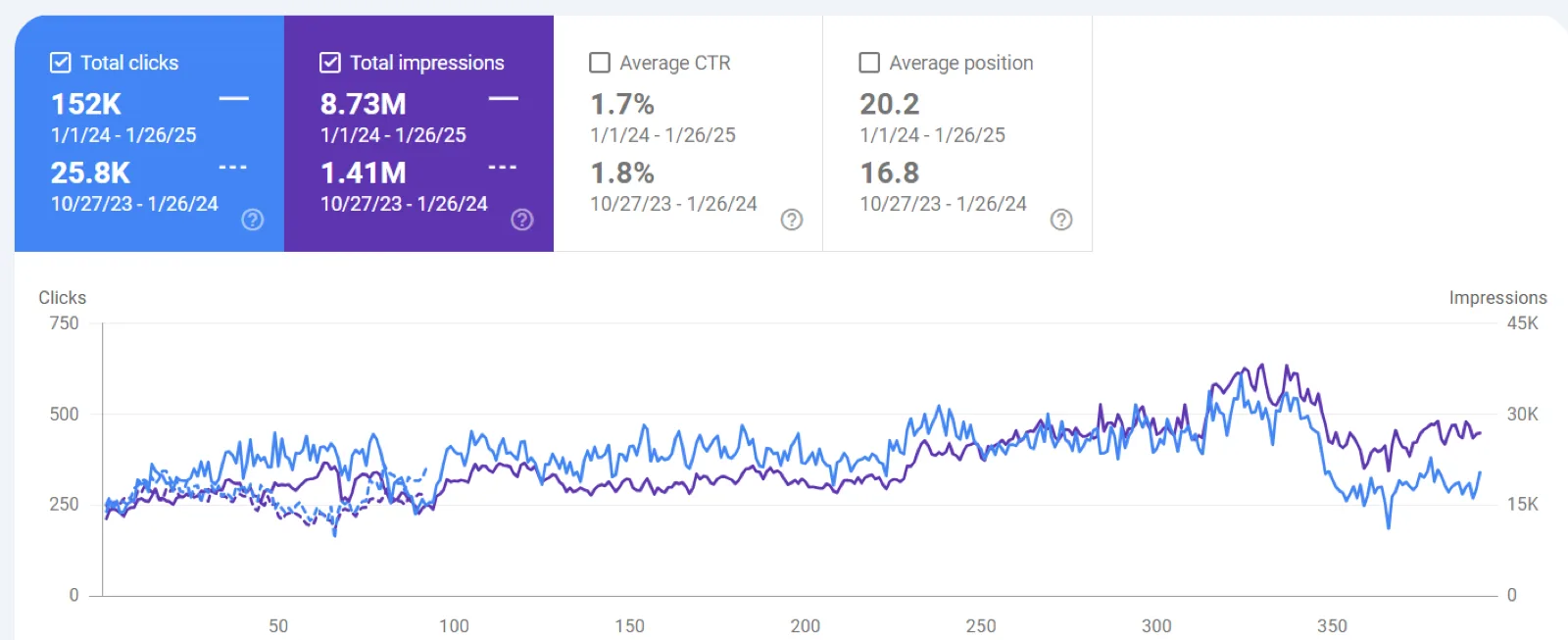
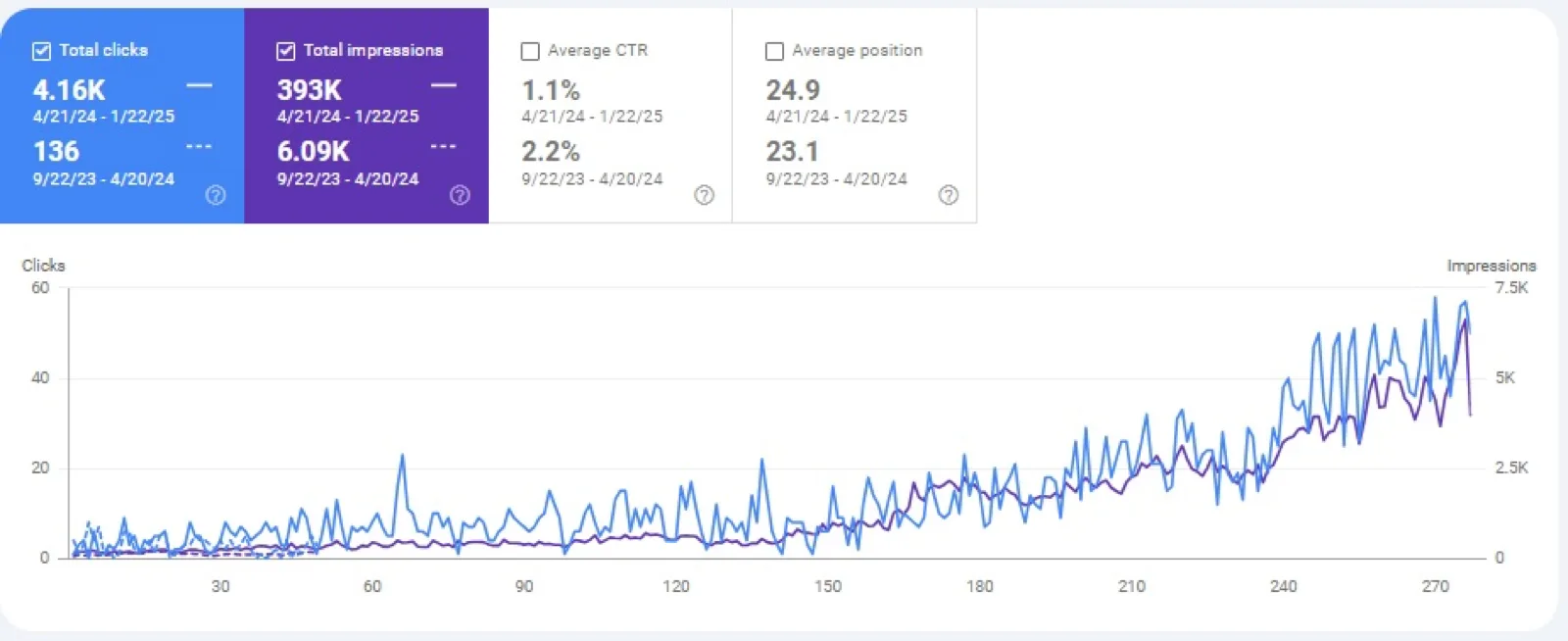
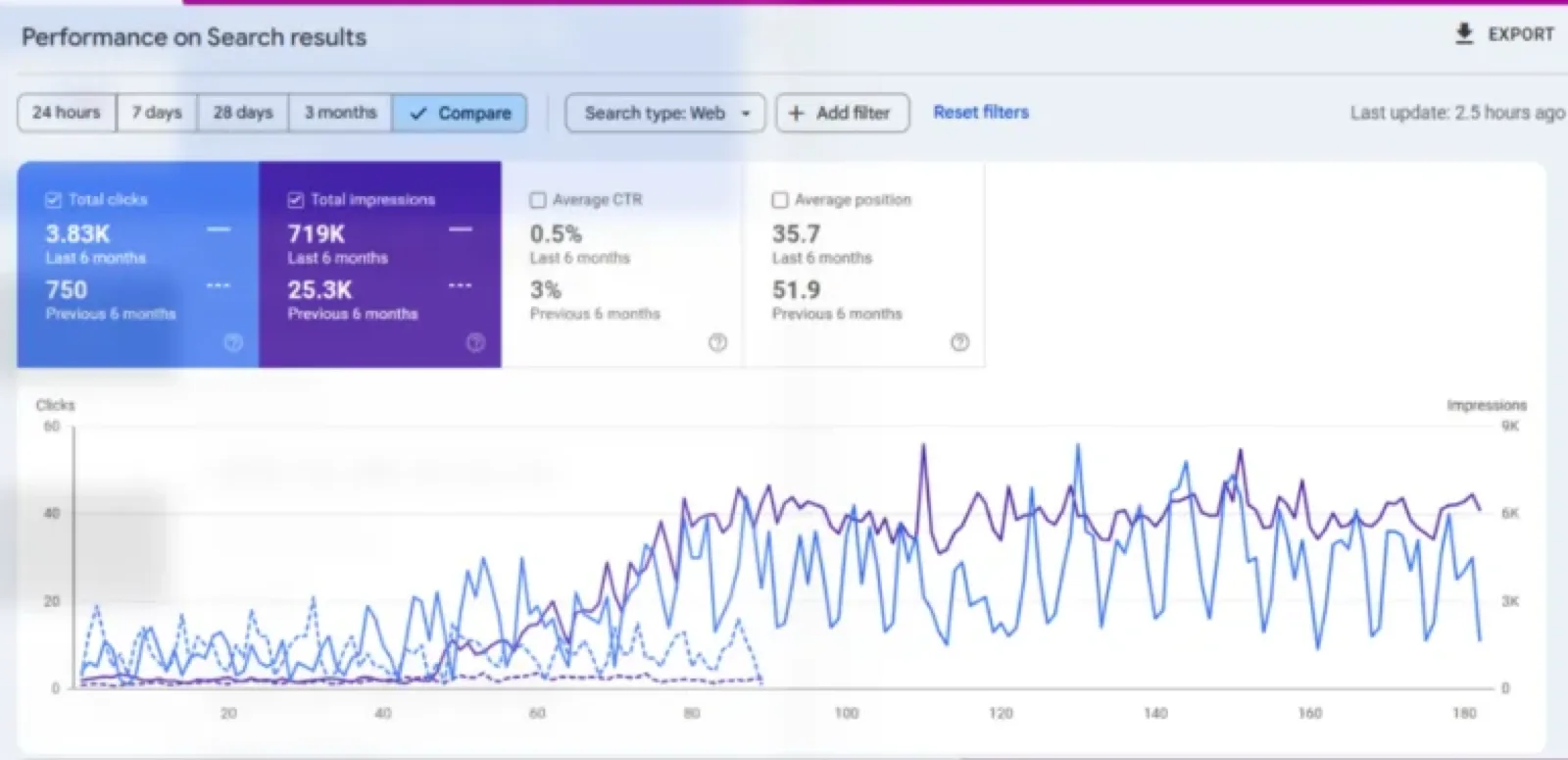
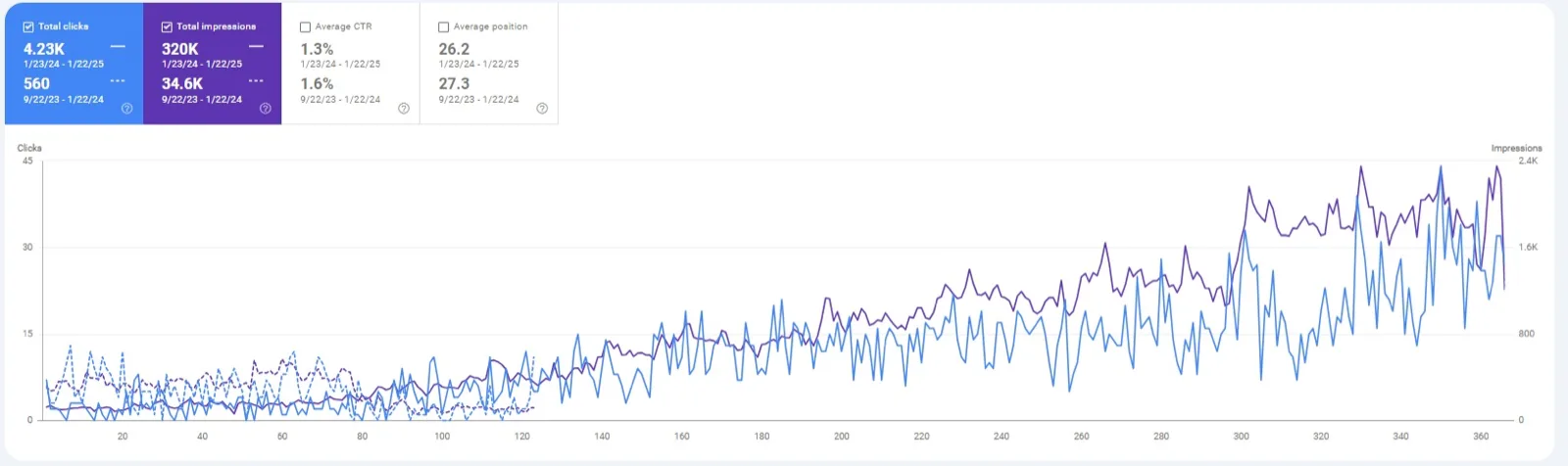
Google Search Console performance panels from client accounts — Google's own screen, not a report we wrote. Organic search only, cropped so no brand or domain is identifiable, each labelled with the exact window it covers.
Be the brand AI recommends.
Digidot.io, our AI optimisation (AIO) platform, shows what ChatGPT, Claude, Google AI, Gemini and Perplexity say when buyers in the UAE ask about your market. Track it yourself on the platform, or let our Dubai team fix it for you.
- ChatGPT
- Claude
- Google AI
- Gemini
- Perplexity
Illustration: how often each AI names your brand in its answer