
URL structure optimisation that tells users and Google where they are
A URL is the first thing a crawler reads about a page. Long, parameter-heavy or inconsistent paths waste crawl budget and split signals between duplicates. We audit every URL pattern on your site, define a clean hierarchy and manage the redirects so nothing is lost.
What makes a URL structure good for SEO?
A good URL structure is short, readable, consistent and hierarchical. Each URL describes its page in plain words, sits inside a folder that reflects the site’s navigation, uses lowercase letters and hyphens, and exists in exactly one form. Parameters, session IDs, uppercase variants and trailing-slash duplicates are removed or canonicalised. For bilingual UAE sites, Arabic and English versions follow the same pattern under separate language paths.
URL structure optimisation is one part of SEO Dubai, our full search programme for UAE companies.
What URL structure optimisation in Dubai includes
URL pattern audit
Every URL pattern on the site catalogued from a crawl and from Search Console, with duplicates, parameters and inconsistencies flagged.
Hierarchy design
A folder structure that mirrors services, sectors and locations, so paths such as /services/ or /dubai/ carry meaning to users and crawlers.
Naming conventions
Rules for slugs: descriptive words, lowercase, hyphens, no dates or IDs, and a length cap. Applied to existing pages and documented for new ones.
Parameter and duplicate control
Filter, sort, tracking and session parameters handled with canonicals, robots rules or removal, so one version of each page is indexed.
Redirect map
A one-to-one 301 map from old to new URLs, tested before launch, with chains and loops eliminated.
Language path structure
Consistent /ar/ and /en/ paths for bilingual sites, with hreflang and canonicals aligned to the new structure.
Searches this covers
How buyers search for this
How URL structure affects UAE sites in 2026
Most URL problems on UAE sites come from the platform rather than the plan. E-commerce stores, property listings and booking engines generate filtered, sorted and session-based URLs that multiply quickly. Google’s URL structure guidance warns that combinable filters can create a huge number of near-duplicate URLs, wasting crawl bandwidth and possibly preventing full indexing. Bilingual sites add another layer: Google asks for Arabic and other non-ASCII characters to be percent-encoded in links, and recommends using words in the audience’s language, transliterated where that applies. Google also treats upper and lower case versions of a path as different URLs, which catches out sites moved between systems. The structure that works is simple, readable and consistent across both languages, with one canonical address for each page.
- Google recommends hyphens rather than underscores to separate words in URLs.
- Google Search generally does not support URL fragments (#) for changing page content.
- Google advises keeping redirects in place for generally at least a year after a site move.
What keeps URL structure optimisation off page one
Letting filters create endless URLs
Every combination of price, area, size and sort order can become a crawlable URL. Google’s guidance names faceted navigation as a common cause of wasted crawling. Decide which filtered views deserve to be indexed as landing pages, then block or consolidate the rest with robots.txt rules, canonical tags and consistent internal links.
Changing URLs without a redirect map
Redesigns and platform moves often change every path on a site. Without a one-to-one permanent redirect from each old URL to its closest new equivalent, links and rankings are lost. Google advises keeping redirects for generally at least a year, and in practice there is rarely a good reason to remove them.
Mixed language, case and slash conventions
Sites that mix /en/ and /EN/, Arabic and transliterated slugs, or trailing and non-trailing slashes end up with several addresses for the same page, and Google treats differently cased paths as different URLs. Choose one convention for case, language folders and slashes, enforce it on the server and redirect every variant.
Using IDs where words belong
Paths such as /p?id=4821 tell users and search engines nothing, and Google recommends descriptive, human-readable words. Use short slugs that name the service or product, keep the hierarchy shallow, and avoid dates or category folders that will force a URL change when content is updated or moved.
Where clean structure gives an edge
URL structure rarely wins a ranking on its own, but it decides how much of a site Google crawls and how cleanly signals consolidate. In the UAE, the sites that compete well on large inventories, such as the main portals and marketplaces, put real effort into controlling which filtered pages are indexable. Smaller competitors often run default platform settings that leak thousands of duplicate URLs and split links between versions of the same page. A business that fixes its hierarchy, standardises its Arabic and English paths and manages redirects properly makes every other SEO investment work harder, because each page has one address that collects all of its signals.

How we deliver URL structure optimisation: three steps, no black box
Audit and classify
We crawl the site, group URLs by pattern and measure which patterns earn traffic, which are duplicated and which are wasting crawl budget.
Design and approve
A new structure and naming rules are proposed with examples for each page type. Nothing changes until you have approved the map.
Redirect and verify
Redirects are deployed with the new URLs, sitemaps updated, and Search Console monitored until the old URLs drop out of the index.
URL structure optimisation: questions UAE businesses ask
Answered in the first sentence, so AI assistants can quote us directly.
Not if the redirects are correct and complete. Every old URL must 301 to one new URL with equivalent content, internal links must be updated to the new paths, and sitemaps must be refreshed. Handled this way, rankings usually stabilise within a few weeks. Handled carelessly, traffic can fall and stay down.
Descriptive words help, but stuffing does not. A slug such as /osteopath-al-safa/ tells both readers and crawlers what the page covers. A slug that repeats the same term three times looks manipulative and is harder to read. We write slugs the way a person would describe the page.
Use a language folder at the start of the path, such as /ar/ and /en/, with the same structure beneath each. Arabic slugs can be in Arabic script or transliterated, but the choice must be consistent. Each language version needs its own canonical and reciprocal hreflang tags.
We check your site against your three closest Dubai competitors and send the gaps costing you leads to your WhatsApp within 48 hours. Free, no call required.
The Google data behind the claims
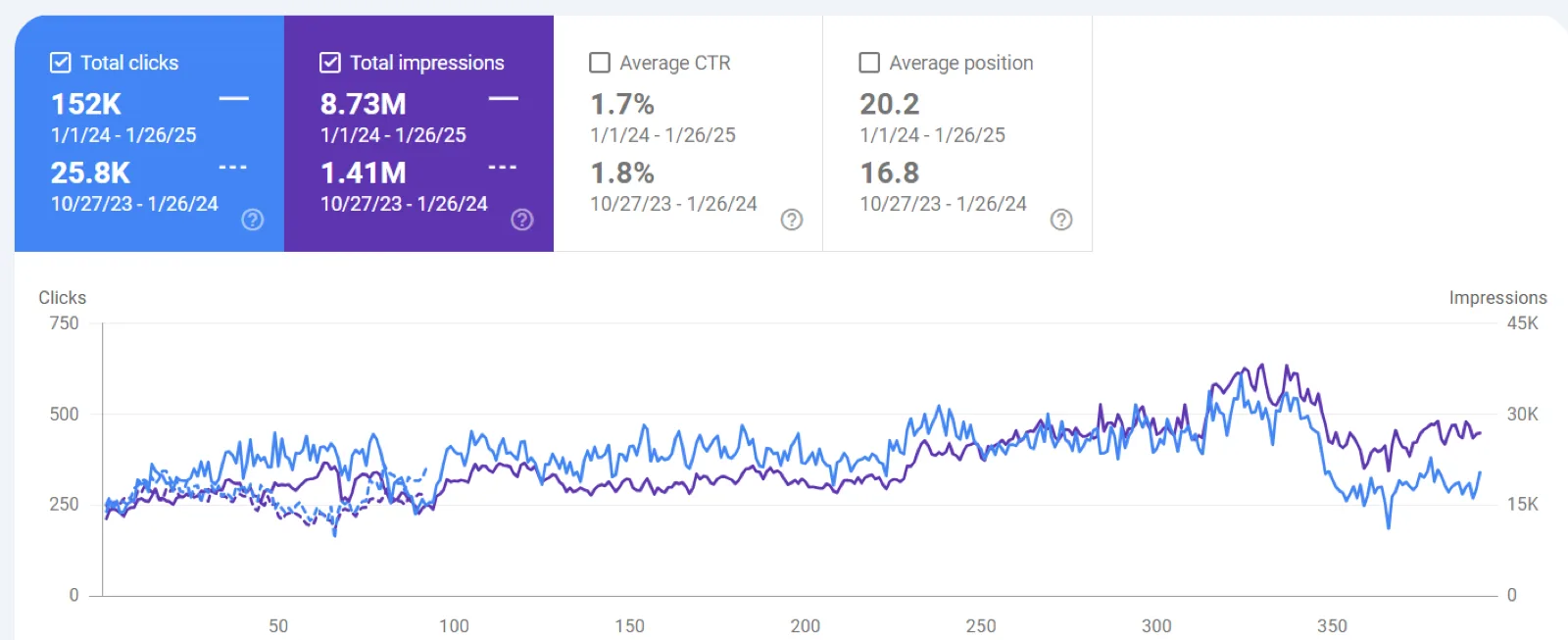
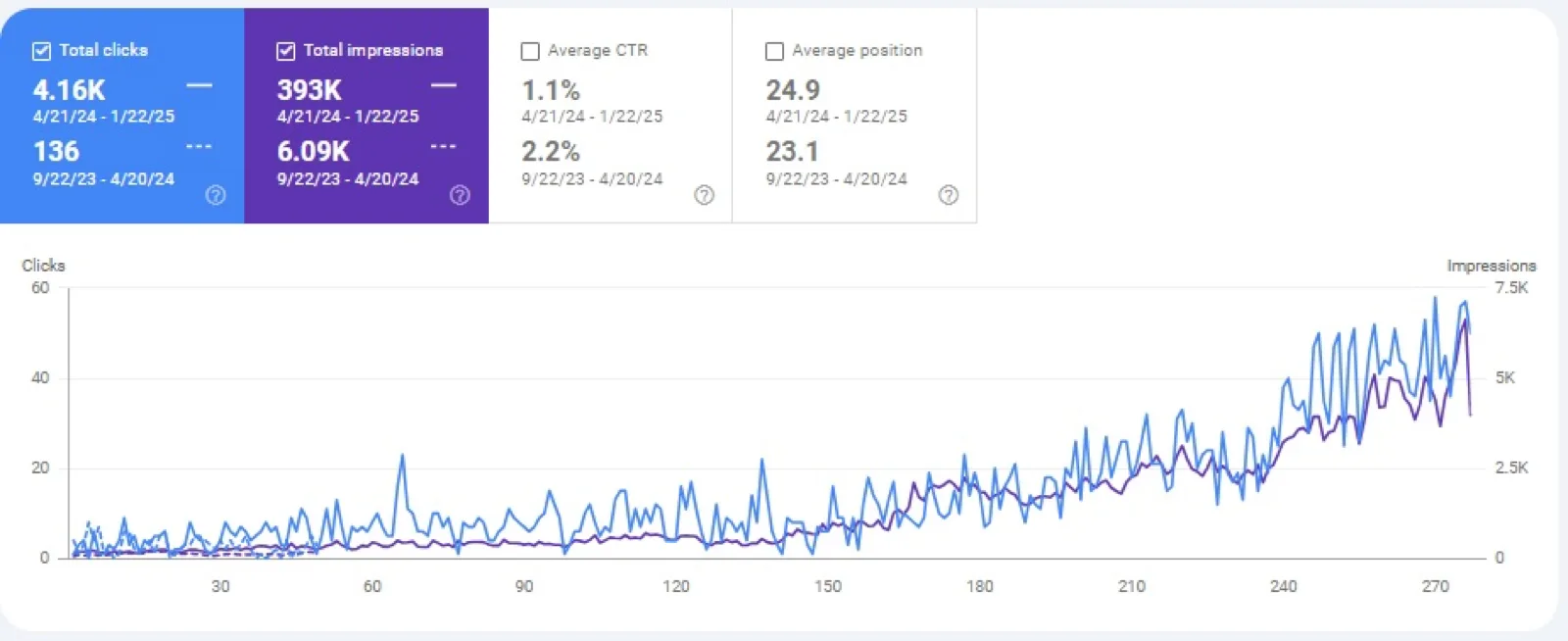
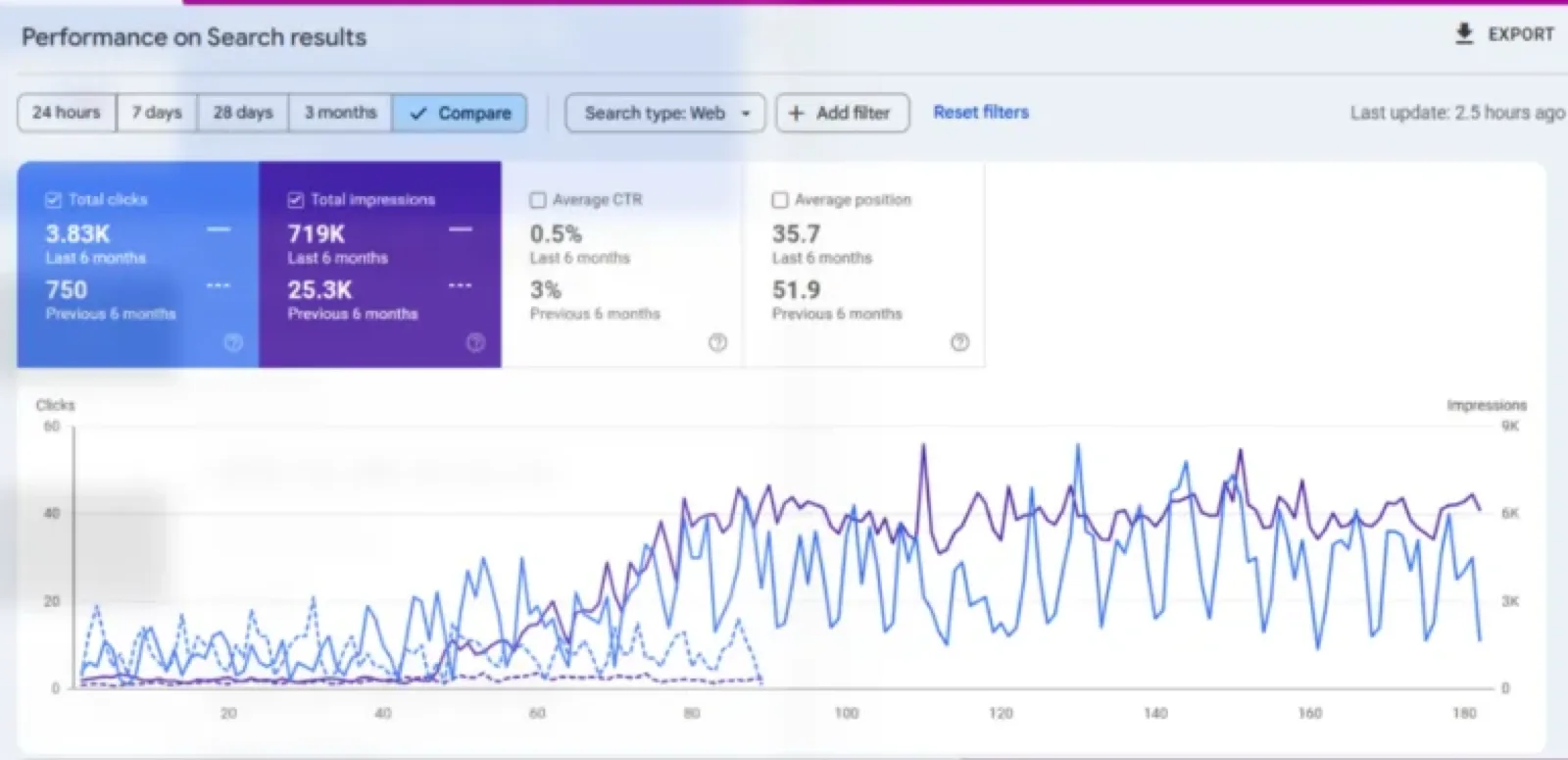
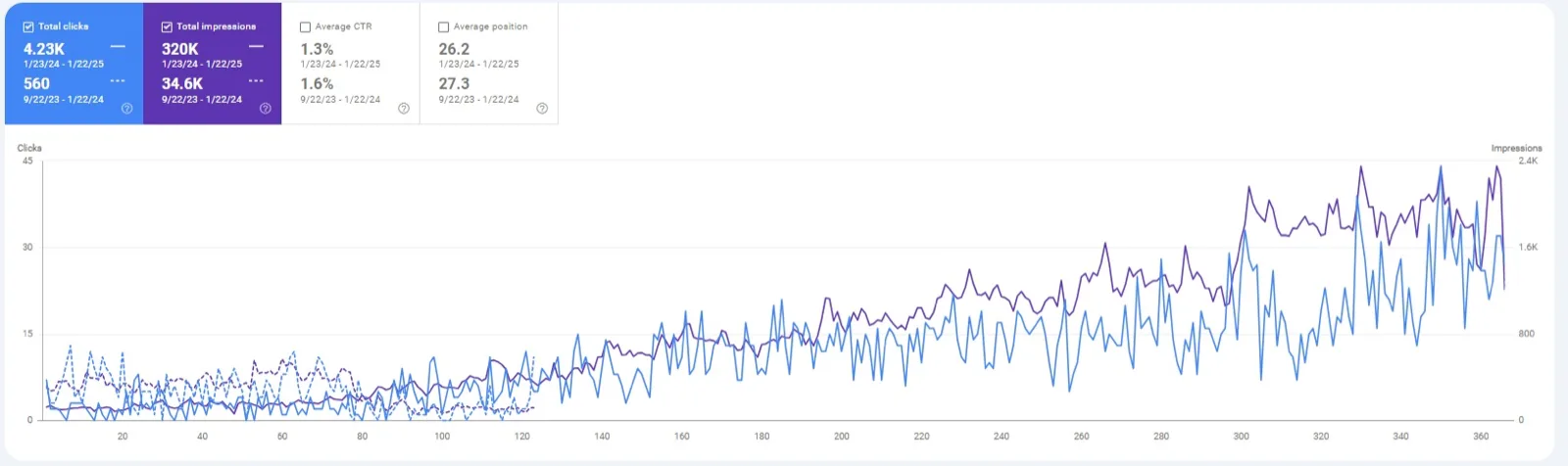
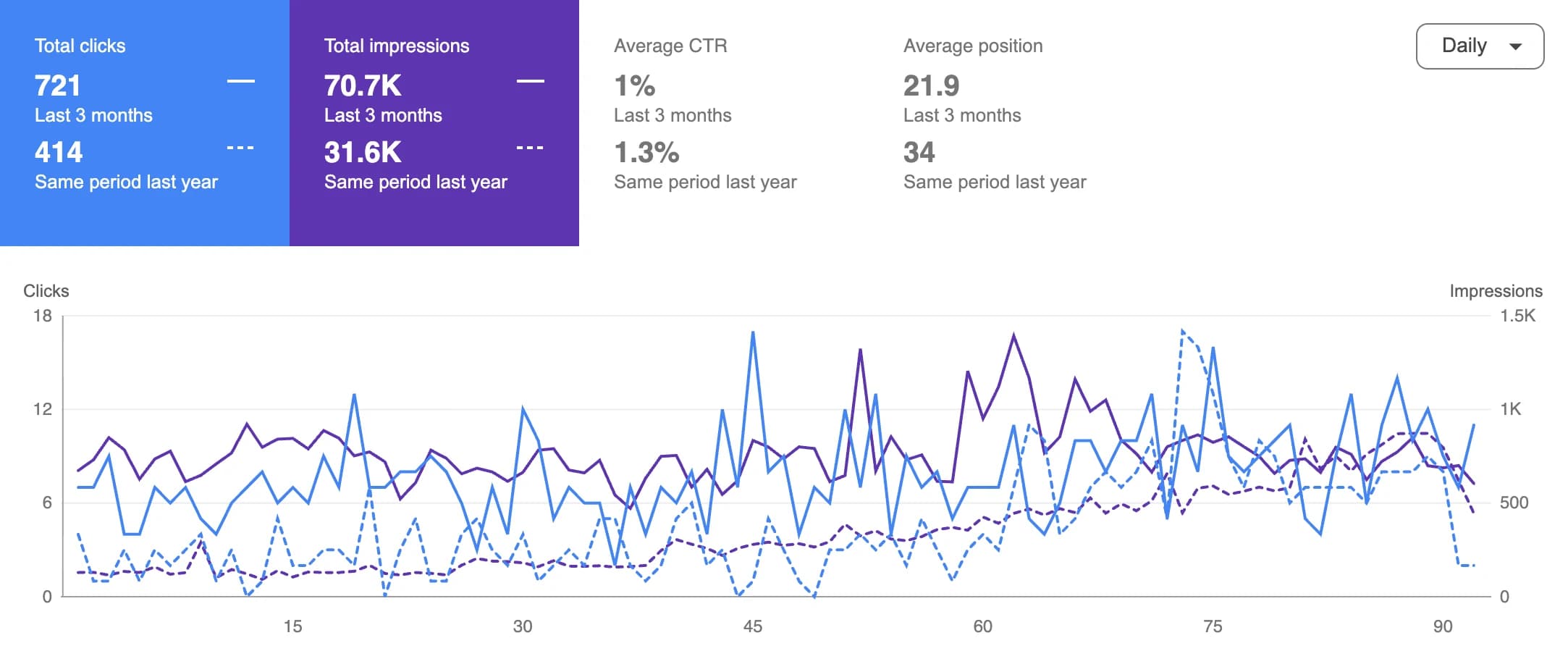
Google Search Console performance panels from client accounts — Google's own screen, not a report we wrote. Organic search only, cropped so no brand or domain is identifiable, each labelled with the exact window it covers.
Be the brand AI recommends.
Digidot.io, our AI optimisation (AIO) platform, shows what ChatGPT, Claude, Google AI, Gemini and Perplexity say when buyers in the UAE ask about your market. Track it yourself on the platform, or let our Dubai team fix it for you.
- ChatGPT
- Claude
- Google AI
- Gemini
- Perplexity
Illustration: how often each AI names your brand in its answer