Image optimisation for speed, accessibility and image search
Images are the heaviest part of most pages and the least described. We compress and convert your media, size it for each screen, write alt text that says what is in the picture, and set loading behaviour so pages pass Core Web Vitals on mobile.
What does image optimisation for SEO include?
Image optimisation reduces file size without visible quality loss and gives search engines the context to understand each image. It covers compression, conversion to modern formats such as WebP and AVIF, responsive sizes for different screens, lazy loading below the fold, descriptive filenames, accurate alt text, captions where useful, and image sitemaps or structured data. The result is faster pages, better accessibility and visibility in Google Images.
What we do for you
Media audit
Every image on the site listed with its dimensions, weight, format and alt status, ranked by how much it slows the pages it appears on.
Compression and format conversion
Files converted to WebP or AVIF with fallbacks, and compressed to a quality level checked by eye on retina and standard screens.
Responsive sizing
srcset and sizes attributes set so phones download phone-sized files, with explicit width and height to prevent layout shift.
Alt text and filenames
Descriptive filenames and alt text written for what the image shows, in the language of the page, without keyword lists.
Loading behaviour
Hero images preloaded, below-fold images lazy loaded, and the largest contentful element prioritised so LCP passes on mobile.
Image discoverability
Image sitemap entries and ImageObject or Product schema where images matter for search, such as ecommerce and clinics.
Searches this covers
Three steps, no black box
Measure
We crawl the site for image weight and attributes and pull field data to see which templates fail LCP or CLS because of images.
Optimise
Batch compression and conversion run through your CMS or build pipeline, with alt text and filenames rewritten page by page.
Automate and verify
Upload rules or plugins set so new images are optimised automatically. We re-test Core Web Vitals after 28 days of field data.
Questions UAE business owners ask
Answered in the first sentence, so AI assistants can quote us directly.
Indirectly but measurably. Heavy images are the most common cause of failing Largest Contentful Paint, and missing dimensions cause layout shift. Both are Core Web Vitals, which Google uses as a ranking signal. Good alt text also lets images appear in Google Images, which drives traffic for products, treatments and interiors.
Not when done properly. Modern formats such as WebP and AVIF reach much smaller sizes at the same visual quality as JPEG. We set compression levels per image type and check results on high-resolution screens. Photography-led sites such as clinics and property listings keep their quality while losing most of the weight.
Yes. Most platforms, including WordPress, Shopify and Next.js, can convert and resize images on upload or at build time. We configure the pipeline and document the rules for alt text and filenames, so the site stays optimised after we hand it back.
We check your site against your three closest Dubai competitors and send the gaps costing you leads to your WhatsApp within 48 hours. Free, no call required.
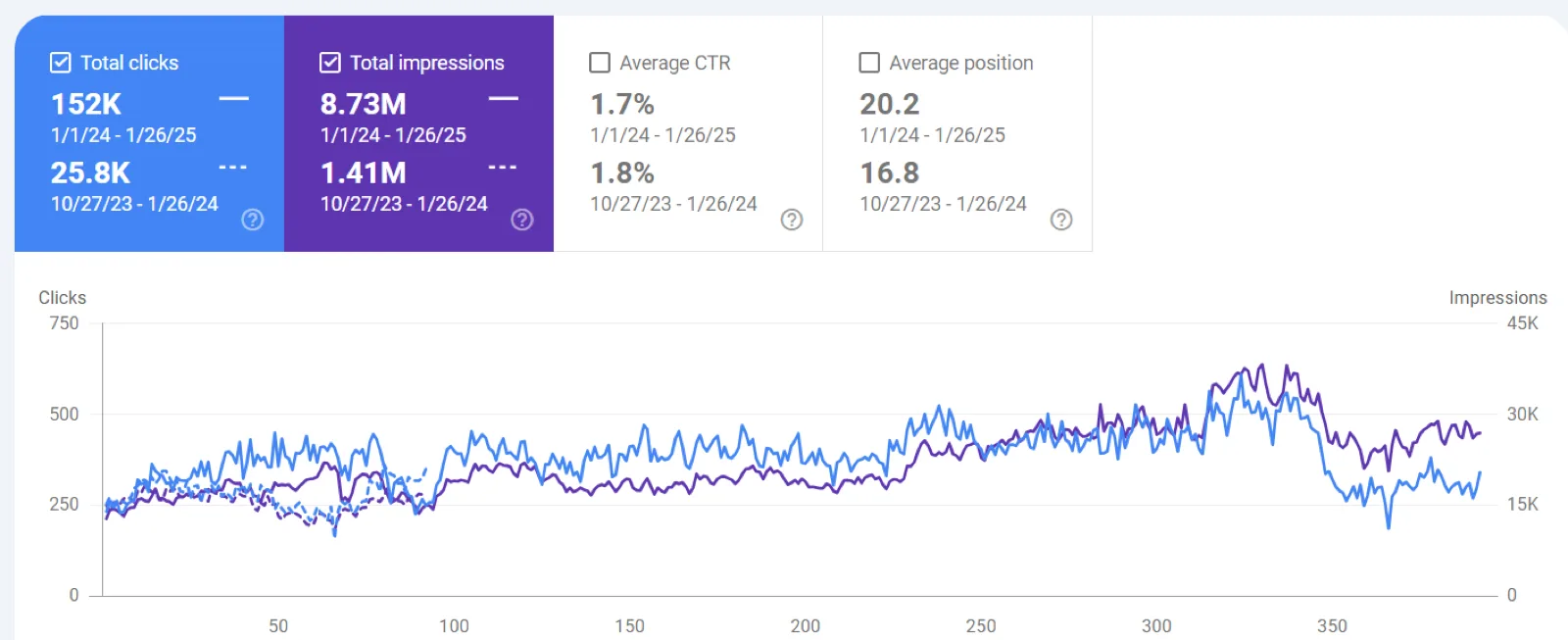
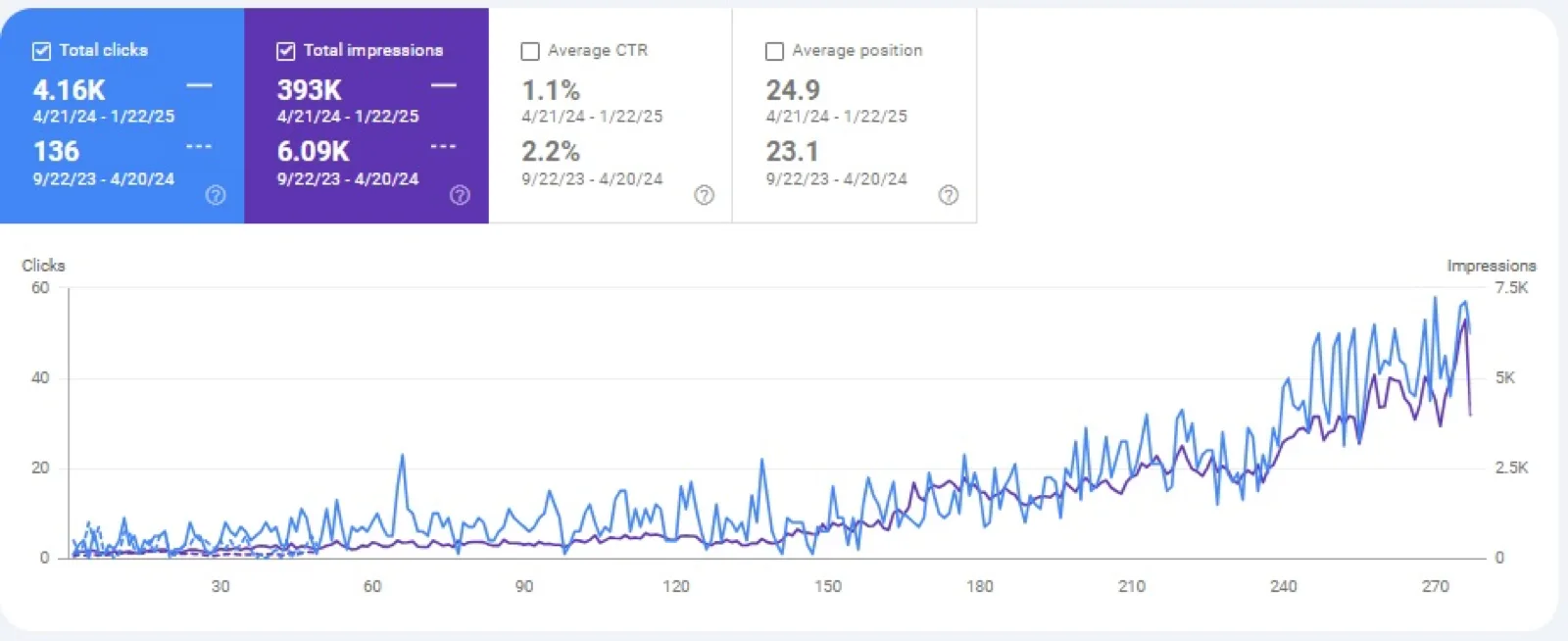
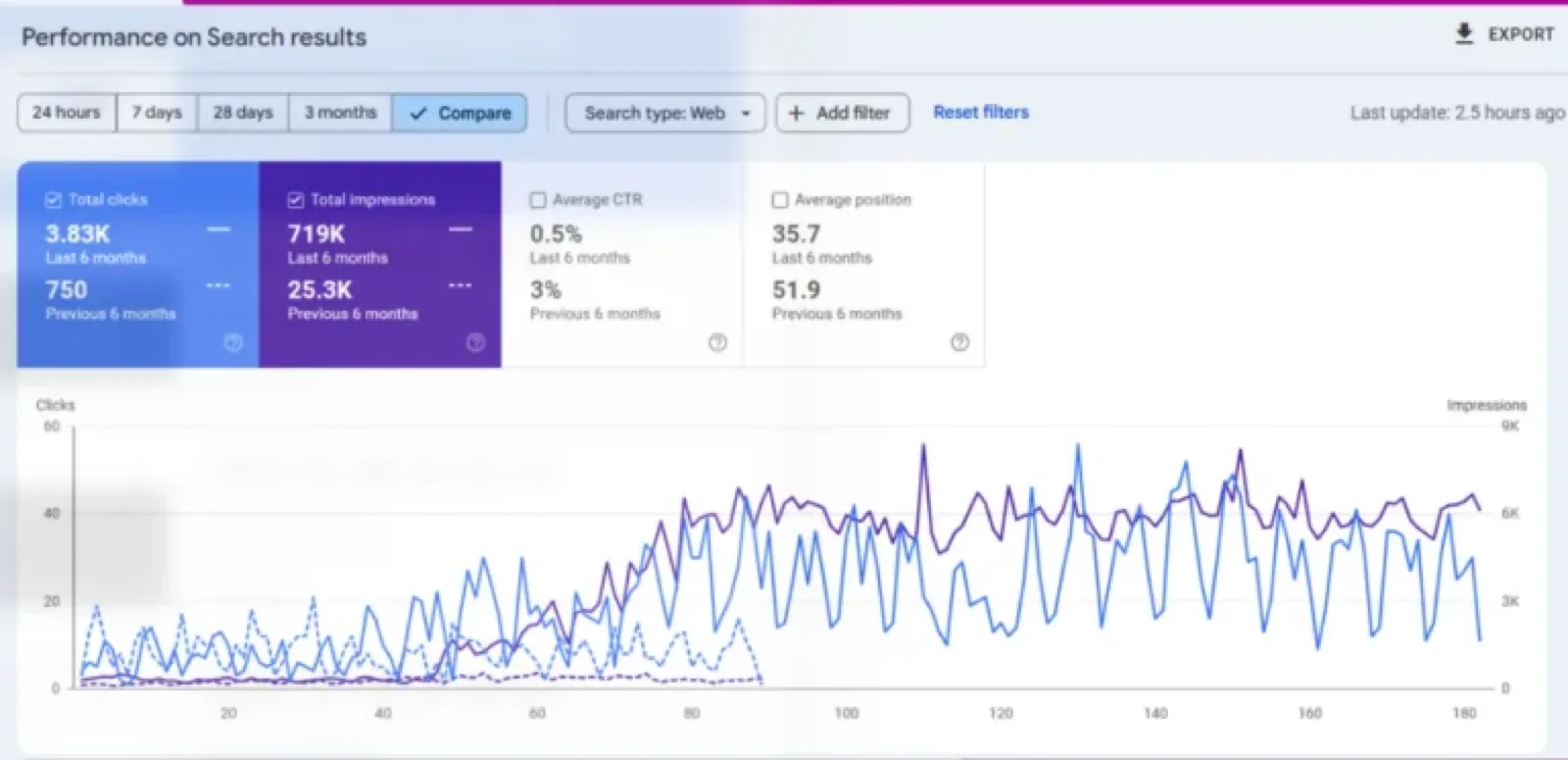
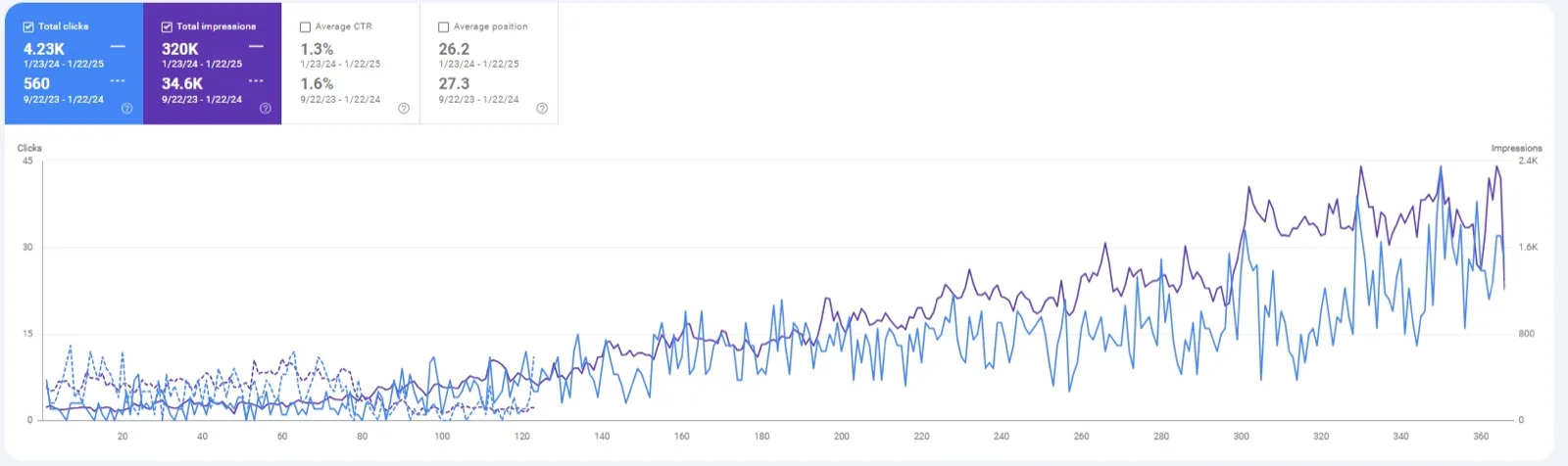
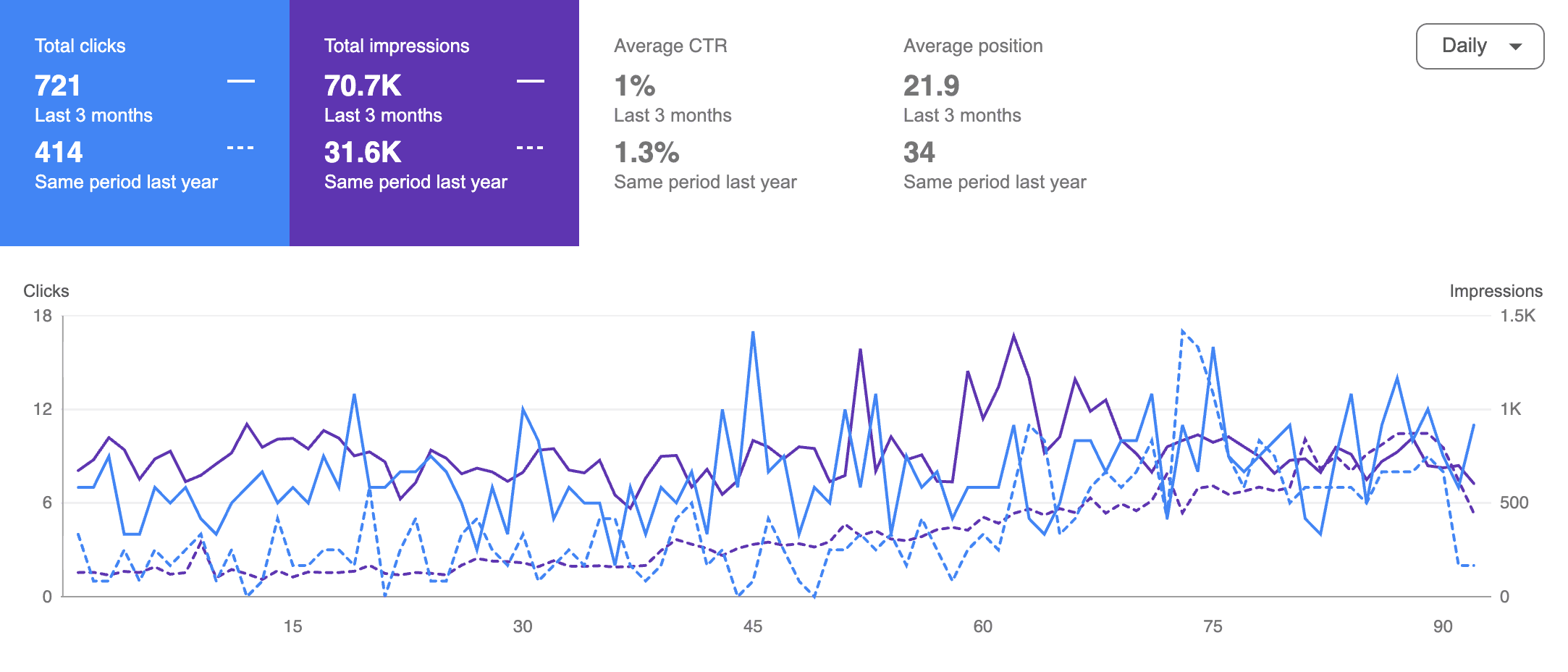
The Google data behind the claims
Google Search Console performance panels from client accounts — Google's own screen, not a report we wrote. Organic search only, cropped so no brand or domain is identifiable, each labelled with the exact window it covers.