
Schema markup engineering: structured data as a system, not a plugin
Most sites have schema generated by a plugin: an Organization block with no address, FAQ markup on pages without FAQs, and Product data with no price. We design your structured data as one connected graph with stable IDs, implement it in your templates, validate it and monitor rich result reports.
What is schema markup and why does it matter for SEO?
Schema markup is structured data added to a page in JSON-LD using the schema.org vocabulary. It tells search engines and AI systems exactly what a page is about: a business with an address and hours, a service with a provider and area served, a product with a price in AED, an article with an author. Google uses it for rich results such as FAQs, reviews and prices, and generative engines use it to resolve entities and verify facts.
Schema engineering is one part of SEO Dubai, our full search programme for UAE companies.
What schema engineering in Dubai includes
Schema graph design
Organization, WebSite, WebPage, LocalBusiness, Service, Person and Product entities defined once with @id references, so every page links to the same nodes.
Template implementation
JSON-LD generated from your CMS fields or Next.js data rather than hand-pasted, so new pages inherit correct markup automatically.
Sector-specific types
MedicalClinic and Physician for DHA-licensed clinics, LegalService, FinancialService, RealEstateAgent, Restaurant with menu, and Product with Offer for retailers.
FAQ, HowTo and Article markup
Applied only where the visible content matches, in line with Google’s eligibility rules, with Arabic versions for Arabic pages.
Validation and monitoring
Rich Results Test and Schema.org validator on every template, then Search Console enhancement reports checked monthly for errors and drops.
Plugin clean-up
Conflicting markup from themes and plugins removed so Google sees one consistent set of entities per page.
Searches this covers
How buyers search for this

Kevin Crowther · Private Wealth Manager built its service pages with FAQ schema and holds two featured snippets, for asset protection and legacy planning in the UAE.
What structured data does in 2026
Structured data helps Google understand a page and makes it eligible for rich results, but it no longer does everything businesses expect. Google’s policies say markup must describe content visible on the page, that valid markup does not guarantee a rich result, and that spammy markup can lead to a manual action removing rich result eligibility. Some formats have narrowed sharply. In August 2023 Google limited FAQ rich results to well-known, authoritative government and health sites, and it stopped showing HowTo results on desktop that September, after removing them from mobile. Google also says no special schema is needed to appear in AI Overviews or AI Mode. What remains valuable is markup that removes ambiguity: Organization with a logo and sameAs links, LocalBusiness details for each branch, Product with price and availability, and Article, Event or Video markup where those pages exist.
- Google’s structured data policies say not to mark up content that readers cannot see.
- Google says valid structured data does not guarantee a rich result will appear.
- Google’s Organization markup guidance asks for a logo of at least 112 by 112 pixels.
What keeps schema engineering off page one
Marking up content that is not on the page
Adding review stars, FAQs or prices to schema that visitors cannot see breaks Google’s structured data policies and can lead to a manual action. Generate markup from the same data as the visible page, so the two cannot drift apart when someone edits the content later.
Plugin defaults left unchecked
SEO plugins and themes output schema automatically, often duplicated, wrongly typed or contradictory, such as two Organization entities with different names. Inspect the rendered output with Google’s Rich Results Test and the Schema Markup Validator, then remove duplicates and fill in missing required properties.
Expecting markup to rank a page
Structured data clarifies what a page contains; it does not make a weak page rank. Google also stopped showing FAQ rich results for most sites in 2023. Spend effort on markup types that still produce visible results or resolve ambiguity, and on improving the content itself.
Entities that do not connect
Separate blocks for the organisation, its branches, its people and its services, with no identifiers linking them, leave search engines to guess how they relate. Give key entities stable @id values, reference them across pages, and point sameAs only to the profiles that genuinely represent the business.
Generators are common; engineered markup is not
Searches for schema markup help return Google’s own documentation, schema.org, plugin makers and free online generators, with a smaller number of agencies offering implementation. Most UAE business sites rely on whatever their CMS or plugin outputs, which is often incomplete, duplicated or inaccurate. The opportunity lies in treating structured data as part of the build: generated from the site’s own data, connected through consistent identifiers, matched to visible content in Arabic and English, and tested on every release. That is still uncommon among UAE sites, so careful markup remains a practical way to make products, branches and services easier for search engines to read.

How we deliver schema engineering: three steps, no black box
Audit existing markup
We extract the schema from every template, list errors, duplicates and missing entities, and check which rich results you are eligible for but not receiving.
Design and implement
The entity graph is documented, then implemented in your templates or components, tested on staging and validated page by page.
Monitor and extend
Search Console enhancement reports are reviewed monthly, and new types are added as Google and AI systems introduce them.
Schema engineering: questions UAE businesses ask
Answered in the first sentence, so AI assistants can quote us directly.
Not directly, according to Google, but it affects what your results look like and how well search and AI systems understand your pages. Rich results such as FAQs, ratings and prices raise click-through rates. Well-connected entity markup helps generative engines identify your business correctly. Pages with accurate schema tend to outperform equivalents without it.
For a simple blog, often. For a business site with services, locations, staff and products, plugins usually produce disconnected blocks with missing fields and no shared IDs. They also add FAQ or review markup where it is not eligible, which can trigger manual actions. Engineered schema built from your data is more accurate and easier to maintain.
MedicalClinic or a subtype such as Dentist for the organisation, Physician for each practitioner with their DHA licence noted in the description, MedicalProcedure or Service for treatments, FAQPage for genuine patient questions, and Review or AggregateRating only from first-party reviews shown on the page. We avoid claims that a licence does not permit.
We check your site against your three closest Dubai competitors and send the gaps costing you leads to your WhatsApp within 48 hours. Free, no call required.
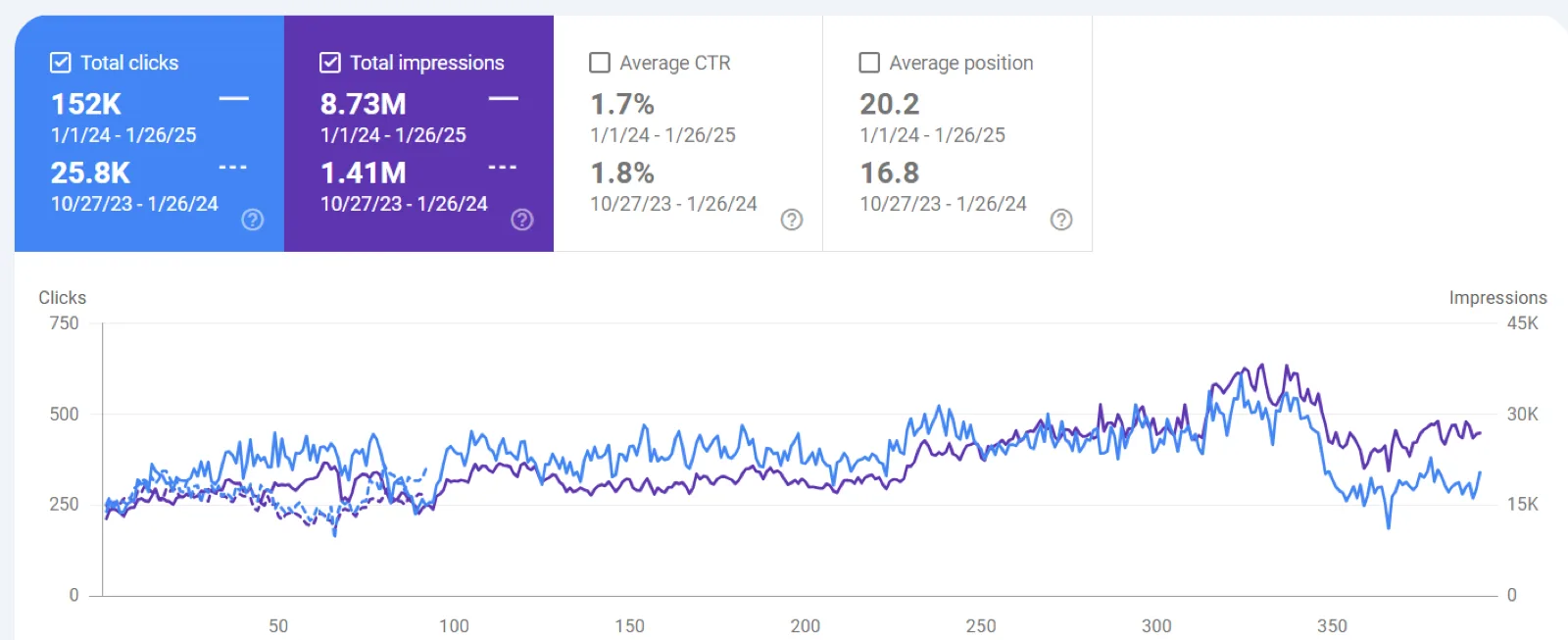
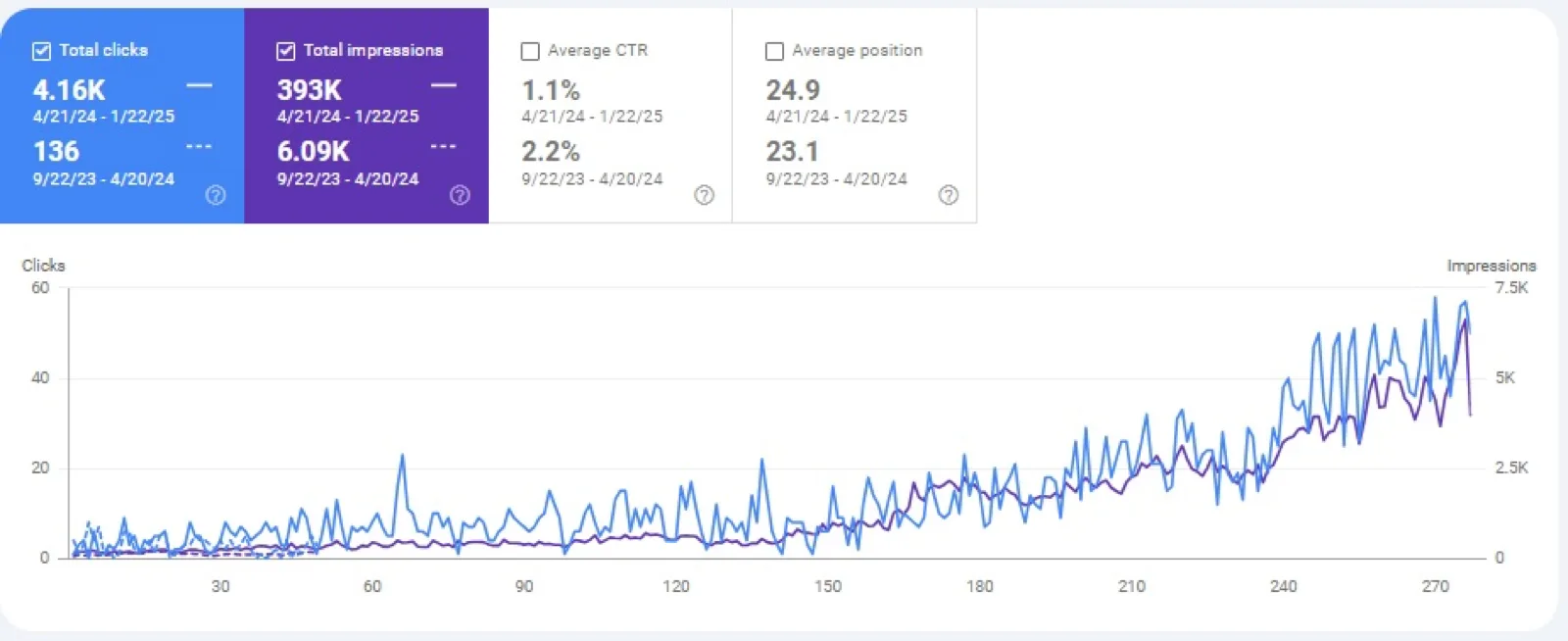
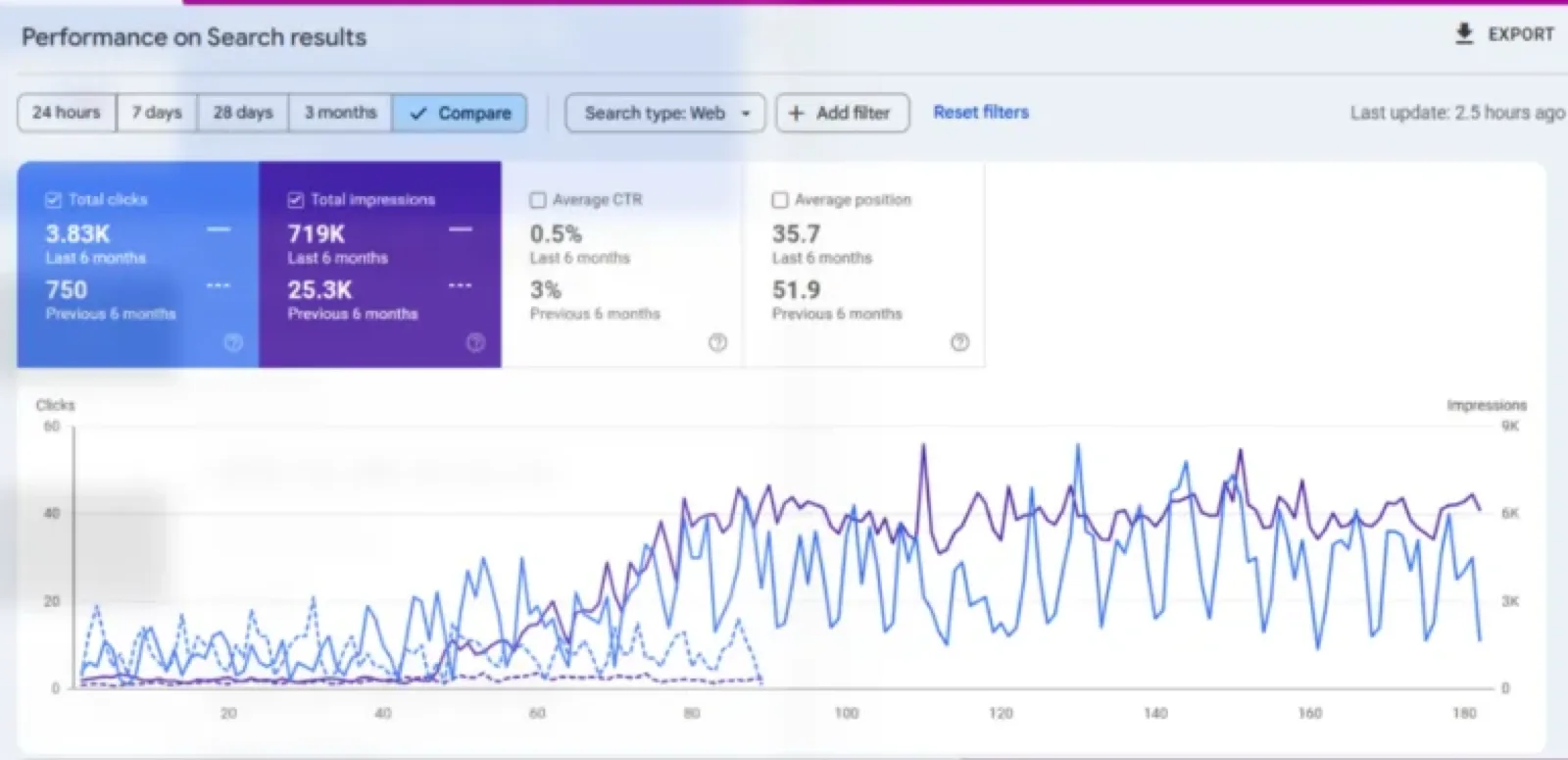
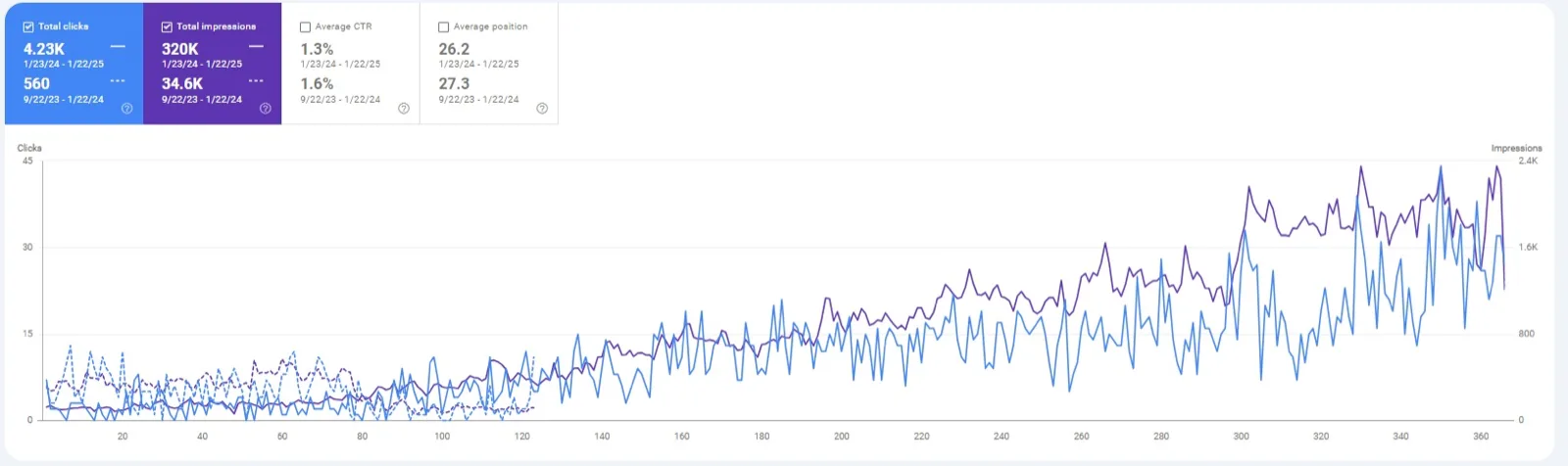
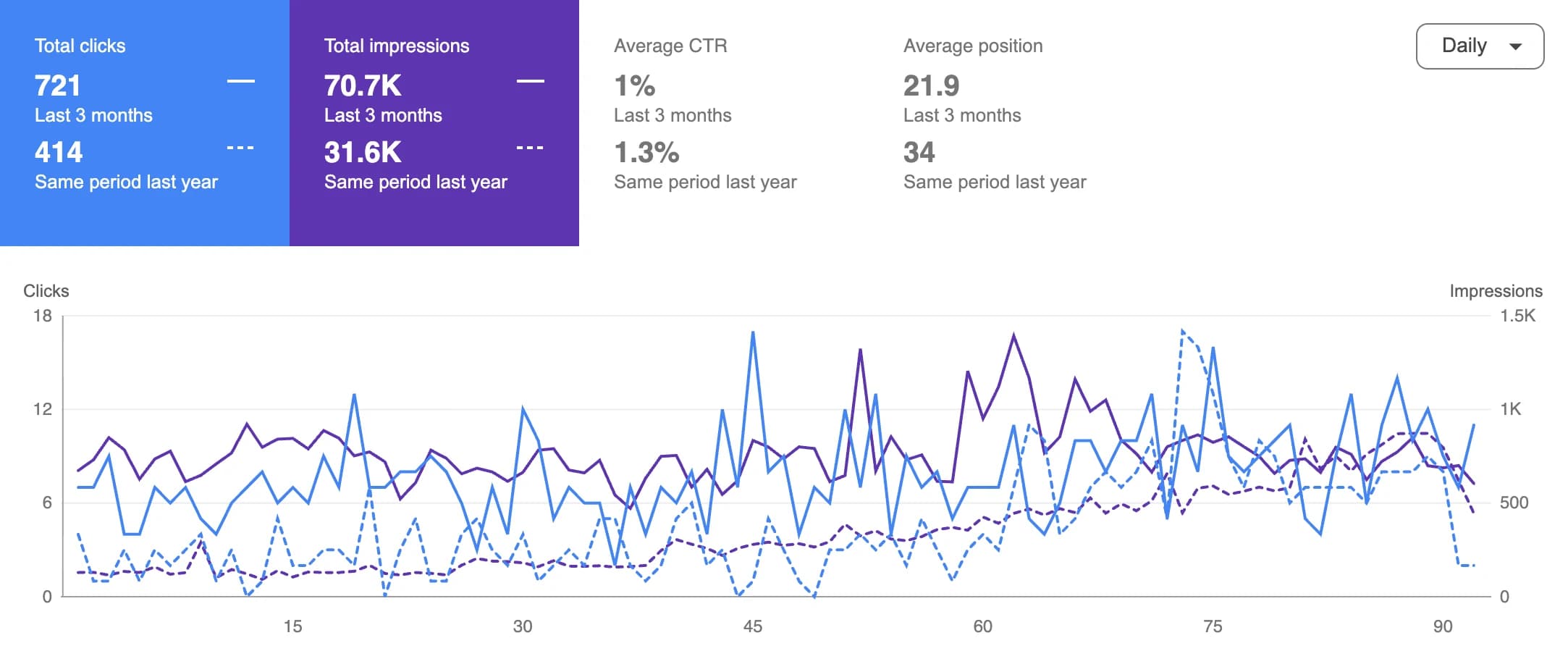
The Google data behind the claims
Google Search Console performance panels from client accounts — Google's own screen, not a report we wrote. Organic search only, cropped so no brand or domain is identifiable, each labelled with the exact window it covers.
Be the brand AI recommends.
Digidot.io, our AI optimisation (AIO) platform, shows what ChatGPT, Claude, Google AI, Gemini and Perplexity say when buyers in the UAE ask about your market. Track it yourself on the platform, or let our Dubai team fix it for you.
- ChatGPT
- Claude
- Google AI
- Gemini
- Perplexity
Illustration: how often each AI names your brand in its answer