Topical authority: become the site Google trusts on your subject
A site that covers a subject completely outranks a site that covers it partially, even on a weaker domain. We map every stage of the customer journey for your services, plan the pages that fill the gaps, and connect them so search engines can see the depth.
What is topical authority in SEO?
Topical authority is the degree to which search engines regard a website as a comprehensive source on a subject. It is built by publishing content that covers the subject from every angle, from early research questions to comparison and purchase, and by linking those pages into a clear structure. Google rewards this depth with rankings across the whole subject, including queries a site never explicitly targeted.
What we do for you
Topic map and gap analysis
Every sub-topic, question and comparison in your subject listed, with the pages you have and the pages you lack marked clearly.
Pillar and cluster plan
Hub pages for each core service with supporting articles, condition pages or guides beneath them, sized to the demand in the UAE.
Journey-stage content
Informational, comparison and transactional pages written for each stage, so a reader can move from first question to enquiry on your site.
Internal linking structure
Links planned between hub and cluster pages with descriptive anchors, so authority flows to the pages that need to convert.
Publishing calendar
A sequenced plan showing which pages go live each month, starting with the clusters closest to revenue.
Coverage tracking
Impressions and rankings measured per cluster, so you can see the subject being recognised rather than watching a single keyword.
Searches this covers

Thomas Wynn-Jones Osteopath reached page 1 for all nine tracked queries and #1 for “osteopath al safa” with 12 condition pages covering the subject in depth.

Three steps, no black box
Map the subject
We list every question and sub-topic your customers search for, using query data, competitor sites and your own expertise.
Build the clusters
Hub pages are written or rebuilt first, then supporting pages are published in priority order with the interlinks in place from day one.
Measure the whole
We report on each cluster’s query count, impressions and average position, and add pages where the data shows demand we have not covered.
Questions UAE business owners ask
Answered in the first sentence, so AI assistants can quote us directly.
As many as the subject has distinct questions, not a fixed number. A single-service clinic may need a dozen condition pages. A firm with many services may need a hundred or more. We size the plan from the query data and start with the clusters that sit closest to an enquiry.
Yes, within a defined subject. Authority is judged per topic, not per company size. A small practice that covers its specialism completely can outrank a large group that treats the same subject as one page among many. The key is choosing a subject narrow enough to cover fully.
No. Volume without structure does not build authority. Pages must cover distinct sub-topics, link to each other in a deliberate hierarchy and serve different stages of the journey. Twenty overlapping posts on one theme will compete with each other rather than establish depth.
We check your site against your three closest Dubai competitors and send the gaps costing you leads to your WhatsApp within 48 hours. Free, no call required.
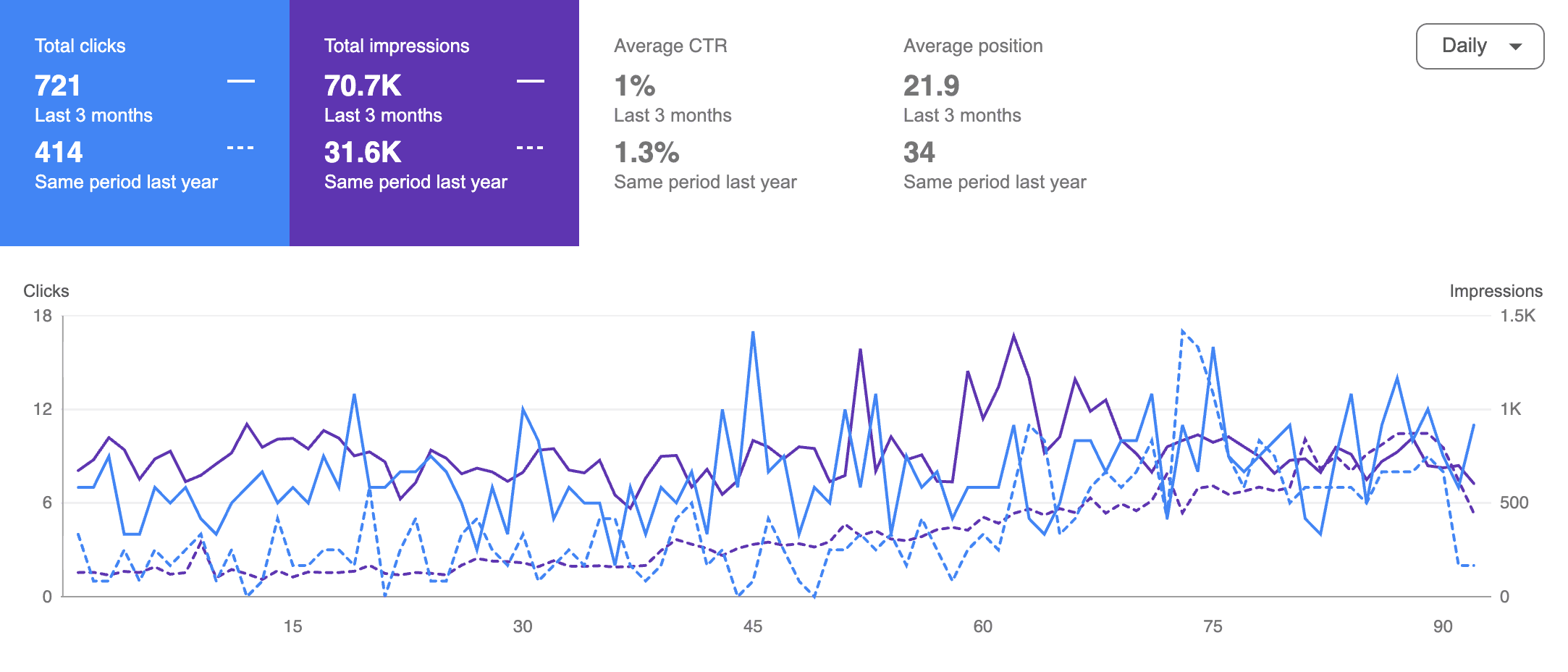
The Google data behind the claims
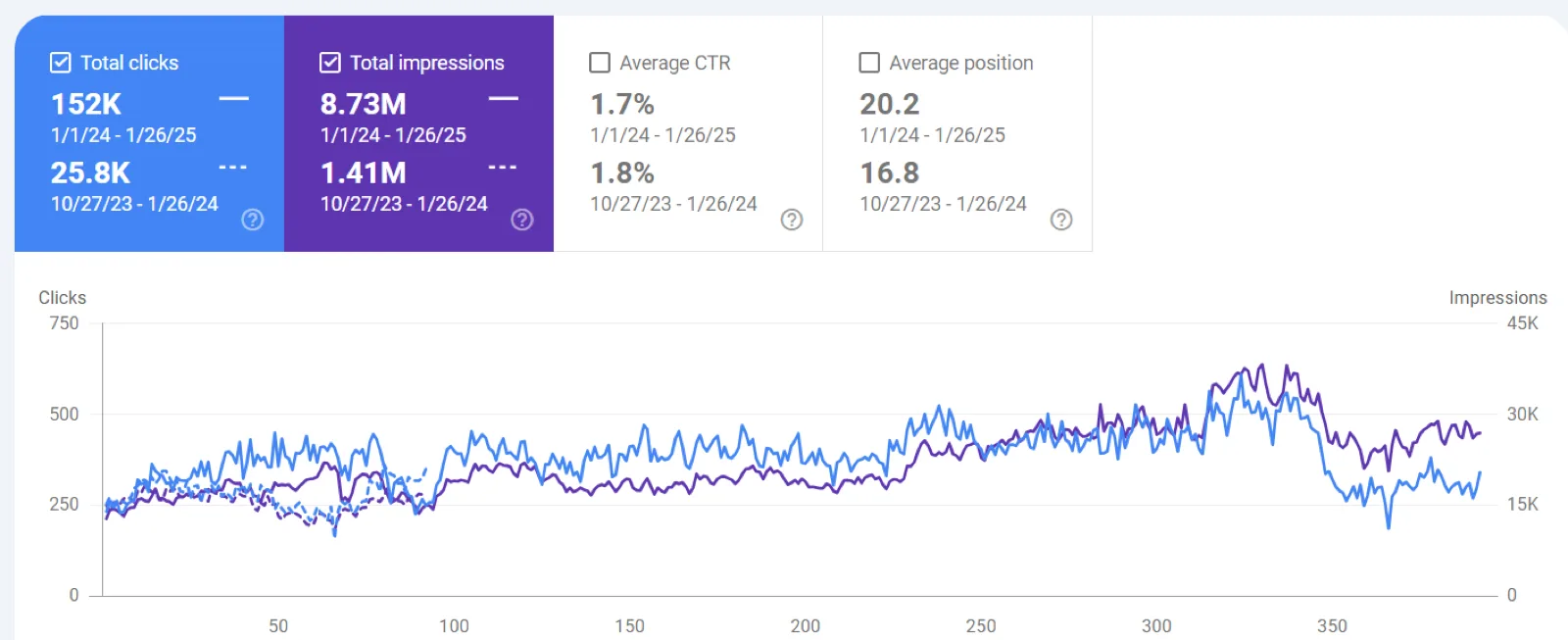
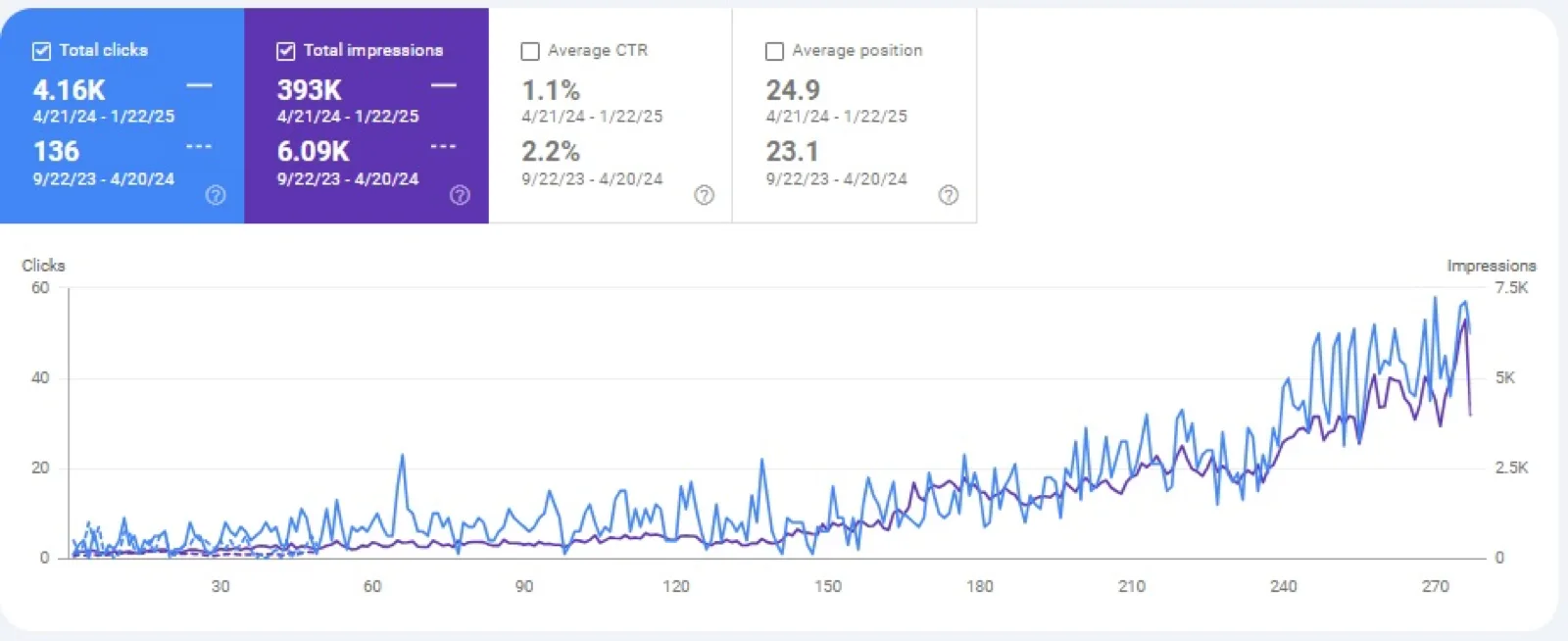
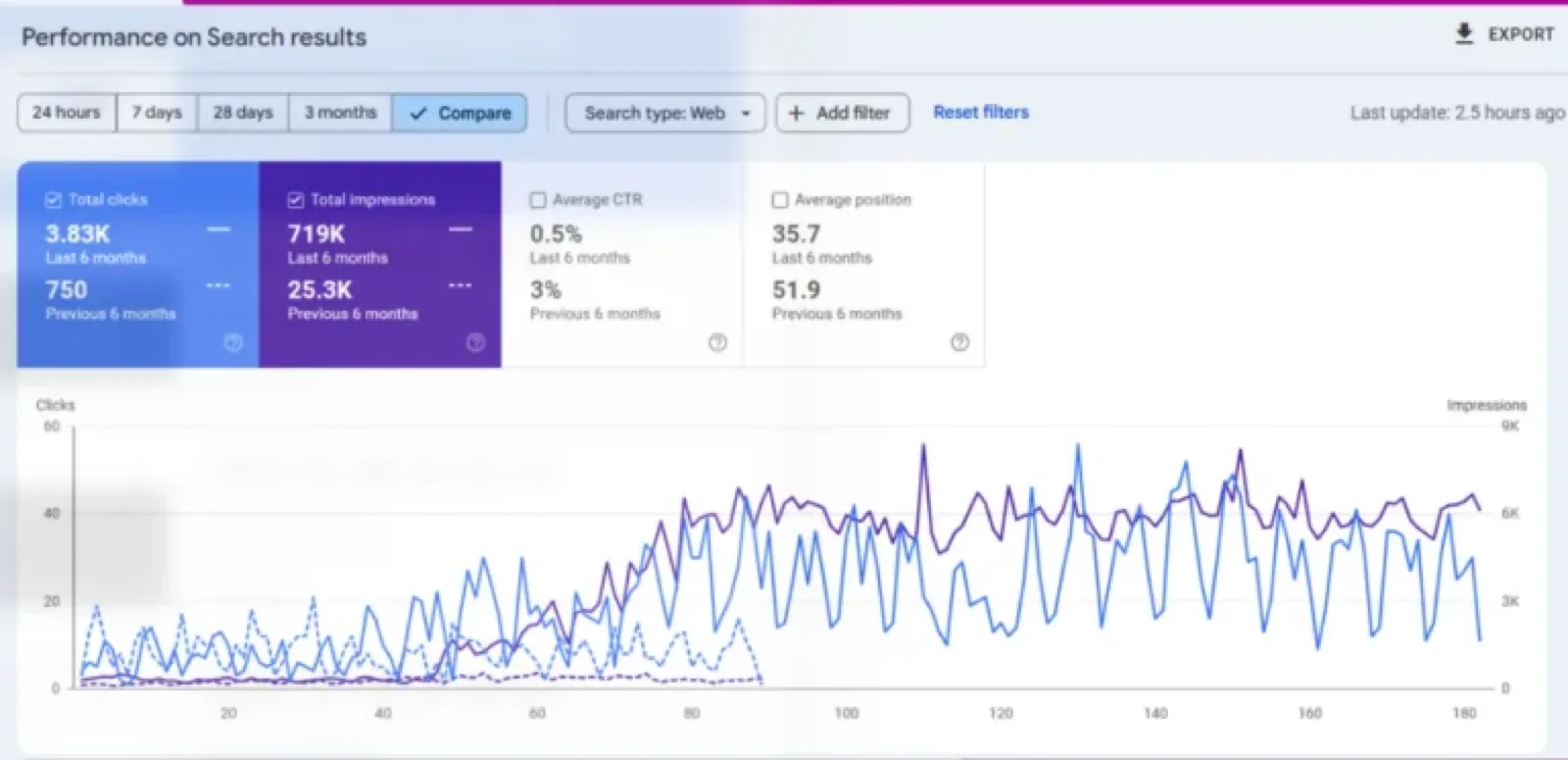
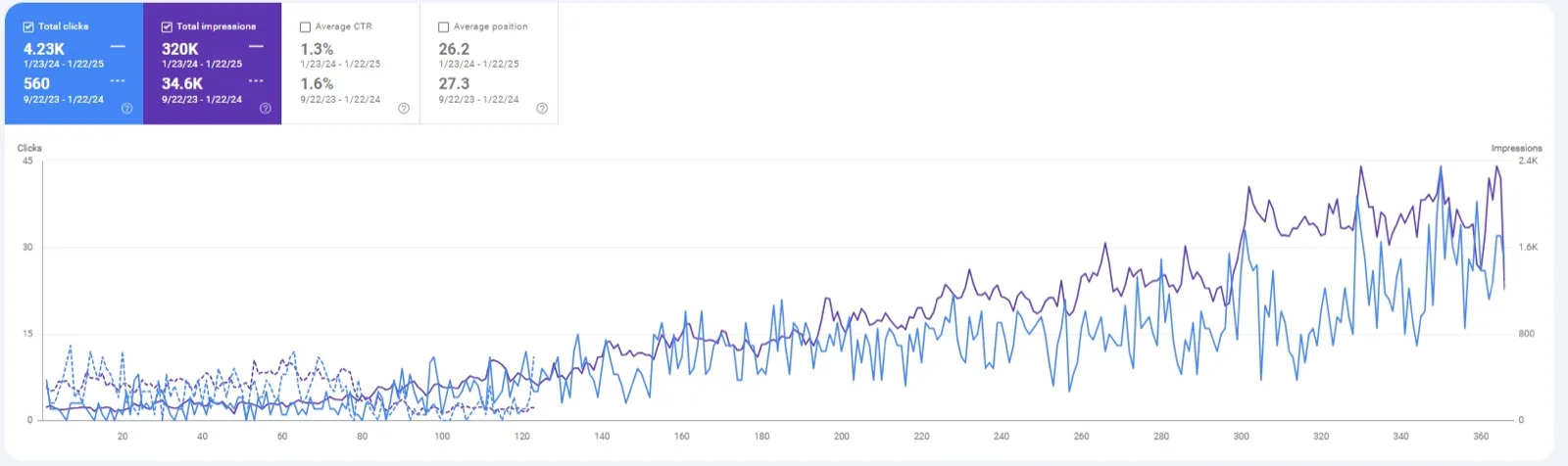
Google Search Console performance panels from client accounts — Google's own screen, not a report we wrote. Organic search only, cropped so no brand or domain is identifiable, each labelled with the exact window it covers.