Entity SEO: make Google and AI models know exactly who you are
Search engines and language models rank things they can identify. If Google is not sure whether your company, founder and services are distinct entities, it hedges. We define those entities, connect them with schema and same-as links, seed them on trusted sources and track when a knowledge panel appears.
What is entity SEO?
Entity SEO makes a business, its people, products and services recognisable as distinct entities in Google’s Knowledge Graph and in the models behind AI assistants. An entity is a thing with a stable identity and attributes, rather than a keyword. The work includes consistent naming and descriptions everywhere, Organization and Person schema with same-as links to authoritative profiles, a Wikidata entry where notable, listings on sources Google trusts, and content that states facts about the entity plainly.
Entity & knowledge graph is one part of SEO Dubai, our full search programme for UAE companies.
What entity & knowledge graph in Dubai includes
Entity definition
Your organisation, founders, practitioners, locations and flagship services defined with canonical names, descriptions and attributes to be used everywhere.
Schema with same-as graph
Organization and Person markup linking to LinkedIn, Business Profile, Wikidata, Crunchbase and sector registers, with @id references across pages.
About and author pages
Pages that state who you are, credentials, history and affiliations, written as the reference source for the entity.
Corroborating profiles
Listings and profiles created or corrected on sources Google and AI models draw from, including Wikidata where eligibility criteria are met.
Knowledge panel monitoring
Brand and founder searches checked monthly for knowledge panel appearance, accuracy and claim status, with corrections submitted.
Searches this covers
How buyers search for this
How Google understands brands as entities in 2026
Search engines and AI assistants increasingly treat a business as an entity, a thing with known attributes and relationships, rather than a set of keywords. Google’s knowledge panel is the visible sign. Where one exists, Google lets the entity claim it by signing in through an official site or profile, such as Search Console or YouTube, and then suggest corrections, though Google notes that not all panels can be claimed yet. Google’s Organization structured data guidance says the markup helps it disambiguate an organisation and choose its logo, and supports sameAs links to the other profiles that represent it. For UAE businesses, entity clarity is complicated by trading names that differ from licence names, Arabic and English versions of the brand, and similar company names across free zones and the mainland, all of which need to be tied together consistently.
- Google lets entities claim an existing knowledge panel by signing in through an official site or profile.
- Google says not all knowledge panels are currently claimable.
- Google’s Organization markup supports multiple sameAs URLs and helps it disambiguate the organisation.
What keeps entity & knowledge graph off page one
Different names in different places
A business known by its trading name on the website, its licence name on directories and a shortened name on social media splits its identity. Choose the canonical name in English and Arabic, use it consistently, and record genuine alternate names in structured data rather than leaving search engines to guess.
sameAs links to the wrong profiles
Pointing sameAs at unrelated pages, inactive accounts or directory listings with wrong details confuses rather than clarifies. Link only to official profiles that represent the business and that you control, keep them active and accurate, and make sure each one links back to the website.
No authoritative about page
Many sites have a short about page full of slogans and no facts. Search engines and assistants look for a clear statement of who the organisation is, where it is based, who leads it, what it does and when it was founded. Publish those facts plainly and mark them up with Organization schema.
Expecting a knowledge panel on request
A knowledge panel appears when Google holds enough reliable information about an entity; Google’s help pages explain how to claim an existing panel, not how to create one. Build the evidence first, through consistent profiles, independent coverage and clear structured data, then claim and maintain the panel once it appears.
Established brands are already understood
Large UAE companies, government entities and well-covered brands usually have clear entities already, with knowledge panels, Wikipedia or Wikidata entries and consistent profiles. Smaller businesses rarely do, and many are confused with similarly named companies elsewhere in the region. Searches for entity SEO help return international SEO blogs and a few specialist agencies, with Google’s own help pages answering knowledge panel questions. A business that publishes a factual about page, uses consistent names in Arabic and English, connects its structured data and keeps its official profiles accurate is clarifying its identity in a market where most competitors have not yet tried.

How we deliver entity & knowledge graph: three steps, no black box
Map the entities
We list every entity your business should own, check how Google and AI models currently describe each, and note conflicts and gaps.
Establish the record
Canonical descriptions, schema, about pages and same-as links are published, and profiles on trusted sources are created or corrected.
Corroborate and claim
Mentions on third-party sources are built, knowledge panels are claimed once they appear, and descriptions are monitored for drift.
Entity & knowledge graph: questions UAE businesses ask
Answered in the first sentence, so AI assistants can quote us directly.
Google generates a knowledge panel when it is confident an entity exists and has enough corroborated facts. A complete Business Profile often triggers a local panel. A brand panel needs consistent information across your site, schema, and independent sources such as press coverage, directories and, where eligible, Wikidata. There is no application form; the record has to earn it.
Language models resolve questions to entities before they answer. If your business is a clearly defined entity with consistent attributes across the web, models can name it confidently and describe it accurately. If your name is ambiguous or your descriptions conflict, models either omit you or merge you with something else. Entity work is the foundation of GEO.
Yes. Notability for Wikipedia is not required. A small firm with a consistent name, a well-structured site, complete profiles on Google, LinkedIn and sector directories, and a handful of independent mentions is usually enough for Google to recognise the entity. Founders and licensed practitioners can be established as Person entities the same way.
We check your site against your three closest Dubai competitors and send the gaps costing you leads to your WhatsApp within 48 hours. Free, no call required.
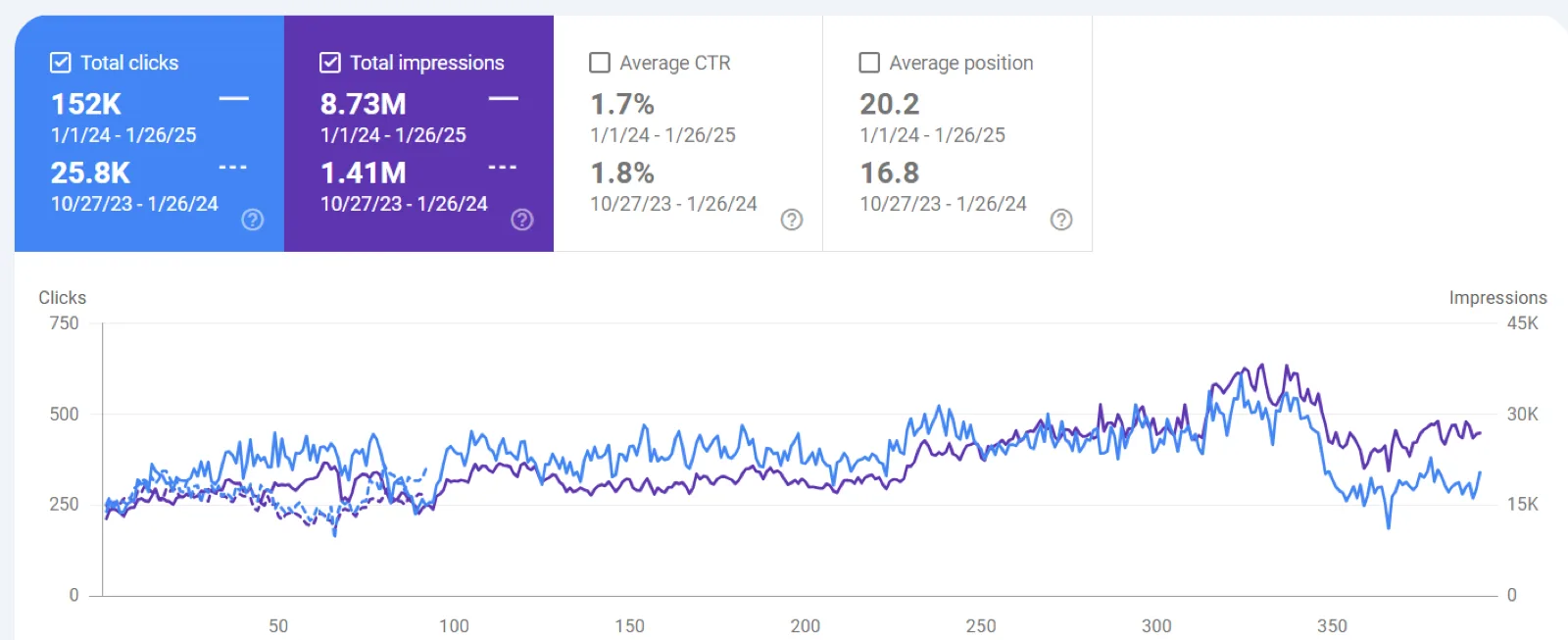
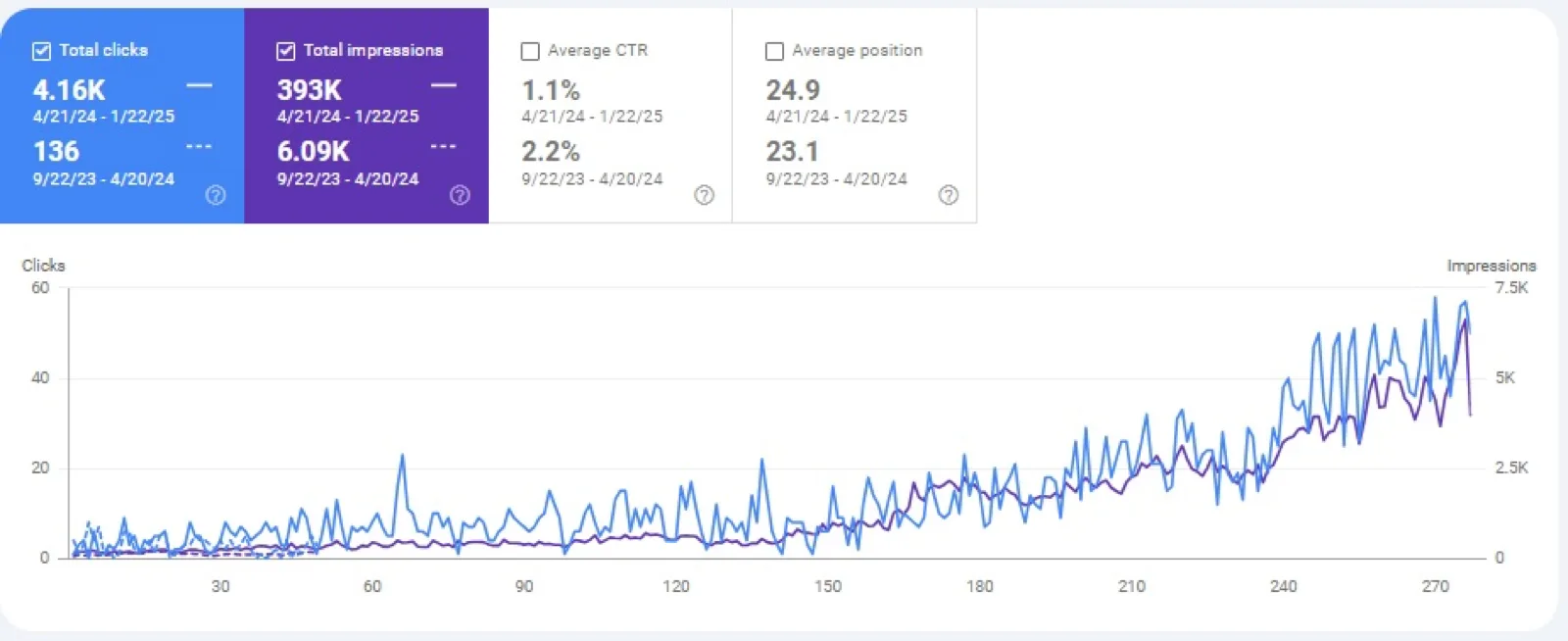
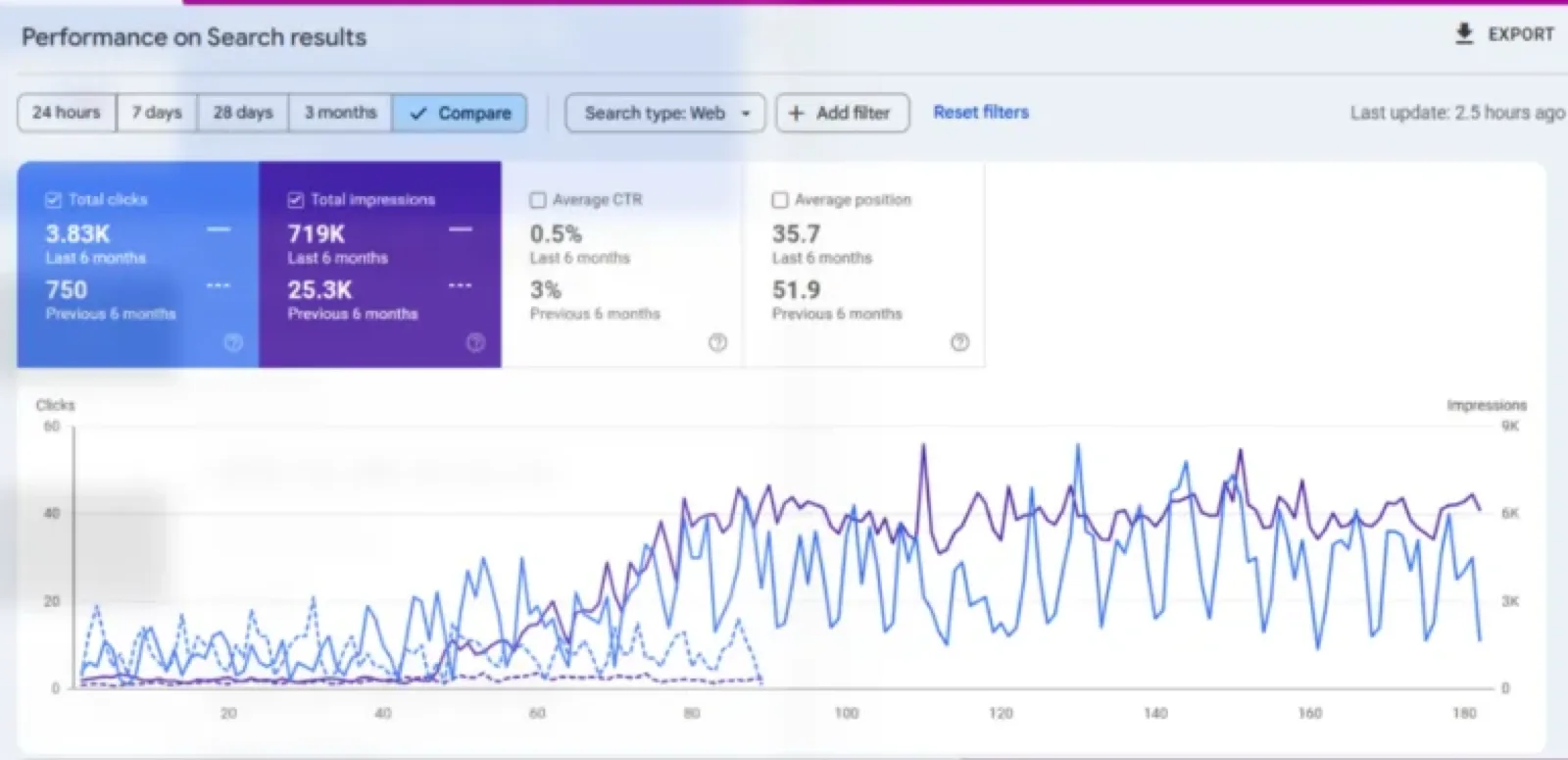
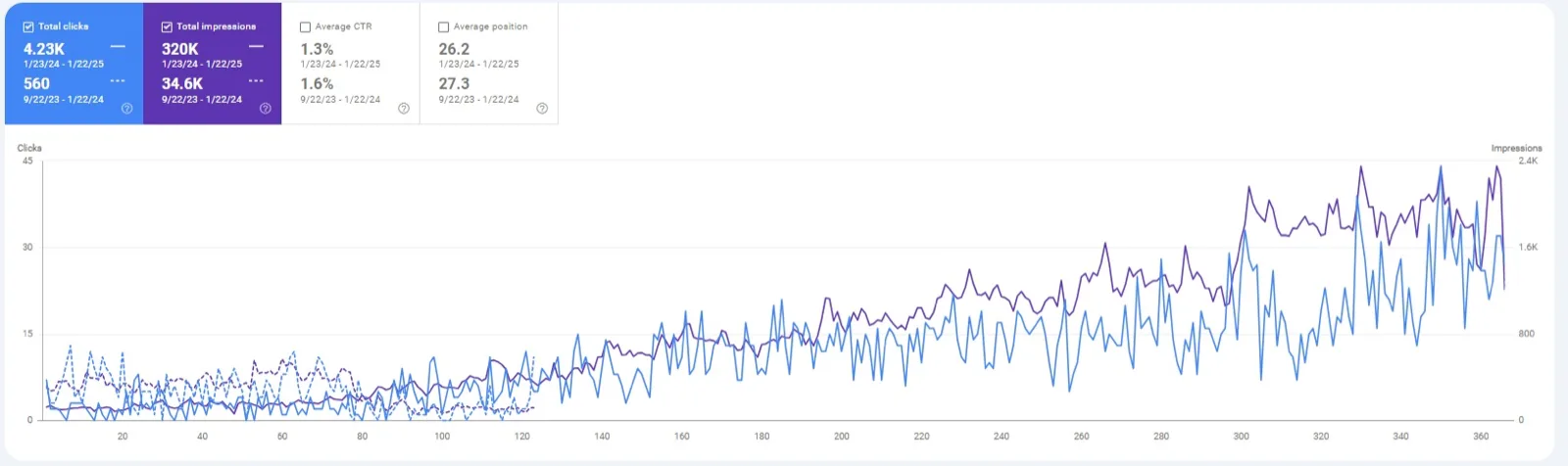
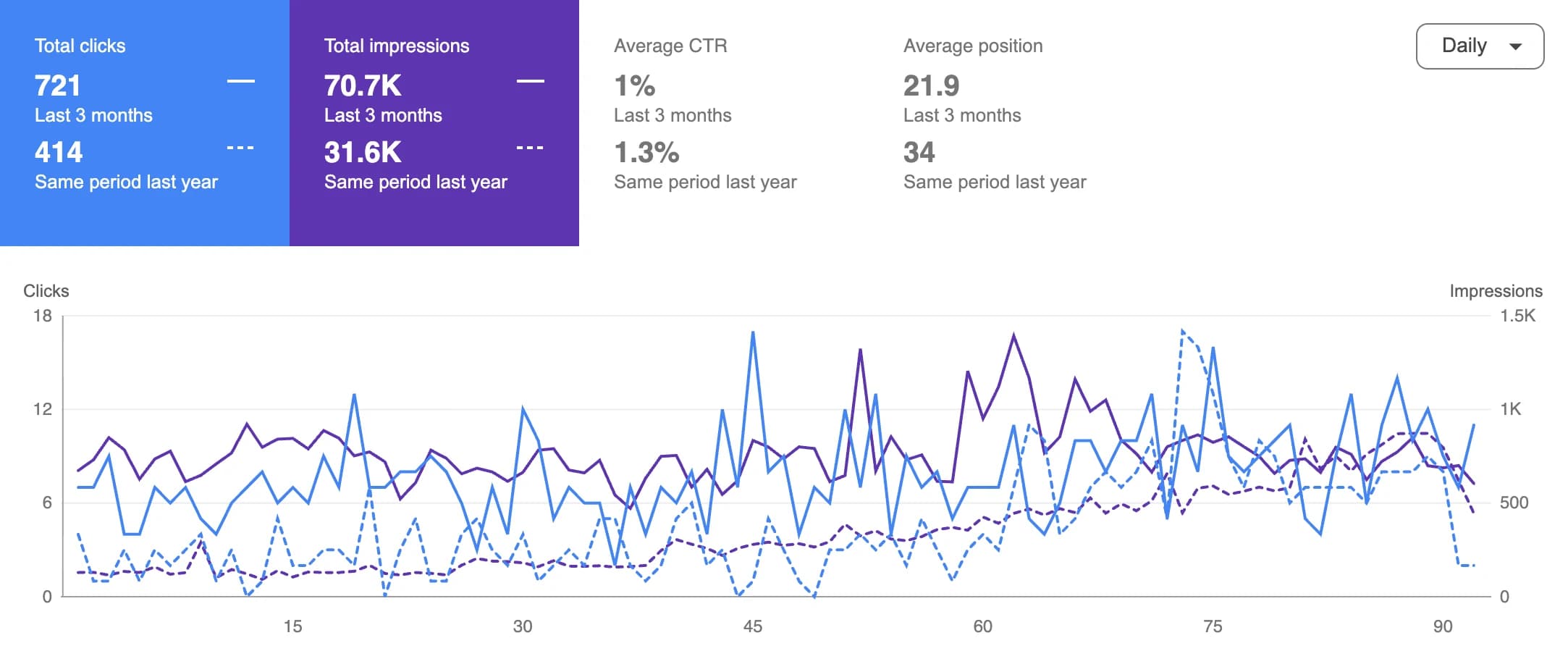
The Google data behind the claims
Google Search Console performance panels from client accounts — Google's own screen, not a report we wrote. Organic search only, cropped so no brand or domain is identifiable, each labelled with the exact window it covers.
Be the brand AI recommends.
Digidot.io, our AI optimisation (AIO) platform, shows what ChatGPT, Claude, Google AI, Gemini and Perplexity say when buyers in the UAE ask about your market. Track it yourself on the platform, or let our Dubai team fix it for you.
- ChatGPT
- Claude
- Google AI
- Gemini
- Perplexity
Illustration: how often each AI names your brand in its answer